

Can You Be Over-Involved In Your Dyslexic Kid’s Life?
About this episode
In this episode, we respond to a recent CNN article about not doing too much for kids in college: https://www.cnn.com/2024/08/16/health/college-student-independence-wellness/index.html.
Transcript
Full transcript · 3,184 words · about 16 min to read. Press a timestamp to jump to that moment.
Is it possible to be over-involved in your college kid's life? Absolutely. But it's a little more complicated than that.
Hey everyone, we're Nick and Sonja and this is Dyslexia Journey. And today we were inspired by a CNN article. Let me just see what the name was here so I can, and we'll link it for you as well. It's called Over-Involved in Your College Kid's Life. It's Understandable but Not Helpful, experts say. And so just had some thoughts about the article overall, you know, lots of points that we agree with, but just a few nuances, in particular if your kid has learning differences.
So this article really, the basic sort of point of the article is that parents are often too involved, that parents these days are more involved in their kids' lives in general, which has been a good thing, you know, overall for society and for families. And it was focusing on the older kids in this case, that they're over-involved to the extent that they're not letting them do enough for themselves in order to develop resilience and autonomy and other things like that.
And they've kind of framed it around the psychological principles about motivation, which I've heard before in other contexts, which are that motivation comes from three elements, which is competence, connection, and autonomy. And so they were talking about how being over-involved in – they mentioned high school kids, actually, as well. High school and college kids' lives can actually harm each of those elements of their motivation. And then they spoke a little bit about resiliency, too, and that they're not able to develop resiliency if parents are too involved.
Yeah, and I think – I guess before we get to kind of the parts that we disagree with or the parts that you might have to consider a little bit differently if your kid has dyslexia, in general, I think this is true. I mean, children do need to develop autonomy and competence and resilience, right? And they're not going to do that if someone else in their life solves every problem for them and doesn't let them ever fail.
Like, that part is definitely true. Right. And I would say overall – I mean, it's not just me. It's been researched, but that I agree with or, like, I see the studies around and agree with those three components of motivation, that that's really important to have autonomy and that they're doing things for themselves as part of the motivation that then keeps them going to keep going forward. So definitely agreeing with that, too.
So I think from my reaction to the article and some of the nuancing there for kids with learning differences is that that that's all true. But if kids have extra challenges, you know, that it's just not quite so simple. They may need you to be more involved or involved for longer in ways that aren't true for another kid or young adult. But that doesn't mean – you know, it's more about, like, how you do it.
So I guess that's my nuancing is that it's more about how you do it, but to understand that different kids still have different needs. And I guess one more point that really applies to all kids is to really remember the point that, you know, they still – I mean, this was true for me, like, far into adulthood. Sometimes we're asking the older generation about things simply because we don't know how to do it yet, right?
Like, there have been financial things, and I'd ask my parents, or maybe there's something around the house, and you haven't done it before. And so you just get that advice because people know it. It's not like we want people to have to reinvent the wheel every time. So I think we have to be a little careful not to think we're being over-involved just when it's about passing down that sort of generational wisdom and, like, helping to guide, you know, kids.
I mean, hopefully that would be – and I think it's possible sometimes to point it out to them if they're not even seeing it, right, just because they've never had the experience before. That would be, of course, where you have to be careful, like, do they want your advice or not? Sometimes people do have to – just don't want your advice, and then they do have to go through everything right from the beginning, and that just may have to happen.
But usually, for most contexts, you know, if you have a good relationship with your kid and maybe you haven't been too involved, in which case maybe you have to reset that a little for the autonomy piece, in most cases, that's actually just going to be helpful and, like, save them time and save them effort and help them do things, you know, with just more wisdom and advice going into it. Yeah, and I think that makes me think about kind of differentiating between when your kid is kind of asking you for help or receptive to your advice versus just venting or complaining, right?
And so I think one of the things they talked a lot about in the article is, like, emailing your kid's professors for that. Right. That is a bad idea. Right. And so if they're complaining about their professor, you know, sometimes they might just want to be venting. Like, they're not asking you to solve that problem for them. Right. Right. Exactly. And, you know, and so there's a difference, though, right? There's a difference between if they're complaining about something and maybe you think maybe they're not seeing something in your chest or like, hey, have you ever thought of this?
Right. This is actually taking over, right, and trying to solve the problem for them. Or maybe they're having trouble communicating or, you know, they're just feeling uncertain about doing it and you can help them talk through this, sort of coach them through the steps of doing it. Right. So that's very different because you're still, you know, it's very akin to what we talk about all the time with regard to learning differences and, you know, helping your kids slowly self-advocate more and more for themselves as they get older.
That can continue. So I think that's part of my point, too, is that I just I don't think the article is trying to say this. It was not that long an article. It didn't have space for everything. But to make sure that it's not this idea that like, well, they're off to college if I help, you know, if I if I help them at all or like it's this. So such a demarcation point, which, of course, it is in a lot of ways because they're not living with you anymore often.
But it's it's not like there's really this marker in terms of their own growth and development quite that way. And so just to just to not just to not also get a message from these kinds of articles that it's not OK to still really try to remain connected and see, try to help, you know, try to try to be supportive. And so that's the how, though. Right. So the how is to not be taking over and not be butting in if they don't want you to and all of those pieces.
Right. And I think that's true in high school, too. Like, I think some parents think of starting high school as that demarcation zone where like, OK, you're you're on your own with homework now, like you're old enough to remember to do this. You don't need my help anymore. And as we've discussed many times on the show already with dyslexic kids, that's probably not going to be the most helpful way to parent them.
And that can be true even into college, too. And this isn't exactly what the article was talking about, but it reminded me of it. Like if you're through high school, if you're helping your child through their English class by reading, you know, their their papers and correcting the spelling and grammar or. I mean, obviously, people have spellcheck and grammar check now to do that. But if you're kind of doing the final polish, helping them with their final polish on their papers, you don't need to stop cold turkey when they go to college with that kind of thing.
And I think the same thing applies to more what the article was focusing on is is helping them more sort of with with life skills and stuff. Like, you know, dyslexic kids might need more help crafting an email to their professor. That doesn't mean you're doing it for them. But if they decide, OK, I think I need to talk about this with my teacher. Can you help me write an email? I mean, sure. Help them write an email.
Right. And because it is a newer environment, they might actually need some extra support like that. Again, it's going to vary so much kid by kid and situation by situation. But, you know, it's all it can be a demarcation point in the opposite direction, too, that they're they got used to how they would advocate in high school and they might need, you know, some support in figuring out how that works, you know, in this different environment.
So I think for the rest of my response, just going back to those three points about competency, autonomy and connection. So the article is making the point that if you're over involved in doing things for the kids, they don't have the chance to develop competency. You're not letting them be autonomous and solving it and that it harms your connection in that sense of like. Them feeling like you don't think they're competent or or if they don't want you to be butting and you're you're sort of being obnoxious in that way, even though you're trying to help.
And so I guess my points are that I think the autonomy piece can be that building the autonomy more if you're just being supportive and helping them figure out how to do things. And I think the competence, I don't have a concern about that if you're you're being confident with them and you're like, oh, you can. So the point would be your attitude about it, not like, oh, are you sure you can do that?
Like, I don't know. Do you want me to do it? You're not still saying things like that, that you're actually saying, I'm sure you can do this. Do you want me to help you break down the steps or something? Then that's just helping them see the scaffolding to get to that. And then in terms of connection, I thought the article underemphasized that a bit. I understood their point, and I think it's true about how over-involvement can harm connection.
But I don't. But because there were so much emphasizing not stepping in, I think that that actually could miss the point of trying to stay connected, that it's actually very important to try to stay connected as much as you can. And that can be more challenging, right, because there are more independent and really interested in other things and all that. So as much as you can stay connected and offering support, you know, where it makes sense and is in these ways, I actually think that can boost them in terms of the connection piece.
Yeah. It made me think of kind of an analogy when you use the word scaffolding. So really, you want to provide the scaffolding, which is the support, so that they can climb the building on their own. And which is not to be confused with rescuing them if they're falling off the building. And I think as parents, sometimes we do see a situation more as a rescue when really they just need the support.
Right. And then I would just add the one further piece of it's important to stay in tune like that and connected. Also, so you can see if there's something else going on, if there's strength of a mental health issue, right, something like that. So as much as we want them to be autonomous and probably are interacting with them a lot less than before, it's like I think it's important not to miss that piece that you can still be trying to sort of see how it's happening.
And of course, someone, right, like let's say they do become depressed or they're having trouble making friends or something. They might need a little bit of extra. You talk to them a little more often for connection or you help them get mental health resources, for example. So I think that piece of connection to can't be missed. Right. There's so many things that they weren't talking about that in this article, but really everything interweaves and you can't really separate it all out like that.
OK, so obviously I gave some thoughts already as Sonja was giving her response. But some of my kind of initial thoughts after I read the article are kind of organized around this thesis in the article that parents... the reason that parents are over-involved is because they don't want to give up control, that that's hard for parents. And so that may or may not be true. That's probably true for some people. I think it probably is hard for a lot of parents.
But I do want to point out there's several factors that are different when your kid has dyslexia. OK, so the first point is that the stakes are different. Someone with dyslexia has already probably had to develop more resiliency than someone without dyslexia because they've almost certainly had situations where they have, quote, failed at something already in school, probably pretty early on, where other kids were reading and they weren't able to read yet.
And maybe they had a traumatic moment when they were trying to read in front of the class and it didn't work out well or made a mistake or something like that. And so they've had to maybe already develop this resiliency. But also people with dyslexia, sometimes it goes the direction of developing a great deal of resiliency. Sometimes it actually makes their threshold for failure lower so that they actually need more encouragement or they're more easily discouraged by failure.
And so they might need extra support and extra, not rescuing, but, I mean, helping in ways, I guess, being careful to being more conscious of the cost of failure on their self-confidence compared to someone who doesn't have dyslexia. And just speaking of stakes overall, I can't remember the statistics, but dyslexic kids are less likely to finish college. So, I mean, so it's worth considering that. Yeah. Again, how you're involved is a separate question, but in terms of what support might be needed.
Okay. Okay. And then another thing I thought about reading this article is that the definition of competence is different for everyone. And so for competence, like in school, for someone without dyslexia might be, you know, reading a thick book to themselves. Competence for someone with dyslexia might be listening to the audio book version of it or having someone read it to them. And so just keep in mind that, you know, this is true of any two people, even if one of them doesn't have, or both of them don't have dyslexia, that sort of definitions of competence are going to vary between people.
So that's just something to keep in mind. Right. That's a good point. What does it exactly mean for them to be developing competence? And I think that also points back to my point, too, about like, as a young adult and in these various stages, competence might look different than it does for you at a later stage of life. So remembering that that's still developing. Right. Exactly. And then kind of the last thought I had going through this article is that dyslexic kids might need kind of extra support to really be their true selves because they might be reluctant to disclose their dyslexia, to fight for their accommodations.
You know, again, some kids learn to do this really well early on and are great at advocating for themselves and have no problem telling everybody about it. Other kids are very more self-conscious, more reluctant. They don't want to seem different. And so your dyslexic kid is going to need probably extra support in this regard, you know, regardless of their specific temperament around it. Right, right. Just something to keep in mind as well.
And just from a practical perspective, you know, you're speaking more about kind of identity and divulging being dyslexic. But just from a practical perspective, they may need help thinking through whether or not to use accommodations in certain cases. Because, unfortunately, it can sometimes be that, you know, let's say you have to take the test a completely different time and it's at the same time as another class. All kinds of things can happen that may actually make the accommodations difficult.
And so there could be where they need help thinking through the pros and cons or maybe they automatically say they don't want to do it, but you want to encourage them to think through it a little more. Those kinds of things can happen as well, just from the practical perspective. So things can be sort of reset, whether it's for even, I would say, even if the identity level they already, everyone knew maybe they were dyslexic before.
And then it's like a whole new thing to tell a whole other group of people, right? So it's kind of just a whole new ballgame in going to a different environment like that. Yeah, whether it's to college or to a new high school or to a new middle school, anytime there's a transition, it's important to be conscious of this as parents. Right. So overall, we agree with that article and what they're saying about how parents can be overall over-involved in ways that are not helpful in their teenagers or young adults' lives.
But just, you know, I think it's important to always really be considering the full context of everything and individual kids and their needs and not taking it as, you know, sort of something like to assume you're doing it wrong if you are feeling like you need to be more supportive. I think it's just important to think about these bases, like, right, the autonomy, the connection, and the competence. Go back to those and make sure that you're still, you know, helping those in terms of how you're being involved.
More from the show
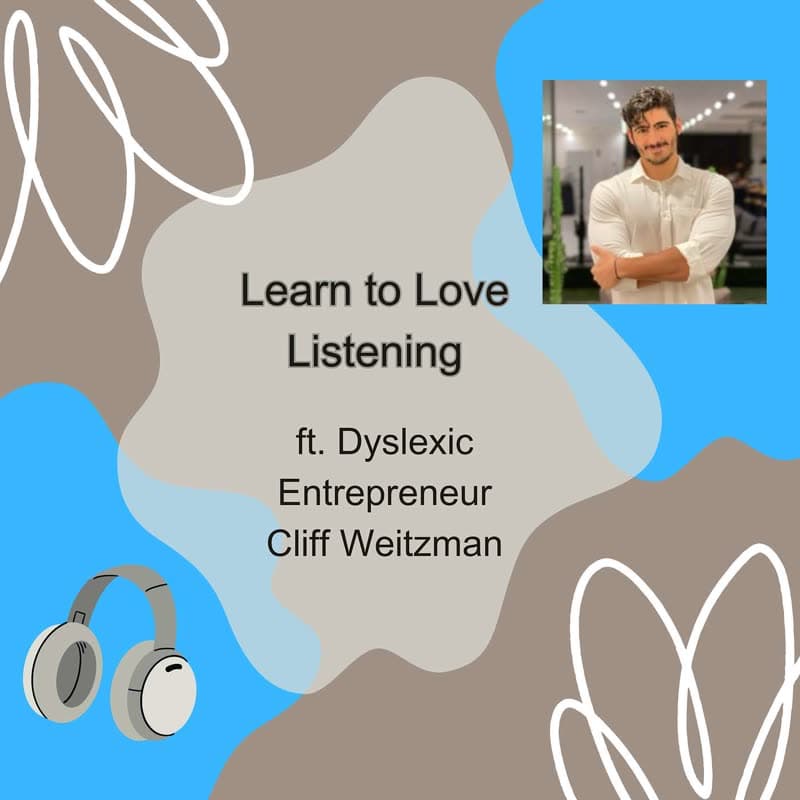
Learn to Love Listening ft. Cliff Weitzman, Dyslexic Founder and CEO of Speechify
In this installment of our Dyslexic Voices series, Cliff Weitzman, founder and CEO of Speechify (https://speechify.com/), tells us about his experiences growing up dyslexic, and shares his advice for how to succeed as a dyslexic child and adult.

Make Real Progress on Big Goals For Your Dyslexic Kid!
We all have goals for our dyslexic kids, but they often seem overwhelming and out of reach. In this episode we provide specific, practical tips for organizing the goals into smaller chunks and making daily progress.

The Attacks On Your Kids’ Rights to a Free Appropriate Public Education ft. Attorney Laura Heneghan
With all the changes in the US recently, it’s hard to keep track of all the implications. In this episode we dig into the changes at the Department of Education, executive orders, lawsuits, and more in order to understand how these changes could directly affect your kids!
Never miss an episode
New episodes every two weeks. Follow wherever you listen.