

How to Balance Long-Term Goals vs. Short-Term Struggles!
About this episode
As parents and caregivers of dyslexic kids, it’s important to try to set bigger-picture and longer-term goals to make progress in moving towards better skills, as well as more independence and self-advocacy. Otherwise, it’s easy to get lost in the busyness of everyday life. However, it can sometimes feel like something pressing is cropping up to deal with in the moment–on a weekly, or even a daily–that is more urgent. How can we resolve this tension?
Transcript
Full transcript · 4,531 words · about 23 min to read. Press a timestamp to jump to that moment.
How can we help our dyslexic kids achieve skill mastery and other longer-term goals while also dealing with challenges that crop up on a daily or weekly basis? That's the subject of today's episode.
It got me diagnosed when I was in third grade, and it was the most relieving day of my life because I finally had, like, kind of a place to hang my hat and say, see, I told you, I'm not lazy, definitely not stupid. I just learned differently, like, that's totally okay. Be dyslexics, we were often, you know, just set up for failure because, you know, we were given books and tasks that really are not appropriate for the level that we were at.
So, how do you expect anyone to be open to learning when their entire relationship with reading, with learning, is physical pain? Wish I had understood when I was younger that the fact that my brain worked differently than people meant that I would be good at things in ways that other kids were not going to be good at. I must assume, I can't be dyslexic because letters don't jump up and down for me.
Dyslexia is not a disorder. It is not a disease. Once you sort of own it and embrace it, then you can have the power to deal with it. It's sort of empowering and also enriching to the whole community. To those who don't understand what dyslexia is, that it's not a negative, it's not a problem, it's, like we keep saying, superpower. Hey everyone, we're Nick and Sonja and this is Dyslexia Journey. And today we want to talk about something for you parents and caregivers out there of dyslexic kids that's really important to consider and try to deal with in a very conscious way.
I think it's helpful overall when trying to think about these kinds of things to approach it with intention and consciousness of what's going on in our lives and in our kids' lives and how we're interacting and how daily and weekly and monthly and beyond is happening. So as parents and caregivers of dyslexic kids, it's important to set bigger picture and longer term goals to make progress in moving towards better skills, as well as things like more independence and self-advocacy.
Otherwise, it's really easy to get lost in that busyness of everyday life. However, it can sometimes feel like something pressing is cropping up to deal with in the moment and it feels like it can be even like on a weekly or even a daily basis that something's happening and that can feel more urgent than those longer term goals. So how can we resolve this tension, this tension of these bigger goals we're trying to make progress on and be mindful of and aware of and keep going, but also that there's just other things that happen that need our attention and need to take priority.
Yeah, I'm just sort of getting through the week of school versus focusing on the longer term goals. Right. And so to look at this, we're going to first talk about just to ground this, like what are some examples of these longer term goals? Then we're going to talk about some of the things that crop up and how just that looks, even though that's really endless, but just in order to, you know, ground it a bit and also give you some ideas of what we're talking about.
And then we're going to talk about some tips for what to do about this, how to resolve this tension. Yeah. So when we're talking about longer term goals for our dyslexic kids, some examples are, there's sort of three categories. there's skills based, so we want our children to be able to read independently or if they are never able to master the reading independently, then this goes into the next goal, which is sort of an independence goal.
We want them to learn how to use audio books and that kind of thing to be able to get the content in without, as parents, without us needing to read everything to them, for example. Right, right. And then a third example, and of course, there can be more examples for longer term goals, is self-advocacy. So being able to talk to their teachers, realizing also just when they need help and when to reach out.
So those are just three examples, skills, independence, and self-advocacy. But I do want to mention also that this is going to look, you know, this is of course also still going to look different with each kid, even what those longer term goals are, because of things like their personality, how their dyslexia presents. Even things like extracurriculars and how involved they are in those, like all of that and like how that balances for that kid or what skills or things they more need to work on versus what comes more naturally to them.
All of that's going to interplay on what the exact longer term goals will be, of course, that you come up with for your own kid. Right. I mean, for example, one dyslexic kid might be just naturally good at time management and organization. And so so that's not as important a long term goal to work on because they already have it, whereas a different dyslexic kid might need a lot of help with that kind of executive functioning kind of skill.
Right. And let's say so. Yeah. So let's say there's another challenge, like perhaps a kid also is an ADHD or they have something else totally else, like a health condition or migraines or something. Then that interplay of how the longer term goal is, both in terms of like maybe where those set points are of when you want to achieve the goal, but also just in terms of what it actually is might vary.
Because, you know, like if there's a because they may need to be advocating for that as well. They may need to be learning to balance their life, you know, to take care of their health. So there can be all kinds of different ways that it looks different for everybody. So hopefully that just gives you some examples. We don't need to spend too long there, but some examples of, you know, those kinds of longer term goals.
So they're really broad, right? Like really broad, big picture goals, like get hugely better at this, achieve mastery of this. Like they're very, very big. Right. But so important. Yeah. And in general, those, what we're talking about with these longer term goals are the kind of, I mean, I know we listed independence as sort of one of the three, but it really is enabling them to be a sort of self-functioning adult at some point.
Right. Right. Right. Right. Exactly. And so let me next move to some examples of things that these things that might keep cropping up. The possibilities, unfortunately, are endless. So these are just some examples. And hopefully this isn't demoralizing to list so many. The reason we're going to list a bunch of them is simply because, you know, we want to give you an idea of recognize. Sometimes we don't recognize what those things are that are actually like interacting or interfering, you know, with the longer term goals.
And so it's helpful sometimes to see a lot of different ways it can look in order to recognize that. And then once you recognize it, you can deal with it. OK, so some examples are teacher issues. So it could be that there's a new teacher. There could be a sub. There could be a particular teacher who who isn't sort of allowing or remembering accommodations. Another example is a particular homework or project crops up.
So it could be very in the moment just for that particular week, but it's really big. And so then it's it's it just takes so much time. Another one is your kid gets sick or maybe you do. And so that can influence how everything goes in progress towards bigger goals, too. Right. Another one is sort of just getting behind on work in general, for whatever reason that that has sometimes that just slowly creeps over time that that they get behind on work.
Or it could be because of having been sick. So some more things that can crop up that take short term attention or take attention in the short term and take away attention from the long term goals are things like extracurricular activities. So if it's a particular sports season, if if there is or if your child is in dance or theater, if there's a show coming up or music, if there's a concert coming up, those kind of things as your child's life gets busier, then that can detract from any longer term efforts.
Also, obviously, social issues can be can take time and attention sometimes for positive ways. If they have a new friend or if they're beginning to socialize more or in negative ways, if there's bullying or any kind of fringe drama could also detract from from attention for longer term goals. Right. And then another thing would be just simply other appointments. Right. Sometimes there's a lot of other appointments that need to be had because of some of those things I was talking about, that there might be other things going on, you know, whether whether with other learning differences or medically or for any other reason that can take a lot of time.
And especially right, like at the beginning, because often there's this huge evaluation that happens for whatever whatever the particular thing is. So whether it's starting therapy, whether it's getting a full evaluation about something, some of those can be really long and like and big and like take more effort, like the whole family might come in first or, you know, all kinds of things like that. And then, of course, just things like stress or overwhelm or burnout, like those sort of we don't always know either when they're going to happen.
Right. Just suddenly there's a period and maybe for some particular reason in the family, there's more stress. Maybe it's just the time of the year that your kid always gets burnt out or just they happen to get burned out at particular times or overwhelmed. And so any of that can crop up, too. And as I said before, there's like endless possibilities, but hopefully it gives you some idea of some of the ways it can look and how there just really is a lot that happens like that.
Right. I think as we all know. Yeah. And to emphasize the the things that come up, stress and stuff could be centered around your kid. It could be for you as well. I mean, maybe it's a particularly stressful time for you with work or life or whatever. And then you don't have as much attention. You feel like you're just sort of living day to day and just getting through every day and you don't have enough attention to focus on the longer term goals as well.
Right. And as we talked about briefly, too, just to emphasize that again, they're not always negative necessarily. Right. Like some of those things like an extracurricular or a show coming up or something can be things that are positive, but they just take more attention. OK, so why is it important to balance both of these, the longer term goals and what's cropping up on a shorter term basis? So I think the number one point that, you know, when we really sit and think about this and acknowledge what's true is that the longer term goals can always be pushed back temporarily.
Right. That was air quotes for those of you listening to the podcast until that becomes forever. So it's if there isn't enough really trying to pull those through, I mean, just with the pace of life or with things cropping up, it can be that those are shunted aside forever. And it's not it doesn't end up just being temporary. Yeah. And it's it's human nature to give less importance to goals that are further out time wise.
And that that happens in all aspects of our lives. And so we have to fight against that tendency, like we tend to give more importance to things that feel more urgent. And we really need to be careful to think of the sort of urgency of something as independent from its importance. And to remember that the longer term goals are, in most cases, actually more important than the short term emergencies that you might be dealing with.
And as Nick said, you know, usually our tendency is to just go for what's urgent. But I think sometimes, you know, when we are so aware and conscious of of our dyslexic kids path and progress, we it's also possible to get really, really intense on that and to, you know, try to keep pushing it, even if it's not necessarily appropriate in the moment for what's happening on a short term basis. So that's the flip side of that, I think, for this, for the for dealing with the short term things that happen.
Yeah. And then attending to the present moment is always key. That's where you're providing the actual support. That's when you're taking in what's happening and how your child feels and what they need. And you're taking all that seriously and into account. And so that is really when your relationship with them is happening and when it's all coming, it's all happening is really in that moment. And so and not to mention, as just sort of a side note, that you're only human.
Right. And so when things are cropping up, I mean, we have to deal with them like we have to deal with stress. We have to deal with all of that. So so those are like the the sort of essentials, I guess, to each piece of this. And now we'll talk about how we can some tips, I guess, for how we can reconcile this. So I'm just going to start with the one we just said recently, which is that we have to acknowledge that we're only human and we're not going to be perfect.
Right. I mean, we have to start there. And it doesn't mean, of course, that we can't still have intentionality. But like just knowing ahead of time that there's going to be things that could push back and that, you know, we're human and that things are going to happen helps a bit, I think, with just knowing that that will happen. And that's, you know, trying to keep perspective on that, that that's not the end of the world.
Yeah. So I think be flexible is is kind of the prescriptive advice there, but including with yourself. Right. That you're that you're not it's going to look different, even though you're going to be intentional, it'll still look different in some way because that's just how it is. So then the second tip is to really, you know, take to heart what we're saying about acknowledging that both are important, the longer term goals and the shorter term things that are cropping up, but that you're going to try to prioritize when you really have to drop the progress towards the longer goals at any given time.
So you're going to try to prioritize how much of an emergency is it or how much stress would it cause to proceed? So it's kind of like triaging. So the third tip is to not treat this as as all or nothing. So even if there's a lot going on in the short term that you have to deal with, can is there a way that you can keep some aspect of the long term goal going?
So maybe you have to drop some extra third party tutoring, but you keep up the practice at home on reading or vice versa. Maybe you drop the practice at home, but keep up the third party tutoring. Right. And or or another way to think about this is, is there if you're feeling really busy, is there a way that you can sort of make make progress toward the long term goal? Just like a tiny bit of progress every day, because that keeps it going sort of mentally, psychologically in you.
So even if it's just five minutes a day, is there something that you can do toward that longer term goal? Right. But then tip four is sort of on the other hand, it can be perfectly valid and important to consider, you know, let's say it's it is illness or it's something that's just particularly stressful to consciously decide that it's okay to really take, you know, a break from everything for a certain amount of time.
So the key here is to be really conscious of for how long you're intending this to happen and like when you're planning on restarting, maybe even put that in the calendar. So it's like really, really concrete. And, you know, if you needed to reevaluate at that point and say, no, we need a little longer, that's fine. Then you just move that back. But making it concrete. And so in deciding, yes, we're doing a huge, great kind of thing or we're only focusing on what's going on right now.
But here's how we're keeping the longer term goal going is that we are deciding this is when we're restarting it. Yeah, make it super intentional, almost almost like if you were going on a family vacation, you would say, OK, we're going to be on vacation for the next week. And then when we return, we're going to pick this back up again. Not that an illness is like a vacation, but you can still be intentional about it.
OK, so our next point is to try to reduce the stress of actually being intentional and conscious like this. So another way to do to talk about this is something I've heard of called not squeezing the cactus. Right. Like you might be touching the spine, but don't squeeze. So the idea here would be to let's say you're doing that triaging, you're doing that deciding, see if you can do. Of course, we're going to feel stress, but see if that piece of it you can keep as calm and straightforward as possible.
You're just doing the scheduling where you're pushing it out. You're just doing the decision making about that. Trying not to bring in catastrophizing, for example. Right. Or thinking like, oh, no, well, they're going to get totally off track. See if you can not let your mind go there, which can be which is separate right from, you know, if there's an actual stressful event going on, feeling the stress of that and, you know, and we'll talk about in another tip what to do about that.
But seeing if you cannot add like your mind going wild with with like what's happening and that it's going to be disaster or something like that is an example of not squeezing the cactus. So so see if you can. And, you know, I think if you do this more and more as a practice where you're deciding and triaging and and, you know, putting things on the calendar in a different way or, you know, whatever you're doing, if it is more of a practice, then I think it's you'll also be less likely to do that because you'll just take that as sort of a to do list type item that you do.
Oh, you know, kind of all the time. It's just sometimes there's something more intense going on than another time. So then the next tip is simply to keep doing your stress reducing techniques always. Right. So like they're really most important when there is something going on or things are feeling more hectic. And I think the key here is just to remember, it can just be like a short amount of time. It can be five minutes of deep breathing or, you know, it can be of taking a moment and getting in the present moment.
So that can help, I think, with it feeling paradoxical that just at the time when everything is taking more time, that's when you're supposed to be doing more stress relieving activities. Yeah, definitely. So our next point, we're not going to dig into this one too much. Maybe we'll do a separate episode just on this topic, just on this point at some point. But just to mention it briefly, when you're thinking about longer term goals, they can seem really overwhelming.
So it's like I want my child to be completely independent. Right. And and, you know, what does that mean? And so it really can help to approach this kind of methodically and drill down. OK, so so what does that mean? So I want them to be able to advocate for themselves, for example. That's that's like a particular goal we're going to work on. And so what let's break that down. So right now, say they're in second grade and and as a parent, you know, you are talking to the teachers on their behalf about everything related to dyslexia.
And so you can you can break down some some small goals for for each age. And so maybe maybe they can start being the ones to remind their teacher that they're not supposed to read aloud or or, you know, there are myriad ways that you can break long term goals into shorter term concrete steps. Right. And and then also what that allows you to do is rather than just having the goal for the whole year for the kid or something, is that you have sort of sooner steps that happen, which may sound like that would be more tricky for, you know, if something crops up, oh, you didn't get the step done for the week or the month or whatever.
But actually, I think that's where it provides that concrete help when you're saying, OK, but I'm just moving this this goal. Right. That helps your mind not go towards like the whole year is getting off track because you can see like, OK. And then it helps you like also plant that somewhere in the future. Like, oh, this specific thing is what needs to happen still somewhere that I'm putting it down down the line and just resetting the exact timeline for it.
OK, then our final tip for how to resolve this tension between longer term goals and things that are cropping up in the moment or on a daily or weekly basis is to see if you can use any of these things that are cropping up as an opportunity. You know, something unexpected is cropping up. So it's not part of this bigger plan and all this planning we've been talking about, but can you use some piece of it just to work towards someone in a small way towards one of the bigger goals?
For example, you know, if something cropped up that is with a teacher, maybe that you do take that opportunity to have your kid speak to speak to the teacher, you know, themselves as part of it. And of course, it depends how stressful the given it's going to depend on the situation exactly. Right. Like how stressful it is for the kid. If it's too if it's a hugely stressful thing, you know, you don't force them to do it, but maybe they can do it or they can do a piece of it or maybe they can do a little bit and you're there sort of to support them.
But they're sort of the one talking first. That's how that could look. Or maybe it's even something like, you know, they're not in the same category. Like maybe it's that there's a lot more project happening, a big project happening that week. And but then that can be the opportunity to talk to the teacher about it. Right. So so then you're getting that that self those steps towards the self-advocacy right in the moment with what's cropping up, even though you're dealing with this big project.
Right. So see if you can sort of flexibly think about, like, is there a small step within any of what's going on? You know, keeping in mind, this isn't going to always be true. Some stressful situations, this won't be true at all. But is there a way, you know, is there something that you could do and sort of use the situation as an opportunity also to be working in some way on the longer term goals?
Or, for example, it could be that, you know, your kid needs some more time management skills. And so this big project cropping up, you know, in the context of what's happening feels only like, oh, it's taking up time. And how do we manage this with the longer term skills around dyslexic reading skills, for example? But you could take the opportunity to work with them a bit on how they can understand doing their time management for the week just about this particular project, even if some of those other dyslexic reading skills are being set aside for the week because of the project.
Or it could be an opportunity for them to sort of like decide, oh, this is this I'm realizing how much I can actually handle this week. This is where I'm going to realize what I need in this situation and reach out and either ask for more help or more time or something like that. So it can look all of those ways, I think, just lots of different ways that it can look for how you might be able to flexibly insert some of these some steps towards a longer term goal, whether it's the one you thought you were going to do for the week or not, into whatever's happening with a particular situation that's coming up.
All right. So those are our thoughts on this topic of balancing long term goals with the short term, the short term struggles. And so we'd love to hear your experiences, your thoughts, your comments. You can email us at parenting Dyslexia Journey at gmail dot com. And if you're watching this on YouTube, you can leave a comment. If you're listening to the podcast, you can. There's a little button, a little link there to send us a text message.
So there are many ways to to contact us and we would love to hear from you. Thanks, everyone.
More from the show
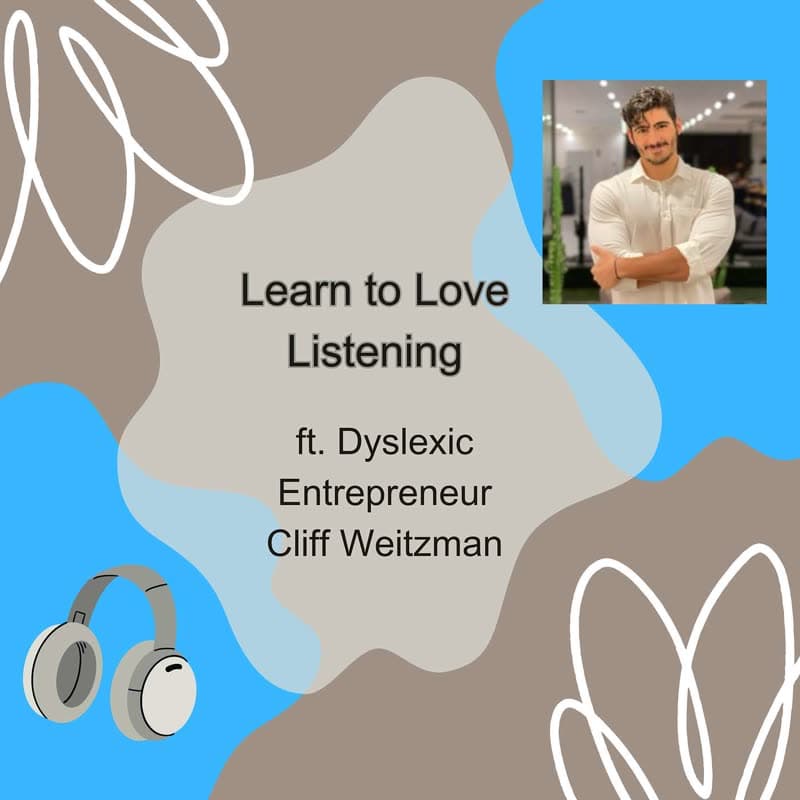
Learn to Love Listening ft. Cliff Weitzman, Dyslexic Founder and CEO of Speechify
In this installment of our Dyslexic Voices series, Cliff Weitzman, founder and CEO of Speechify (https://speechify.com/), tells us about his experiences growing up dyslexic, and shares his advice for how to succeed as a dyslexic child and adult.

Make Real Progress on Big Goals For Your Dyslexic Kid!
We all have goals for our dyslexic kids, but they often seem overwhelming and out of reach. In this episode we provide specific, practical tips for organizing the goals into smaller chunks and making daily progress.

The Attacks On Your Kids’ Rights to a Free Appropriate Public Education ft. Attorney Laura Heneghan
With all the changes in the US recently, it’s hard to keep track of all the implications. In this episode we dig into the changes at the Department of Education, executive orders, lawsuits, and more in order to understand how these changes could directly affect your kids!
Never miss an episode
New episodes every two weeks. Follow wherever you listen.