
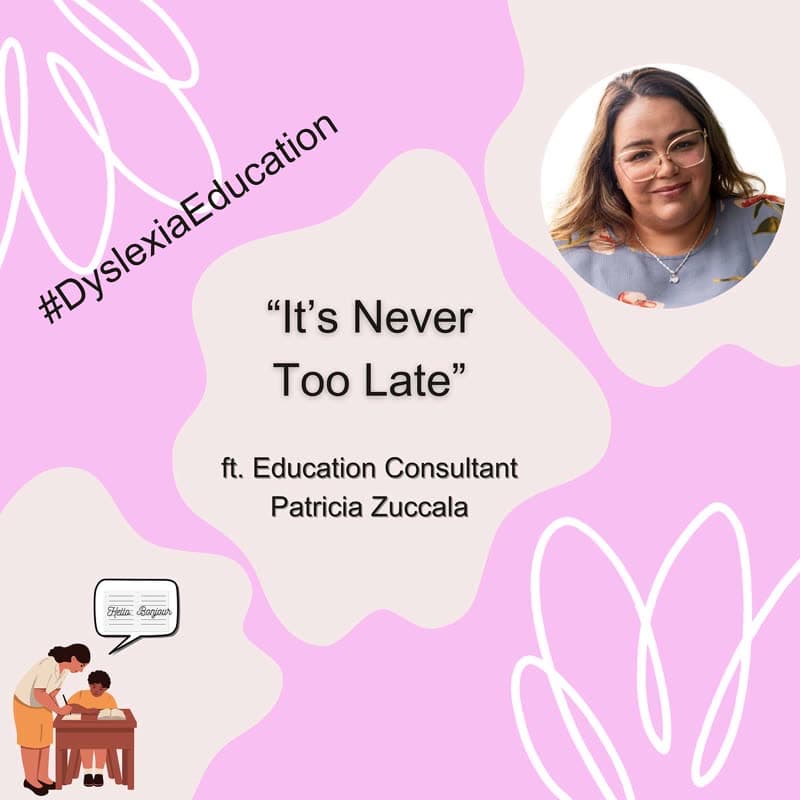
How to Make a Difference With Dyslexic Kids Ft. Patricia Zuccala, Educational Consultant
About this episode
#dyslexia #dyslexic #neurodiversity #learningdifferences
Located in Montreal, Patricia is our first guest from a bilingual area! We were excited to discuss her techniques for helping children with dyslexia in both French and English!
You can find Patricia online at:
https://pzeducationalconsulting.ca/
Or email her at:
patriciazuccala@pzeducationalconsulting.ca
Transcript
Full transcript · 9,250 words · about 46 min to read. Press a timestamp to jump to that moment.
I want them to be able to go in and say, hey, no, I could do this. I could do this assignment really, really well, but I need my tool to be able to have the same access as everybody else. And what drives me nuts is, you know, the, oh, it's like cheating. Oh, you know, you're giving them a computer. It's not fair. I don't get to use a computer. And I always point it out to my glasses, right? And I say, great. Yeah. So I'm going to walk into this classroom today and you're going to take me of my glasses. You're going to sit me.
There's only a seat in the back of the classroom and you're going to, you're going to expect me to perform the exact same work when I can't see the board. Is, is this cheating? Is putting on my glasses cheating for me? Well, no, it's not cheating. No, it's a tool that I need to have access to the same information as everybody else in this space, right?
Hello, everyone. We are Sonja and Nick, and this is Dyslexia Journey. And today we are excited to welcome Patricia Zucala. She is an educational consultant specializing in language remediation, and she is located in Montreal in Canada. Welcome, Patricia. Thank you so much for having me. I'm so excited to be here with you both. Great. We're excited to have you. So to start with, could you just tell us a little more about your background and, you know, then how you became interested in learning differences?
For sure. So, really my background, I think is quite different than what most educators, more classroom educators would be. I ended up after, my high school and my, my college going the pathway of psychology. And I think that that was a really pivotal point in my career because it, in a, in a big way, it got me interested in how people are different and how we behave differently under similar or the same conditions.
and because of that, you know, I, I ended up working in psychology. I got hired in a, very specialized learning clinic that worked with students with dyslexia. and from there, I ended up working in various schools. I worked in a consulting, space for, 17 schools, but for a nonprofit organization. and then I went back to school into a school rather to work as a director in a school. and it became really apparent that I had nobody to recommend, that could remediate the language difference.
Even, even at my very own school. so it, it got me thinking that maybe there's a very different way of handling this. And maybe that I have the tools and expertise and the knowledge that really we need as a greater society to fix this literacy crisis across all schools. So that's really what got me started. in terms of what got me started, what got me interested in learning differences. It's, I have a very particular, I've had, I've been asked this question before, whether it's in an essay or, or presentation.
And it's always this memory that comes back to me. When I was in grade four, I actually changed schools in grade three. my parents moved me to quite a different neighborhood, whole new batch of kids. but I was always kind of the good student, right? Literacy always came very easily, easy to me. and I was the new kid. I was in grade four. So one year into this new school, with my grade four teacher that I love to this day, I still remember her very fondly.
there was a boy in my classroom who couldn't manage to read his French book. So we were in an Anglophone school. We're in a bilingual province. Of course, we'll talk about that later. I'm sure. but he couldn't quite read his French book. He was lacking the language. He was lacking the understanding of the code to be able to read these very simple books. they were drama books. I'll always remember them. And the teacher asked me, you know, like twice a week after school, would you sit down with him after school and help him read these books?
And I, you know, sounded pretty simple enough to me. I said, okay, he lives around the corner from me. Maybe I could do this. But really what sparked it is I remember, and he was kind of the one that got, he got in trouble a lot in class. He was a bit of the class clown. and clearly because he had some academic difficulties, right? In that one-on-one space together, I started to recognize that he wasn't really interested in these books.
But if I made them funny or if I made them interesting in some other way, I could gain his attention long enough for him to actually get something out of the book. So I really learned my first lesson kind of an engagement and that paying attention to me is the first step. If you're not paying attention to me, forget about it. We're not going to get anywhere, right? So I need to make sure first and foremost that you're listening, you're listening to me and you're engaged, you're tuned in.
and that's really what launched, I think, years later, this, this need to kind of repair people's learning skills. That's so interesting. So how, how, what grade were you in when you were doing that? At that new school? Sorry, what grade? Yeah. How old were you or what grade were you in when you were doing? This was grade four. Grade four. That was grade four. Okay. Yeah, exactly. That's so interesting to have such a foundational experience that early.
Yeah. And I think that, yeah. No, go ahead. I think that it was, you know, I was an only child, so I didn't have a lot of interactions with my, you know, we had other kids around, of course, but I didn't have kind of that negotiation that more like, I need my brother or sister to do something for me or to, to do. So I had to learn that lesson, right? Like I want him to learn.
My teacher has asked him to learn and I need to make that happen. I felt that sense of responsibility and it worked. And I mean, I continued to teach him or read the books with him for the rest of the year. And it was a pivotal moment in my career, I assume. Yeah. I mean, that's such an, such an important insight that I think as adults, we too often forget that, that learning, that learning should be fun and that the best way to engage learners is to make it fun.
And I wonder if you were able to come to that insight easier because you were still a kid at that time yourself, maybe. That's a very good point. You know, maybe if I wouldn't have had that experience so young, maybe I, because what you're saying, I completely, it resonates with me a lot. I, I'm that very silly, fun teacher who will, you know, I have clear expectations. Don't get me wrong. You have to like, listen to me and do, I expect certain behaviors from you.
But fun and silliness are a big part of the teaching. And, and I think that in, in very often, especially when you're dealing with a child who has difficulty in a certain area, making it feel fun and lighthearted is the ticket that they need to buy into what you're selling. Right. Because if it's going to be, if it's going to feel painful, like every classroom feels painful, why am I going to do this again?
This hurts, right? Like it's not fun and it doesn't work usually. So if I, if it's not fun for me, if I'm not bought into what you're selling, then why am I going to even risk myself getting hurt? Yeah. Yeah. A lot of sense. Yeah. So you were just, you started to talk about how you had that moment of insight that maybe you could, you know, be someone who isn't just the director of school, but maybe is more specialized in this way and providing something that was really necessary out there.
Can you tell us a little more about that journey? Like how that came to be then and sort of broadly what, what you provide in that area? For sure. you know, I, I'd been in various kinds of school positions. I, I really started in the clinical kind of therapeutic approach of, I often refer to it as, quote unquote, teaching the unteachable. And I say that because over and over I've been given these students that they say, now this one, this one will never learn.
This one will never learn to read and over and over I say, give me the kid, give me a year, give me two, three hours a week. And you'll see, you won't recognize that child in the next year. I think having been in school systems and working even as a consultant in a nonprofit organization working for schools, there's a lot of red tape and pressure right now in all schools. And I mean, it's a very big reality in our city, but as far as I'm concerned, it's a very big reality.
Science-wide, nationally, and, you know, even between our shared countries. and it became just fighting red tape when really what I wanted to do is improve literacy scores for all students, particularly those who struggle with literacy, right? I had the skills and the knowledge of what I need to do to explicitly teach these kids how to do it. But there's always red tape being met, whether it's budgeting, whether it's, it's, you know, dealing with other super prevalent, important topics in schools like behavior and, and anxiety that students are really, really feeling, which is extremely valid.
But it didn't take away from the fact that I really wanted to be a part of solving the literacy crisis, right? And I wanted to, and, and it became evident that instead of fight fighting all this red tape in school systems, maybe I could really do it myself. I had almost 20 years of, of experience under my belt really to get this started. And I knew that I had never failed teaching a kid how to read.
So it said, you know what, instead of fighting these battles and working a ton of hours in a school system, very often not getting to exercise my passion. What if I remove myself from it and I started offering this service to schools, right? And, and let me fix your literacy crisis, starting with the classroom. Let's, let's teach teachers how to teach phonics in the classroom. And then we'll see that gradually we'll return to the resource room being for that five to 10% of students who really struggle with literacy.
So I decided to do that. And honestly, it's been six months that it's been full time, just my career. And it's really taken off. I have a lot, a lot of connections that I've made over the last two decades. And a lot of trust, I think that's there from parents and educators. And, and here we are. And honestly, I feel very happy and blessed to be able to say that I'm doing this full time now.
It's feels like a dream. That's great. I didn't realize how, how recent it was that you launched your consulting business. Full time. Yes. I launched it a year prior, but I'm still maintaining a full time, you know, and, and then it was, this is what I had to do full time. So we're already growing. I've already hired a one and a half employees. So it's wonderful. Excellent. Yeah.
so I guess, you talked about, I guess one, one key aspect of the way that you work with kids is to make things fun, to make, you know, to be silly, things like that. can you tell us a little bit more about your approach to working, with, well, with dyslexic kids in particular? and, you know, you can take this, several different directions. I mean, one, are there particular kind of, like, like you use Orton-Gillingham, that kind of thing.
and then also just, just like tips and tricks that you've found super effective for dyslexic kids in particular. Mm-hmm for sure. so even bigger, I think than really the, the, the being silly and the giggles, I think that really what that forms is a relationship. And I always say, you know, that the relationship is a very central aspect to language remediation, especially if you're doing it one-on-one. Very often, these are students that over and over and over again have been, like, said, this person will help you.
And then they're given a person, and then sadly, they don't necessarily improve, right? so I think it's just coming in with a very clear, empathetic approach to understanding that this is, this hurts, this is painful. And I always, always start my sessions with a new student building a relationship. So I want to know, what parts of school do you love? Because when you love something, usually we tend to be pretty good at it.
What parts of school do you hate? Because usually when we hate something, it's usually a point of contention. It's a difficult part, right? So having a really understanding, and I see very often students are kind of afraid to tell me, like, I hate reading English, or I hate writing French, right? Because they don't get that space to really articulate that and say, like, I hate this. This is not fun for me.
And I want to make sure they have that space with me. So they're able to say, you know, I absolutely hate this, but I know I need to improve, so I'm going to work on it. So first things first, I think bigger than the jokey and the comedy aspect, which I'm, I think I'm pretty funny personally, but I think it's really a matter of building the relationship. That's foundational. From there, though, I'm always going to do an explicit instruction of phonics, right?
So I'm really teaching the relationships between symbols and the sounds that they make, depending on the context of each word. So we're not studying words. We're studying sounds. There's only 44 phonemes in English. There's 44 relationships between symbols and sounds. Instead of teaching students 400,000 words in English through one year, let's focus on those 44 sounds and think about the excessive language that we're giving a child when we're doing that the right way.
So I'm always going to be teaching those relationships while still maintaining that relationship, right? Another very, very important part. Oh, sorry. Another important part also is the use of anchors. So learning anchors are basically an other way for the child to have access to what that means, that that learning piece means, without it being just random rote memorization, right? So if you're teaching them something, rather than just saying, you know, we put an E at the end of this word, just because it's like that, that's it.
We put an E at the end of this word and we move on. Let's give them anchors. Let's find out why. Let's group simple words that are similar together, right? Like, let's give them another route to that learning besides just random rote memorization. And finally, a really important ingredient to my teaching is that every single child has some sort of visual representation of their learning. And I think that this is really the miss in most schools and in most settings of intervention is, you know, they teach them something and that child in that intervention setting, they're really able to show that they're learning, right?
It's working. And then we send that child back home and perhaps they return to that therapeutic setting a week later, sometimes more, sometimes less. And it seems over and over that people tell me the memory is gone. You know, this child has a memory issue. There's no more. Everything we taught last week is gone. That all of that can be solved by just giving a visual representation of the skills that we learn.
So any phoneme and grapheme association that we're learning, we're putting it on a folder, we're putting it on a paper, and that becomes their encoding and decoding tool in all environments, whether it's with me, in the classroom, or at home. And that is the constant that gets them to generalize their new learning in many different environments as well. So what does that look like? I'm not sure if I totally understand. For sure.
Yeah, I make them a duotang, right? And their first page is kind of like in a plasticized paper. And we have an area with the short vowels. So the short vowels, it starts out blank, my paper. Let's say we learn short vowel ah today, right? We're going to add ah in the short vowel. I'm going to teach them that being a short vowel means you cannot say your name, right? The symbol that looks like A.
Sometimes he says A. Sometimes he says this sound. Sometimes, but really today, we're teaching you that whenever you see this A letter, he says ah, right? Just like an apple. And so we practice, then we're going to practice words like pat and mat and cat and sat and so on. Once I feel that that child has mastered that phoneme, that sound symbol association, we add it to their folder. And then they have learned something that I know next time they return, I will integrate the past learning into what they're learning today.
It's kind of like a reference sheet of all the sounds that they've learned. And what I've noticed is at the beginning, students depend on this very heavily for their spelling and reading, right? But gradually, whether they need 500 repetitions for their brain to recognize or 1,000 over time, they start to need this visual representation less and less. Interesting. And do you ever work also, for that middle piece you were talking about, do you ever work on sort of like word origin kind of things for like kinds of things?
I mean, that probably would be a little bit older, maybe, but I'm curious. Exactly. No, 100%. And so that really, it's funny because I'm kind of, I've been asked from some schools to kind of help them build like my own English curriculum. How I would teach English from the start and morphology, word origin, etymology are huge. And they answer a lot of those questions that students come up with, right? Well, how come?
How come through though thought and tough, all have O-U-G-H, but every single one sounds like a different sound. How come? Well, there's reasons behind that. And so I remember the first time a student asked me why said, S-A-I-D, is pronounced said. And I was like, oh, I don't know. Let's like, let's look it up, right? Maybe, maybe we can find an answer. And then to this day now, I teach that the reason why said is pronounced that way is because it really did used to be pronounced say-ed, like paid.
But over time, with it being such a pop, a word that we said very often, it changed. It morphed for our mouth to be easier to say. So those answers to those questions are super important for children to continue their pathway into etymology and morphology and becoming good readers and spellers. Yeah, and that's always made so much sense to me. But I feel like a lot of people maybe think that's almost like, you know, it could be too much information.
But I think it really is that it gives people a handle on the why and it doesn't just feel random. Exactly. And I think for some people, they won't necessarily need that, right? And it doesn't mean that we need to explicitly teach the etymology and morphology of every word that exists. But if there's a question, if there's a wonderment there, well, let's look into it. Why not? That's how we learn. Right.
Right. Interesting. So beyond all these specifics, which, you know, obviously you're giving them this huge foundation and actually reading. What do you see in terms of because, you know, you've you've talked about that every single student can be successful. You say that, you know, like people say this person can't be and you're like, no, they can. And we definitely agree with you. Are there other factors that you see involved? Like, I don't know how it is in Canada.
Are there a lot of accommodations used in schools? Like what other pieces are mixed in there, too, to make students successful? For sure. So I think we have a lot of kind of the formula in place for success. However, in practicality, we're not really applying them properly in the school. So accommodations are very common here. In fact, you don't need to have a diagnosis to get accommodations. You don't need a diagnosis to have an Individualized Education Program.
But it's hard to say whether all the students, parents and school systems are necessarily using the accommodations the right way. Accommodations are vital for students with dyslexia to be able to see any success. But the foundational skill is to have the language skills to begin with. Right. So once you're taught explicitly, then we want to give them the computer. A lot of frustration that I get from students and parents is, so my child is dyslexic.
We gave them a computer. Right. Now they're in grade four. They still can't read or spell, really. So we gave them a computer and they still can't read or spell because any word that they put in the laptop, it's not being recognized by the word processor. Which is extremely frustrating because then it says, this tool is supposed to solve all my problems. And here I am using said tool and none of my problems are solved.
So primarily we need to remove the tools and really do the work of once they're 70 to 80 percent accurate in their own spelling on paper and pencil, then we can put that writing into a computer and then the word processor will pick it up. At that point, a tool, a computer becomes a crucial tool for success. Of course, we also have the speech to text and the text to speech, which is very important for exam preparation or doing any sort of exams.
And for us here in Canada, we're allowed to use that as long as the aim of the learning is not the reading or the spelling. Right. So if you're in history class, you can use a speech, a text to speech to listen to your text and then use your voice to speak back to the computer.
For subjects that are not specifically related to literacy, reading and writing, that is crucially important. Why should we make a dyslexic student sit there and read through an entire science exam or read through an entire history exam when the assignment here is not reading? The assignment is understanding history. The assignment is understanding chemistry or physics or whatever it is we're studying in science. Right. So definitely having something that can take that pressure of language away from those students.
But even more so, we need to give them extra time. Even more so, I wish we could give more private space. It is an accommodation, whether it's a quiet space, which means you're sharing it with other people, or a personal space, which means it's a one-on-one. I wish we could do that more because dyslexic kids really need that as well. However, the reality is that the real estate in schools, we don't often have the people and the space to necessarily put every child who struggles on their own to complete any sort of assessment.
Yeah, we talked about that recently in one of our episodes about accommodations. Our daughter, who we talk about often on the show, who has dyslexia and is in high school. When she has extra time on exams, she sometimes ends up just like sitting in the hallway, you know, having to take the test with people walking by and coming up and talking to her. And, you know, it's less than ideal, I guess we should say.
A hundred percent. And really, we're giving her something that's supposed to support her, but really to her deficit, right? Because she now has to learn how to manage the distractions better than what they're having to encounter in the classroom. Now, there's one thing I teach my dyslexic students is nothing will ever be easy for you. So get used to handling these difficult scenarios that are completely unfair, but learn to handle them the sooner you are, the more successful you'll be right now, right?
Yeah. That makes sense. Yeah, that leads right naturally into our next question, actually, which is about the self-educacy piece, which it sounds like you, in the course of your work with students, do try to also help them learn. It sounds like. A hundred percent. And I think really my goal with a child, when I meet a child and I can tell that the deficit is severe enough that I'll be working with them probably for a couple of years, right?
Especially in a space where we do English and French. It's like the double whammy for these four students. I always want them to recognize that right now I will be there to fight your battles. I will go and speak to administration about you getting a reader and a scribe for that. I will go make sure you have a computer. I will speak to your teachers. I will speak to your parents. But guess what?
I'm not always going to be there to be the one to say that. And something I work really, really hard with my students is having not only a sense of understanding of their dyslexia, but a sense of pride about their dyslexia. Because there's so much great that comes with dyslexia as well. And I think that it comes in this shameful sort of feeling because we spend our entire days in a school setting where they're evaluating the one thing I'm not good at, right?
Like every day I'm being monitored based on my reading and my writing. And so I want them to be able to go in and say, hey, no, I could do this. I could do this assignment really, really well. But I need my tool to be able to have the same access as everybody else. And what drives me nuts is, you know, the, oh, it's like cheating. Oh, you know, you're giving them a computer.
It's not fair. I don't get to use a computer. And I always point it out to my glasses, right? And I say, great. Yeah. So I'm going to walk into this classroom today and you're going to take me of my glasses. You're going to sit me. There's only a seat in the back of the classroom. And you're going to expect me to perform the exact same work when I can't see the board.
Is this cheating? Is putting on my glasses cheating for me? Well, no, it's not cheating. No, it's a tool that I need to have access to the same information as everybody else in this space, right? My glasses are this child's computer. So I want them to confidently be able to go into a space, speak to a professor when they're in university, speak to a resource department when they're in college and be able to say, hey, I have dyslexia.
This is what I need to be successful, you know? And what we really see is when you have the confidence to say that and speak up, you get what you need, right? So this shamed feeling of like, I don't want to talk about it. I don't want anybody to know. I completely empathize with that feeling, but I try to coach it out of them because truly, I also think that these dyslexic kids are the future, right?
Like they're the ones that will solve all our problems down the road. So don't be embarrassed about the feeling, about your challenge with reading. Yeah. Let's dig into that a little bit more, the strengths of dyslexia. I mean, that's one thing that we, on Dyslexia Journey, we emphasize a lot, that dyslexia is really, it's a brain difference that affects much more than just reading and writing. And many of those effects, you know, and I hate to put sort of, you know, ascribe sort of positivity and negativity to things, but many of those, of those effects are, quote, positive.
A hundred percent. So can you tell us some of the sort of strengths that you've observed among dyslexic kids? There's like too many to name, right? Like I've, as somebody who's worked with students with dyslexia so long, I'm like the person who says, I wish I was dyslexic, right? Because I see the value and, and, and very often it's so implicit that it's hard to even see, but having worked with hundreds and hundreds of students with dyslexia and especially the ones with the most severe kind of language challenges, right?
I've seen that the biggest, biggest, besides the obvious, we see a lot, the creativity, the drawing, the painting, like I would have the most beautiful pieces of artwork in my offices everywhere because these students would bring me their own art pieces. And I would blown away. Like these people will become artists, as well as, you know, related to science or related to history or just little areas where it's understanding, where it's logic that leads to your learning.
There's a mate. I mean, some of the best professionals in the world are dyslexic, right? They, they work in some huge capacity being a CEO, which really, really the across the board that I see all the time is this unbelievable. So creative, problem solving, problem solving, divergent, excuse me, thinking ability for these students that very often you, you sit there and you're like, what, this doesn't even make sense. And you realize that they're thinking at a level so much bigger than you that you're not even realizing.
And I'll give you a perfect little kind of anecdote to that story. I remember years ago, this was probably 15 years ago. I had a student, who was, who was coming to see us. They were unsure. Basically, he had a really hard time with reading. He was able to read. He was able to decode, but he wasn't grasping enough from it. And so they, they didn't really know what to do. They asked me to do some investigation, figure out where this child really is.
and so to give, it was in grade six. I gave him a short story reading that was kind of made to be a decodable. So it had less, unknown, phoneme grapheme associations and it was about Pandora's box, right? It was a short story reiterating Pandora's box. So of course, you know, and you'll forgive me. I don't know, remember all the details, but the idea was that, you know, all of these things were in the box and Pandora was not to open this box.
And really it was her curiosity. And when she opened the box that released all of these things and it was her curiosity that released them. Well, we re I read him this whole story and I slowly and making sure that the language is processed and I get to the end and I have a few comprehension questions according to my book that I need to ask him. And so the first question is, did these things exist before Pandora opened the box to which the answer in front of me is very clearly no, right?
Pandora opened the box and released them into the world. It was all her fault. And the child looks at me and goes, yes. And I say, oh no, maybe there's a lot more deeper language processing challenges, but I've learned a very good lesson in my career and it's to always stop. And before you even like change the look on your face is you stop and you ask why, why, why do you say, yes, these things existed before.
And he looked at me and he said, well, I mean, they were in the box in the first place. How would we have put them in the box and close the box for her to open it if they didn't exist in the first place? Someone had to put them in the box. And I remember being stunned and looking at him and saying, ah, you're right. This book is wrong. You, you're right.
Like, I cannot argue with this kind of a, of, of a thinking. And that's the thinking that we often like, we not being dyslexic, we restrict our thinking into boxes very often. Like, of course, you know, but for him, he saw it in a much bigger picture and that's something that we can't teach to anybody. And this is something that the world needs, as we continue to grow is that creative, bigger picture thinking that can support them.
Yeah. That's a great example. Yeah. Interesting to hear. yeah, I'd love to even delve into that more, but I'm going to switch gears just because it's so unusual for us to have someone coming from a bilingual place, you know? And so I'd, you would love to just hear about like differences you see, like, does it seem like there's a difference in prevalence? I mean, I, you know, in terms of let's just neurobiology, there wouldn't be, but in terms of maybe how it presents, that could be the case or other differences and, and how to remediate or just what all of it, I guess.
Yeah. It's a very interesting and a very big challenge in this province to say the least. So imagine in any place where, you know, being dyslexic in a place where we only learn one language is hard enough. Imagine right from the beginning, I mean, right from kindergarten, whether you speak English or French at home, you're learning both in this province, right? So having a dyslexic mind being kind of encounter, encountering two similar yet different languages.
So in terms of prevalence, they're very similar. So if we're looking at only English or only French there, the comparisons are pretty straightforward. We do say that English is a deeper language than French, meaning that there's actually way more spelling and reading patterns in English, not way more, but significantly enough more in English than there are in French, especially in reading. Reading in French is supposed to be a little easier than it is in English.
I've never seen a child that said that, but anyways, that that's supposed to be. However, the difficulty with French is writing it because then there's a lot of similar sounds that are represented by strings of different kinds of graphemes, different kinds of. So in terms of looking at like if I'm working with a French child who spoke in French at home since the very beginning and they're now learning French at school compared to an English child in an English school, no differences.
I would say it's the same and I use the same strategies. I use my visuals. I use my anchors. I use my explicit instruction, but I use my fun, my connection, right? Here's where the difference happens. We're not, it's not consecutive, right? It's concurrent. So now you're asking these children to be put in an environment where they have to read two languages and spell two languages that in some cases have graphemes that are exact same, right?
And in some cases have letters that are graphemes and phonemes that are completely different, right? Like S-H in English makes shh. Well, in French, C-H makes shh, right? And to make matters worse, we're not explicitly teaching these rules in the classroom. So we're just expecting them to figure it all out very often, right? That S-H makes shh in English and C-H in French. So when you're asking a student who has difficulty encoding this code in their brain without explicitly teaching them, you're giving them a much more, a much bigger reason to despair, a much bigger reason to say, I just can't do this.
Like there's double the code that I need to learn. So really what we need to do is make sure that both in English and in French, we're changing it at the tier one level, which is the classroom level, and we're teaching the sound and symbol associations. Then there will be so many of those dyslexic kids that at least start with an idea of learning the code instead of starting with a simple frustration that not only do I have to do the one thing that I'm not really good at all day, but I have to do it in two different codes that I cannot do all day.
There's no rhyme or reason to it for them. And that's what I provide. I provide them an explanation as to why symbols say one thing in another and they say something else in another. It's the concurrency that's very hard for these students. That's interesting. A few different thoughts floating around in my head here. One question is, do you know if there are any differences, for example, if someone is a native French speaker and say they're growing up in France where they don't have to learn English as early, is dyslexia identified as early in that setting, do you think, as someone who, say, in the U.S. or in a different province of Canada where maybe they don't have to learn French as early, where they are a native English speaker and doing only English in school?
It's an interesting question. I have a bunch of studies and research bouncing around in my head that don't necessarily fully answer it. But what I will say is that when you grow up in a bilingual environment where more than one language is present and prevalent, like more than one language is around you at all times, there's a lot of advantages to the brain, really. First of all, a student that grows up in a bilingual area will have the notion or understanding that more than one language exists much earlier.
So there's research that shows that if you ask a child in Montreal, for example, you know, like which language do we speak? At four or five years old, they'll be able to say English and French. Like there's two languages or one or the other, but here we speak both. Whereas if you take that same grade and, you know, match them, that child in an English environment, they very often won't even realize they're speaking English because nobody ever sat there and said, oh, we speak in English, but other people speak in other languages, right?
So that alone, there's also, I believe the research and correct me if I'm wrong, but based on my, I believe the research is between seven and nine years old, the brain begins to really prune all the language connections that we are not using, right? So we, our brain becomes, we're born with open brains, ready to learn and be exposed to any sounds or, or things, you know, that our brain needs to soak up for us to be able to communicate.
As we get older, our brain begins to prune. We get rid of these connections because I don't speak this language. I don't need to know how to make this sound. It's a, it's a, it's a language that I'll never be interacting with. If you're not, and that's actually a good reason why we have accents. So if we learn a language later in life, when we've already pruned all those connections in our brain, it becomes a lot harder for us to be able to reproduce those sounds.
So the exposure to it early is really important because it's opening up our brain to even receive this information in the first place. So if I completely remove you, put you in an English environment completely, only teach you English and then expose you to the French, your brain is going to be lagging in how to soak up another language, depending on your age, right? So in a way, it's amazing to have the exposure to two languages.
But then when it comes down to really reading and writing it, there's more of a delay. We always recommend in science of reading to remediate the first language first, which is always what I recommend as well. We're in a reality here where we can't really always do that, right? Like, yes, I will go in and remediate the first language first, but quick behind it. I need to do the other one, whatever it is.
I don't have a choice. Your child legally has to be in both languages at school. So it's what we have to do. Yeah. And in the U.S., I think there's a lot of native Spanish speakers who in school, I don't know that they get the Spanish remediated. They almost certainly get the English remediated first, which is probably more challenging for them. Yeah, exactly. Because it's a second language, right? So same thing here when I have, for example, a child who's severely dyslexic, a child who has severe challenges with their ability to read and spell.
And if they're not born here, if they didn't have a parent who went to an English school in Montreal, they're forced to go to French school themselves. But if their entire family is English, now we're asking a dyslexic child who's unable to go to an English speaking school without applying for accommodations and changes from the ministry. And you're asking them to work in a language that's not their own. Those are the children that are going to suffer the most because I can't fix the language I don't know.
How am I going to start this? Right? That's a big challenge here for sure. Yeah. Yeah. But one other thought is I've had a theory. So the two most popular foreign languages to learn in the U.S. are Spanish and French. And I've had a theory that, or I guess we've had a theory that perhaps for an English speaker who is dyslexic, a native English speaker who is dyslexic, Spanish might be, easier to learn than French because it's such, Spanish is such a phonetic language.
Yeah. And French, while consistent, is very difficult to spell, as you mentioned. Yeah, exactly. Does that, do you agree with that? Or do you think that that is? So I don't know enough about Spanish to really confidently say whether it's like a more shallow or to me, I speak some Spanish. I'm like a language person and it feels very phonetic for me. However, once again, we have strings of letters that make new sounds that they don't make in another language.
But what I will say, which is very interesting to bring to your point, from my understanding and from some of the research and readings that I've done, there are places such as Japan, for example, where dyslexia is almost non-existent because Japanese is a very, very highly decodable and encodable language where there's just series of consonant and vowels. And the vowels are very consistent in terms of the sounds that they make. And so it's just repetition of consonant, vowel, consonant, vowel, consonant, vowel over and over and over, which group together to make words and then sentences and so on.
So it is my understanding that in places like Japan, although dyslexia does exist because it's not like, you know, it doesn't mean it can't exist, but it's, it is not prevalent, right? In terms of learning to read and write because of the easier, you know, association between the sounds and symbols, which is very neat to say. So in terms of Spanish, is it possible that that's the case? A little bit possibly, maybe it's easier than English and French, but I wouldn't say that it's easy.
I would say that a Latin based language is probably still difficult. Yeah, that's really interesting. I hadn't heard that about Japanese, but that makes sense when you're saying yes. Yeah. Yeah. There's a few other languages as well. That's pops up in my, you know, I'm surrounded by so many language kind of learners and facts and, and I look into it and it's, it's absolutely valid. it's interesting to know. It's interesting to know how, how we are a product of our environments, right?
Yeah, that's true. That's true. Cause that shows influence between the environment. Exactly. Learning. Yeah. let's see, we just have a few more minutes here. So I'd love to get into some of your, you know, insights and advice and wisdom for different, well, let's start with parents. What advice would you give for parents of dyslexic kids? Ah, the most important, I think the biggest heartbreaker on my side that I see with parents.
And I guess, you know, we say, you know, as you get older, my heart is a little hardened because I've heard this a lot, a lot of times, but it's never too late to stop and remediate the language that your child is lacking. So, and I get parents, you know, who call me in tears in grade six and say, it's too late. I should have done this in grade three. And I just, we didn't have the help and I didn't know.
And nobody, and, and what I always say is that's the problem is that nobody knows, right? It's not your fault. You didn't do anything wrong. You didn't drop the ball. We were in a place where we didn't really know what to do. And we're emerging out of that, right? It's not too late now to stop and do what we need to do to build the success. And I'll bring you back to, I had a student who was in grade six, a couple of years ago, who was assessed to have a grade one reading and writing level.
Okay. And I had to fight everybody around me. Everyone was saying, it's too late. It's too late. She's going to high school. We'll give her a computer. It's too late. And I said, no, stop. Give me this child three hours a week for six months. Just give, like, give, let me do it. And she went from a grade one reading and writing level to a grade four or five reading, writing level, and ended up winning an award for a short story competition.
Like the amount of things that you can unlock, it's not too late. And then went into high school way more prepared than she had been six months before. It's not even too late if you're in high school. It's never too late to stop and do what needs to be done to unlock all of this potential on your child's life. Yeah, that's really inspiring to hear and to have a example, too. Because I think it's true that people do have a sense of it being too late and that shame prevents it from happening.
Yeah. I mean, as the parents of a dyslexic kid, I mean, there's always that, you know, there's always that sense of, like, oh, why didn't we realize this earlier? Like, why did we let her suffer through this year of school when we didn't know what was going on or whatever? And then that interferes, I think, that sense of guilt or whatever interferes with then taking the necessary steps and realizing, okay, like, that's behind us.
Let's do the right thing now. And let's just, yeah. And the layer of that, too, is that dyslexia is genetic, right? So very often we have, if it's not the parent, then it's an aunt or an uncle or a grandparent or it came from somewhere. But there's big feelings in the parents as well, right? About, like, maybe it was me. Maybe, you know, it was my fault. Maybe I remember having a hard time in school or I remember my brother had a hard time in school and I was so mean to him.
And now my kid is like this. So now what do I do? So there's a lot of big feelings that all of which are very, very valid. But it's never too late to actually stop and fix the problem. No matter what, all those feelings and emotions are super valid. But let's give that child the opportunity to become the best they can be. Yeah, definitely. Yeah. All right. So the next category of people, I guess this is a really big one, the general public who maybe doesn't know, you know, we find that there's still a lot of misconceptions, still a lot of just not knowing about it in general, even though it's so prevalent.
So yeah, what would you, what would you wish or hope that the general public could know? That's a big one. We're going to need a whole other hour. One thing was stop making fun of people who make spelling mistakes. That's a big thing that, that really bothers me. People who make spelling mistakes may have done 10 times the work you have ever done to learn to read and spell. And if they're still having difficulty, it's likely not their fault, but everybody around them's fault.
So don't make fun of people who make spelling mistakes. There's likely very good reasons for that. But really just to, to recognize that with every deficit is a strength, right? So for, for the people around us who are struggling in language, these are going to likely be the pivotal people in our society that we will need to depend on to have an improved structure. So, you know, really not, I think we're, we're moving in that direction societally anyways, like to stop judging each other for like how we're different.
but we still have some more to go. and certainly, you know, learning that we have so many different kinds of learners and intelligences and, and there's nothing wrong with that. And then we all have something to contribute together if we just collaborate. so to be patient, to be understanding and to be kind to everybody who's different than you. Yeah. So important. Yeah. A lot of that sounds like good advice for dyslexic kids as well, but I will add in the final category in case there's something else you want to say for what would your advice be to dyslexic kids?
Oh, definitely. Cause they're my, they're my people, right? They're my, they're my, these, these are my students. So, the biggest one is don't give up, over and over and over. I've been given students who are so close to giving up. Like, they're like, I'm done. Nobody can teach me this thing that they said they could teach. It's not your fault. If you're learning, not learning how to read and write, it's the person, it's everyone around you's fault.
We, and it's not, it's not malicious, right? We, you need to find the person around you who knows how to fix the challenge that you're having. And you can have a hundred people who want to help around you, but if they don't know really what to do, it's, that's not on you. Everybody, we need to learn how you learn to teach you. Not, it's not, you don't need to change how you are for us.
We need to change how we teach you for you. so don't give up, start over, keep going because the payoff will be a thousand times the, the value of the effort that you put in. Yeah. It's really important advice. And when I feel like your examples can really make it real for them too, because you can point to the fact that, you know, you do make kids successful. So, Oh, for sure.
And I, I think when you start to show, like I had a student in grade four this year who had been failing English this whole time and she just, it unlocked, right? And she started reading and writing and, and she's a whole new kid, right? Parents are, are crying. Teachers are saying like, you did magic. It's, it's really not even magic. It's not even hard to do what I do. Just sit with me and I can teach you how to do what I do and everyone will be able to do it.
So that that's the most important. That's amazing. Well, thank you for what you're doing. It's amazing and wonderful. Yeah. So, so where can people find you online? Yes. So, I have my website, which is PZ educational consulting.ca PZ as in Patricia Zucala, which is my full name. So PZ educational consulting.ca. you can also find me on Facebook and Instagram at PZ educational consulting. and you can always shoot me an email, which is Patricia Zucala, my full name at PZ educational consulting.ca.
I've done a lot. I do a lot of PD for schools, professional development, program development for schools and teachers. really I want to change educators so that students come out on top. So anything that I can do to help in that area. Great. And we will put those links all in the show notes. Perfect. yeah. Thank you so much again for this wonderful, all about the work you're doing. It's so inspiring.
Thank you so much for giving me the opportunity to speak with you. It's, I love your podcast. As soon as I found it, I think to have people opening up these discussions is crucial to getting to the next level here. And I want to thank you all for everything that you do. And thank you for having me on your podcast as well. Hopefully we can change a few lives. Yes, absolutely. Thank you.
Thank you. Thank you.
More from the show
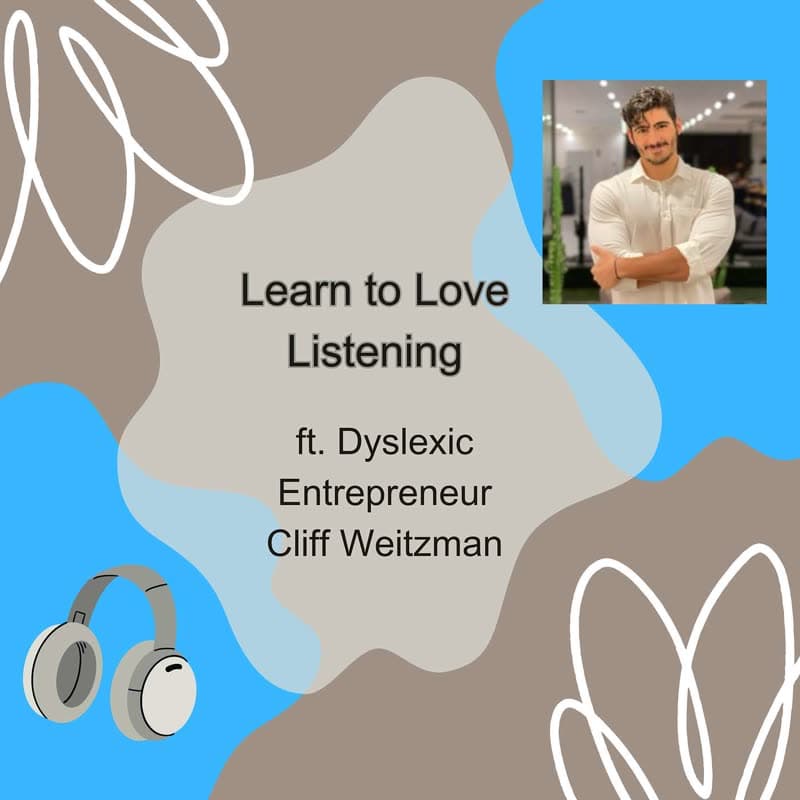
Learn to Love Listening ft. Cliff Weitzman, Dyslexic Founder and CEO of Speechify
In this installment of our Dyslexic Voices series, Cliff Weitzman, founder and CEO of Speechify (https://speechify.com/), tells us about his experiences growing up dyslexic, and shares his advice for how to succeed as a dyslexic child and adult.
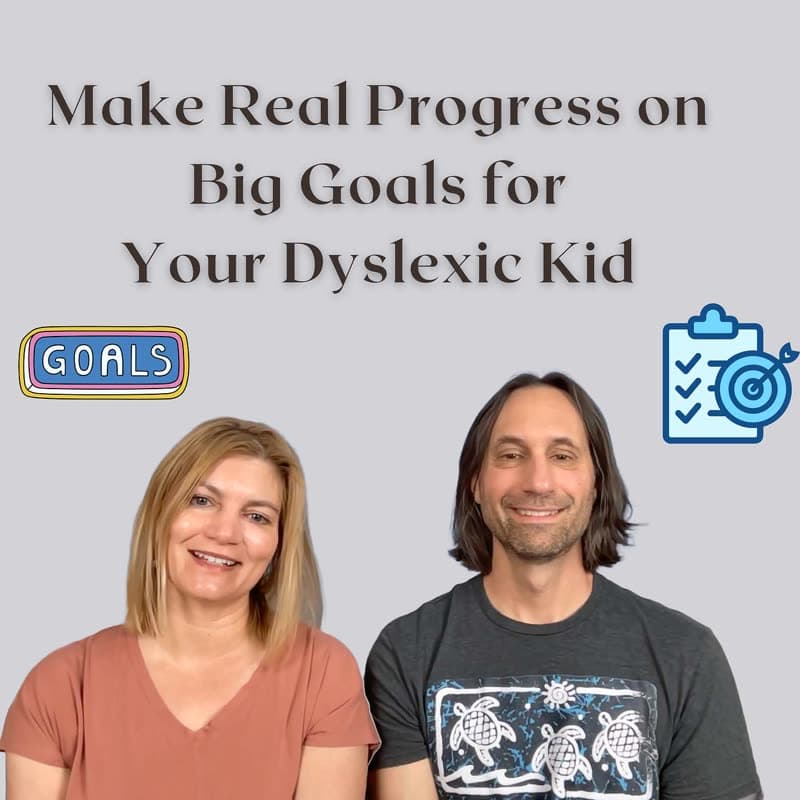
Make Real Progress on Big Goals For Your Dyslexic Kid!
We all have goals for our dyslexic kids, but they often seem overwhelming and out of reach. In this episode we provide specific, practical tips for organizing the goals into smaller chunks and making daily progress.

The Attacks On Your Kids’ Rights to a Free Appropriate Public Education ft. Attorney Laura Heneghan
With all the changes in the US recently, it’s hard to keep track of all the implications. In this episode we dig into the changes at the Department of Education, executive orders, lawsuits, and more in order to understand how these changes could directly affect your kids!
Never miss an episode
New episodes every two weeks. Follow wherever you listen.