
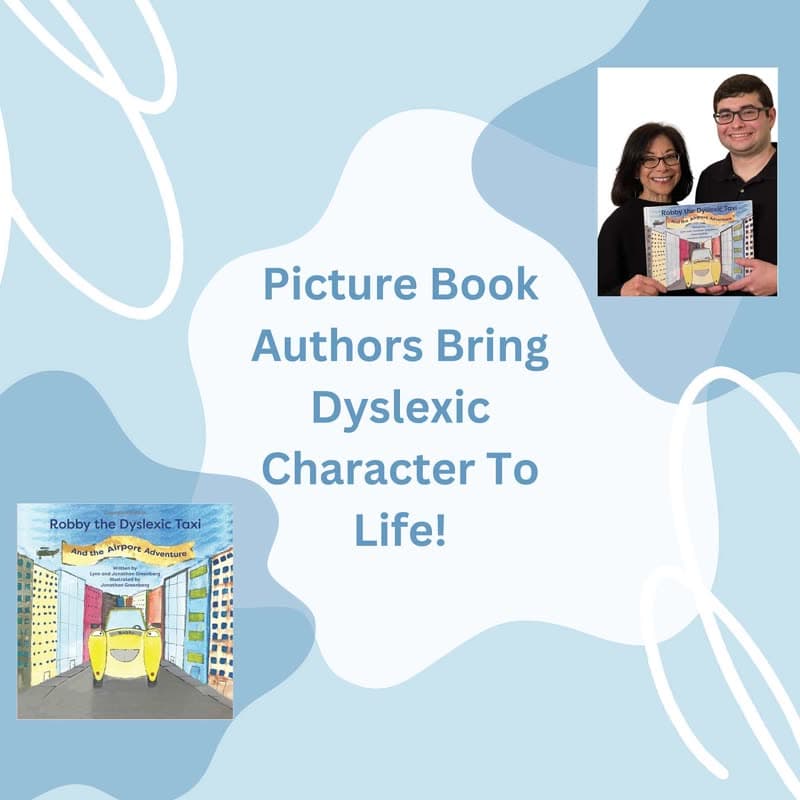
The Importance of Dyslexic Role Models, ft. Picture Book Authors Lynn and Jonathan Greenberg
About this episode
Lynn and Jonathan Greenberg are the authors of the picture book, “Robby the Dyslexic Taxi And the Airport Adventure”, which is available at https://www.amazon.com/Robby-Dyslexic-Taxi-Airport-Adventure/dp/B0BTZVVX8H/
We are excited to share our interview with them, in which we explore what life was like for Jonathan growing up with dyslexia, and for his mother Lynn, who supported him on his journey.
Transcript
Full transcript · 5,523 words · about 28 min to read. Press a timestamp to jump to that moment.
We also wanted to explain a little bit to those who don't understand what dyslexia is, that it's not a negative, it's not a problem, it's, like we keep saying, superpower.
Hello, everyone. We are Sonja and Nick, and this is Dyslexia Journey, where we help you support the dyslexic child in your life. And today, we are excited to welcome Lynn and Jonathan Greenberg, who are the authors and illustrator of the children's book, Robbie, the Dyslexic Taxi and the Airport Adventure. And here's the book right here. So welcome, Lynn and Jonathan. Hi, thanks for having us. This is great. We're excited to be here.
So let's start with your own journey as a dyslexic child and now adult, and then as a parent of someone with dyslexia as well. So, John, can you tell us a little bit about what it was like growing up with dyslexia? Well, it wasn't easy by, well, that's putting it kindly. When I was younger and everyone else around me was being able to read books and more complex stories, and I was unable to even do a picture book.
It was not only incredibly frustrating, but very disheartening for me. And a lot of people just didn't trust that I'd be able to succeed in life, and they didn't value that. So I felt very alone. However, I was lucky in that I had family who cared and did listen to me and doubted that it was not me for lack of trying being able to get to that point. So they spent a lot of time, a lot of effort.
We found a school that specialized in teaching children with dyslexia, and because of that, I am pretty much fully remediated. And I've fallen in love with writing and with reading, and it's all because of them. How old were you when you were, I guess, sort of first noticed the trouble you were having with learning to read? And then how old were you when you were actually identified? Well, I think it really became prevalent that there was a problem when I was still in preschool, and then there were maybe a year of uncertainty.
And then I think it was when I was, you were six when we had you tested. Six when I was tested, and found out that I was textbook dyslexic. A lot of people thought, a lot of the teachers at the time thought I was just slow, to put it mildly. So then we finally got the testing, and yeah. Yeah, and actually, Lynn, maybe this is a good time to jump back and forth in with your perspective, because of course you were along on this journey the whole way.
Like, what did that part, that initial part, look like from your perspective, or how did you experience that? So John is our youngest of four, and right, you know, when kids start doing the ABCs, and, you know, some watch Sesame Street, and, you know, John didn't want to do any of that. But I knew he was really smart, because he could tell you every time it's the tank engine, but he couldn't tell you that Thomas started with T.
And, you know, I just, I just knew that something was up, because I had to go with my gut. And all around us, people would say, oh, you know, John's just not smart, he's a boy, they're late learners. And I was like, no, no, no, I know my, I know this child, I know my son, and that's not accurate. So I did some investigating, and I spoke to my pediatrician at the time, who got us to a wonderful person who tested him.
And we went from there, and, you know, not easy. You have to struggle to find people to listen to you, I think. But it's really important to listen to your child, and to really just go with your gut. And that's what we did. Yeah, it's interesting that it was maybe easier for you to identify it, because you had older children who were not dyslexic, so you knew what that looked like. I just knew there was a difference, because, you know, kids start doing the ABC song, and, you know, back, my older children are in their 30s.
So back then, it was all Sesame Street, and, you know, sing along with Big Bird, and Ernie and Bird. And John came along, and he was like, nope, I am not watching that, I am not singing, I have no idea what you're talking about. So I was like, this is different, you know, something's up here. Yeah, so going back to you, John, you mentioned some about your experiences already at school, because the teachers were clearly not understanding what was going on.
Any other thoughts about that, about your school experiences, and then how that shifted as you were identified, and things started to change? Well, when I was, before I was tested, there was just a lot of, I'd say I couldn't do this, and I think the teachers would just sort of think those were excuses, as opposed to, I was physically unable to do it. And so, it really made me think that, it kind of instilled this feeling of, maybe they're right, maybe I'm just dumb.
And it was, it really impacted how I viewed myself. It gave me a very negative perspective, and it was incredibly depressing for a kid. I just thought I was dumb, and I stuck with that, and I didn't really want to try as hard. And then I got tested, and I found out, oh, hey, wait, I, there's something up here. It's not just, I am not just dumb. It gave me a whole new perspective.
And it made me want to try more, it gave me more enthusiasm to learn. And then once I started working with teachers who were more specialized in dyslexia, it was really eye-opening. I knew I wasn't alone. And I could find other people who had been in similar situations. And it was so much, it really just gave me a whole new, it just, it was perfect, really. Yes, it sounds like the, getting the diagnosis was really empowering for you.
Indeed, I don't know where I'd be without it. And Lynn, how did it feel for you to get that diagnosis? Did it feel sort of just like a confirmation of what you already knew, or sort of a relief, or what would you say? Well, I did not know anything, really, about dyslexia. And then I had started to read up on it, and I thought, I think this is what John, who John is.
I think this is who he is. And when we did get the diagnosis, I thought, I'm vindicated. I can go back and say to all those teachers who said, well, your son is slow, and say, nope, you're wrong. I think maybe you're the one who's got the issue. You know, you're the educator, and you made us feel badly and didn't stop for one minute to investigate why John was maybe a little different.
And so we were thrilled that when we got the diagnosis, because it gave us validation to what we thought was going on. So we were really lucky that we could do that. Yeah, I think that's a key word, validation. We can relate to that as well.
Do you want to talk a little bit about the Windward School, which sounds like was a really amazing find and a really good experience? Sure. Where to start? The school itself was, as I mentioned before, made specifically for children with dyslexia. So the courses were broken, the classes were broken into smaller groups, so the teachers would be able to focus more one-on-one with said students. And their program was more based around instilling a knowledge, a different sort of perspective on how to learn to read and write.
So there are different tasks. We learned cursive, which was, I'm blanking on exactly how, but it infects how the brain memorizes things slightly different. We did sky learning, which was, we just wrote letters in the air. There were a lot of techniques that were used and a lot of time spent on making it so it was a normal sort of activity. They focus, they believe very strongly that the Orton-Gillingham method is the way to teach someone with dyslexia.
And they take people, the teachers, they have to go through vigorous training. There's a very small classroom with, like, six kids and a teacher and an assistant who's learning. And within, I would say, a few weeks of John being there, he started learning the ABCs. He was seven at the time. And we were so lucky to have found that school. They give people the kids confidence. They let them grow and learn the way they need to.
And it's not something that everyone can do, and we understand that. But we decided as a family, we made a family decision that we were going to invest in John and take him to the school, which was, you know, half an hour, 45 minutes from our house and definitely a change for our family. But it was worth every minute and, you know, honestly, every penny. And there was a lot of peanut butter and jelly at the time.
But we were really, we really feel lucky that the school was there for him.
Yeah. How was that just through elementary school or how far does that go up in grade level? So they have a teeny first grade and they actually have two campuses now. Back then there was only one, there's a small first grade. And then the class side, the classes get bigger and bigger. When John was in second grade, there was only, there were only two or three classes. And they do that because they really want to focus on, on, on each child.
And then as, as people start learning and understanding that their kid might have dyslexia, the, the amount of kids like in third, fourth, fifth grade really goes up. The school goes through eighth with a tiny ninth grade with kids who really have not had the ability or the means to be there. But it's mostly, it's a teeny first grade and a teeny ninth and second through eighth is the, the biggest part of the school.
Interesting. And so did you transition then to a public high school, John? I actually went to a, another prep school called the master school, which was nearby and also had similar sort of style of learning in that it was smaller classrooms. They used to something called the Harkness method, which was, they talk, there wasn't as much sitting in rows with just raising your hands. You were supposed to talk when you felt like you wanted to ask a question.
It was very freeing as well. And after that graduated from there and went to the university of Vermont. The, the master's school though, gave him no exceptions. He had to take a foreign language. It just was a smaller place, more artistic because that's what John is. And, so we just thought, you know what, this is where John feels comfortable. And, and, so he went there, but he could, he could have gone to the public high school.
It just was bigger and not quite what he wanted to do. So. Well, and you, you mentioned, having, you know, learn to read and write really well with these other methods. So, how did that feel? I guess then for you, John, when you were in this, you know, it still was a slightly different method maybe than, than the regular public school. But did it feel like a big transition or did it kind of feel like you'd already learned to read this other way that was, really worked for you?
And so less of a transition in that sense. That's a really good question. It's interesting because at first I was incredibly nervous. I'd never really, I was like, is it going to be like when I was back in before windward, is it going to be awkward? And am I not going to connect? But the skills I was given really did carry over. And I was able to use them whenever I had to, or felt like I was struggling.
And even after that, I was able to take some skills from masters that were quote unquote more standardized and be able to work with them just fine. And to this day, I still use a few of the techniques, even for writing essays and the like, when I was still in college, on how to create these works. And I think, you know, John obviously can speak to him more than I can, but when he was little and he couldn't, read, he started expressing himself through drawing and, you know, he, he really had a gift and he, we encouraged him to do that.
And, I think he's still, you know, obviously to this day, but masters also was a more sort of artistic kind of place. And, John is actually going in, in the fall to grad school for his art. So he's come, it's come full circle. So he, you know, it, it, the reading and the writing is, is really who he is. Yeah. That's interesting because, you know, there's a lot of the people we talked to emphasize so much the, you know, trying to not to neglect passions, for example, and that kind of thing and how important that is.
So it sounds like that, that being so emphasized in the high school then was also really an advantage overall. Agreed. Was it a, a, a struggle when you were, maybe in elementary school and middle school or junior high school? I don't know what they called it. to, balance, like, were you spending a lot of time on the remediation work? did you feel sort of to the exclusion of your, of your art and your, your other passions or was it, sort of well balanced?
I'd say it was well balanced in high school. Well, they did definitely focus just as much. You like had to take an art related program as well as do a sport. So it was very balanced. So I didn't really feel like I struggled too much during that time period.
And I think at Windward, they encouraged the kids to express themselves in ways that were, were best for them. They were obviously very passionate about teaching their reading and writing, but the, the way that they did that was often through art and through self-expression. So I think, I think that that was very encouraging for John and for the other kids who were there.
Yeah, that's great that it was such a balanced program. Cause I think a lot of times because homework can take longer, you know, for dyslexic students, it, it can be such a challenge to do that. Even though, you know, we know that the balance is needed. So, yeah. Well, I also have to add to that is that because they sort of, before Windward, I would spend an inane amount of time on homework.
And there were a lot of late nights where I just would be pulling out my hair and I didn't know what I was doing. And that just, it would take forever. So then I didn't really have time for art. But once I started to learn a little bit more about how to properly do the work, I was then able to balance it pretty well. And while before I had only just been able to sort of touch the surface of what I could do with it, it really allowed me to dive deep under and see what I could do.
Mm-hmm. Yeah. And then I guess shifting a little more to, because it sounds like this, of course, served you well in college and now it's going to be beyond. What do you notice, what kind of differences do you notice now as a dyslexic adult? You know, because sometimes we tend to emphasize, of course, the reading and writing for obvious reasons. But, of course, there's these other aspects to how one's brain works and all of that.
I'm just curious how that is as a dyslexic adult for you. Well, I gotta say that, for the most part, I don't really notice it. There are certain times when I will stumble over a word or I'll have to pause and, like, rethink it. I will put a B before instead of a D and vice versa. But with the skills I have, the technology to the point where it is, and sort of just being able to do things of my own accord, it hasn't really affected me in any way that has been noticeable.
And I gotta say, it's, once again, Winward really did set me free in a lot of ways. We teased John just a little bit because his directions are still a little tough for him. And thank goodness there's the technology that, you know, you could put on your phone or in your car. There are stories where he was supposed to meet his siblings on, you know, like, 28th Street and he was on, you know, a different avenue and, you know, those kind of stories.
But for the most part, we've been very, you know, he works really hard at it, but also the technology is there, spell check and all of that to really, I think, help where it wasn't, you know, when we started. It's definitely filled in a lot of the gaps. Yeah. Yeah. Well, and then in terms of visual spatial skills, or being strong in the other, like an art, for example, for you, it sounds like that's how it's, I know, different for every person, but it sounds like that's how that's showing up in your life very strongly.
Yeah, no, I fully embraced that sort of being able to view things in a different perspective. And at first, what some people might have called a challenge, I just see as a huge advantage now.
I think that people, all the kids that, you know, John's friends from growing up from school, starting at Windward and then Masters, they all, they all see things a little differently. And I think that's a lot of people that, you know, some of you know, some of you know, that dyslexia needs to tap into. And a lot of people don't see it that way. But, you know, we've embraced and I think the kids that John knows and grew up with embrace that as well.
They were so excited to figure out what else they could do, or how to work around their dyslexia. And for John, it was drawing and painting and other art forms. So we were lucky that we could tap into that or he could tap into that. So.
Go ahead. No, go ahead. Oh, no, I was just going to say that feels like the perfect transition to the book since, you know, you both wrote it together and then John's the illustrator. So, so I'm curious about just to start with, how did you get the idea? What was your purpose? Well, I think subconsciously there was a little bit of the whole, the reason we chose a cab specifically was because in a certain respect, mom did drive me back and forth from Windward all the time.
So the sort of transporting someone was definitely part of it. However, on a bigger note, this was during COVID, we were stuck at home and doing painting and drawing as a course in college from home is not ideal to the point where actually I, at one point was told to write an essay in a painting course. So we decided to work together on this project because mom had been reading to my niece and nephew online virtually.
So the idea of the book was already in our heads and we just sort of decided it was the right time to try to create a book together. We always sort of liked the idea of it, but never really considered it in a, like, we can do this. But then was the perfect time and we decided to use an anthropomorphic cab because a lot of children who doesn't like cars. And so we wanted to just get across a story that was both easy to show to younger audiences while also helpful to adults to show them that their kid can succeed.
So we, we, we talked about it originally, I was just going to be the author and John was going to be the illustrator. But then as we were writing it, I was writing it. John really had a point of view that we thought was important to get across. And so that's why we co-authored it, but I can only draw stick figures. So he definitely did all the art, which, you know, if you see it, look in the book is, I think it's beautiful.
I know I'm prejudiced, but he did a great job. So that's how we ended up co-authoring it. And he did the pictures. He did the illustrations, the paintings, actually. So they were paintings. Oh, okay. So are they, are they, are they actually watercolors then? Yes. That it was all physically done with watercolor and paper with physical brushes, completely physical media. But then we digitized it, did some minor editing. So it'd fit better on the page and then sent it out to be printed.
We were lucky because John did all the artwork, spent a lot of time. And then I have a friend who is a book designer and, she actually helped us try to figure out how to, how to make it all work correctly. so we were lucky in that regard. Yeah. You had all the pieces already of different roles. That's great. can you say a little more about your hopes for the book? I noticed you wisely noticing that, you know, parents are very much a part of it or whoever else caregivers, because they're often reading the picture book to the child.
So they are an audience too, in a sense. yeah. What are your hopes and dreams for the book? Well, I, no, I was just going to say, we, we, we wanted people. And in both of our shoes to understand, you know, parents, that there is an answer that, you know, your children are wonderful and, perfect the way they are. They just need different kinds of encouragement and different kinds of learning. And we also wanted to explain a little bit to those who don't understand what dyslexia is, that it's not, not a negative.
It's not a, it's not a problem. It's like, we keep saying superpower. It is who the child is. We were told at the beginning, you know, your child's not smart. That's not true. And part of the book was to show that, that, you know, any child with dyslexia just needs the right kind of encouragement. So it's out there and look for it. I think one of my least favorite things is how a lot of people call dyslexia and a lot of other things in the neurodiverse community as a learning disability.
I don't view it as that. I view it as a difference because, yes, you might have to learn differently. There are a lot of other things that you can do a lot stronger than someone else in a different position. And I feel like that should be talked about more often. And that was what the book was for, to start conversations.
And we're hoping to, I'm sorry, go ahead. No, no, go ahead. Go ahead. No, no. We were just going to say we're hoping to, to have this become a series and to talk about not just dyslexia, but other learning differences. And that's our, our hope. We did a book signing recently and there was a child who came in and, and was so happy that he saw himself in a book. He'd never, he'd never seen that.
And he, it was really heartwarming because he felt terrible at school and he said, I saw this book and my mom read it to me and I, you know, I saw myself and it was great. And, so we were, we were really hoping to have more people be able to see that in themselves, that they're great.
Yeah. I really like, in the book, how you emphasize Robbie's strong visual spatial skills, and, you know, focus on, like you were saying, focus on it as a, as a difference that has some, positive aspects as well. Definitely. With everything, there's always good and bad and you got to be able to look for the good. And that's what we wanted to try doing. Yeah. Good. one, one sort of very specific question.
the setting of the book is in the city of Greensboro, which is, I think a word that might be, tough for someone with dyslexia. what was the, sort of the, the decision process for that, for that city name? You know what? Honestly, I don't, perhaps we should have thought about it a little more, but our last name is Greenberg. And so we just picked Greensboro because it was not our last name, but kind of close.
And, it's an interesting question. I, I hope people don't struggle with it, but honestly, that was just like, oh, okay. Well, we, we, we, we don't want to call it Greenberg, but that's why. Right. So. Yeah. Well, I think mostly there, this is going to be being read to a child as well. So it's good to have that exposure to all the different kinds of words and reading a lot to someone.
were there any other intentional, choices you made in writing the book? Like in terms of, well, anything really, any parts of it, the visuals or the words. Well, in the book, there's a dispatcher named Allie and her purpose in the story and hopefully in other stories is to be someone who is there and willing to spend the time and effort to put these taxis into the proper places where they will best be suited.
And I, we wanted to add that in to show that sometimes you can't be alone in this. You need to have people backing you. And for me, that was my family. And for Robbie, that was the rest of the cabs and Allie. And we wanted to just get that across because I feel like it's important to trust someone. Yeah. And honestly, Allison is our grand, my granddaughter and some of the, and Sam is the mechanic.
We use, we use family names. We didn't realize, you know, how wonderfully this was going to take off. And, so we put our family there. Everyone has, every character is a family member. So at this point, so that was our passion about it. We wanted to include everybody because they were there for John always for, for all of us. We're lucky that we have a very tight family. So.
Yeah. You said, you mentioned the reception of the book. Do you want to say anything more about that?
Your experience and how it's going so well. We, we did this as a passion project to begin with, but it has grown to be such a large and beautiful thing. And I think neither of us thought it would take off as well as it has, but we're so glad it has. And how wonderful that we can sit here and talk to you about it. We really appreciate it. we've had such a positive response.
It's really been amazing. And we're really pleased about it. and John actually, when we went back to Windward, and John read to the students and they were thrilled and excited and treated him like a rock star. It was wonderful. they, they, they saw themselves in him and, they were really excited. And, and that meant a lot to, I think, to both of us. There was really no feeling, no word to describe how to, to come back to a place that helped me so much and give what I hope was children, a hope for what they could do in their futures was, there's no real word for it.
It was just very, very special. And that's what we're hoping, you know, if people read the book, then, then that we're hoping they see themselves in the book and feel good about themselves too. So that's, yeah. It's really important to have it out there. Yeah. Thank you. Yeah. So where, so where for our, our audience, for anyone watching this, where can they, buy a copy of the book? So, they, you absolutely can buy it on Amazon.
also, there, we're trying to start getting into some bookstores, but, if a bookstore doesn't have it, they have the ability, through bookshop.org to buy it. some libraries are starting to put the book in there, into their, libraries and some schools as well in theirs, but absolutely, try Amazon, and BarnesandNoble.com. as well. So pretty much wherever you can buy a book online digitally, you can get a printout version of it. We even have a Kindle version.
And we also have, you know, there's an audio, that, well, we read the book, and there's one as well. It's not on a particular, like an audible site, but we can, it's, it's out there. So I don't, I, yeah, we'll put links. Thank you. That was inarticulate, but yeah, thank you. It's out there. Great. And we'll look very much forward to the series too. Yes. And we'll see what comes next in the, in the series about living differences.
We're hoping to get it out soon. So thank you. Great. Any, I guess as, as we wrap up here, any, additional thoughts, I guess, sort of words of advice that you would have, either or both of you for someone growing up with dyslexia or, or the, parents of someone with dyslexia? Well, for children, I will say it's not easy, but you can succeed if you put, if you manage to put the time and effort into it.
If you don't give up, you can become something so special and so powerful. It's not an easy rope, but it is very much worth it. I think for parents, it's really, really important. Don't listen to the noise outside. Just, you have to listen to your child. You have to really hear what they're saying to you, what they're missing, what they don't understand. And if you listen and, and become an advocate, I read a lot.
I listened to John. I asked a lot of questions from a lot of people. And I think it's really important to do that. And if you do that and really, you know, focus on that, I think, I think that there's such a powerful message in building that relationship and then finding what works best for your child, whatever the issue might be. I remember when I was younger and I just was diagnosed as dyslexic, there were a lot of times when I'd come in and find my mom in her room reading a book.
And at that point I wasn't really able to figure out what it was then, but I would then find out that it was a book specifically about how to raise a dyslexic child. And she would just spend hours studying it. And I don't really think it hit me just how much time was put into it and without it, I don't know if I would have been able to write a, or write and illustrate a book like this.
And I owe the world to her and everyone else who helped. So believe in, believe in your child is, I guess, my bottom line. So, yeah, that's really, really powerful words from both of you. Thank you so much for being here with us and thank you so much for putting this book out into the world. Like you said, I think it's so important for kids to see themselves in this book. Thank you for having us.
It's been wonderful giving us the platform, platform to talk about it. Thank you. Yeah. Thank you. Thank you.
More from the show
Dyslexia in Everyday Life - Summer Edition!
In part 3 of our popular series on dyslexia in everyday life, we discuss five more ways that dyslexia affects everyday life outside of a school setting.
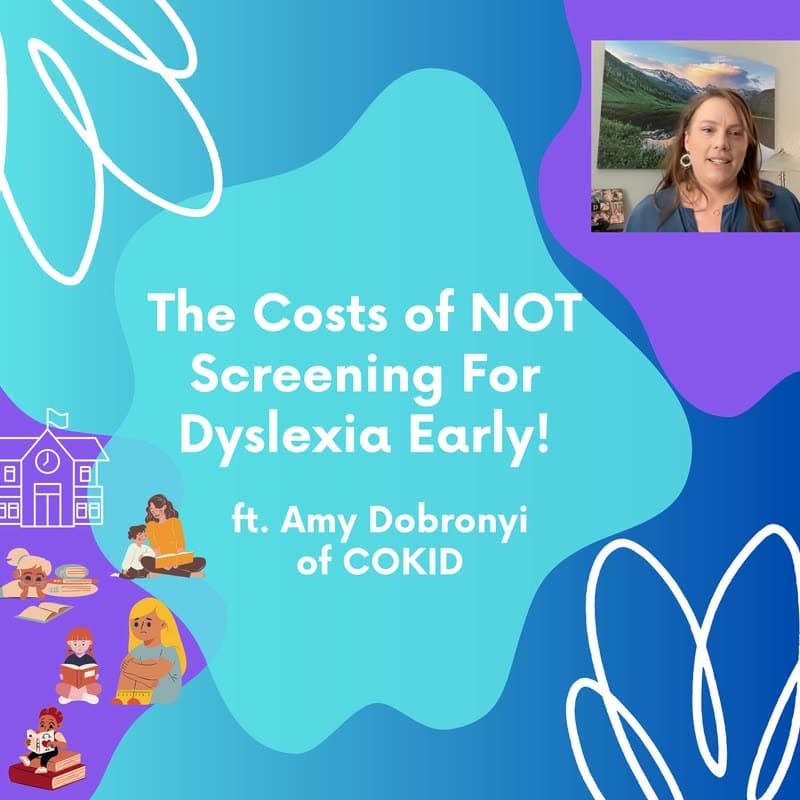
The Importance of Early Dyslexia Identification ft. Amy Dobronyi of COKID
Amy Dobronyi (pronounced duh-BRO-nee) is a Co-founder and Co-chair of COKID (Colorado Kids Identified with Dyslexia - https://www.cokid.org/), a grassroots parent group, whose mission is to improve the lives of individuals with dyslexia through advocacy, education, and legislation.
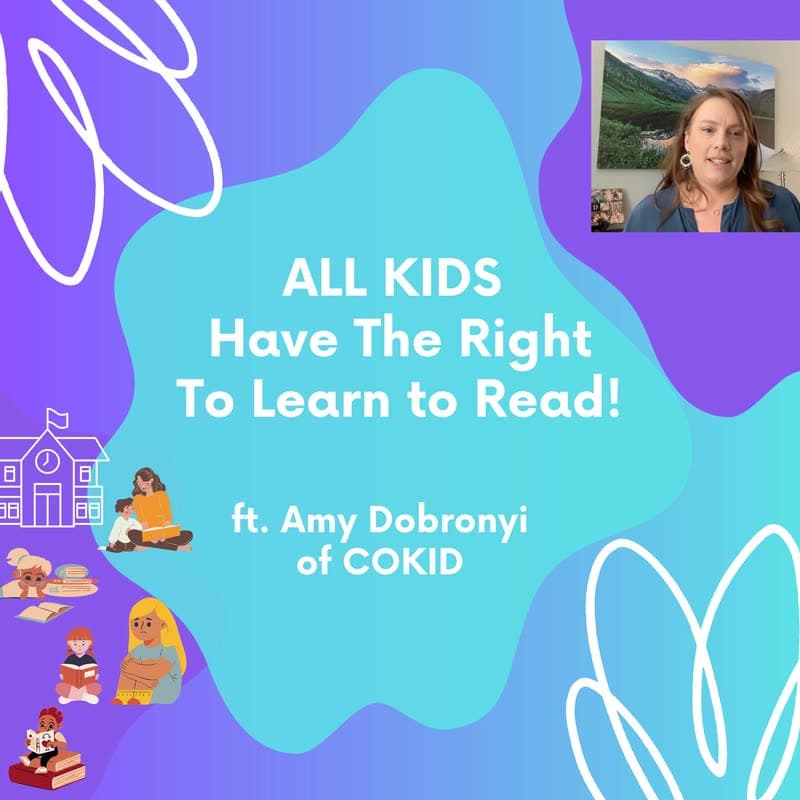
Ensuring Support For ALL Kids Identified With Dyslexia ft. Amy Dobronyi of COKID
Amy Dobronyi (pronounced duh-BRO-nee) is a Co-founder and Co-chair of COKID (Colorado Kids Identified with Dyslexia - https://www.cokid.org/), a grassroots parent group, whose mission is to improve the lives of individuals with dyslexia through advocacy, education, and legislation.
Never miss an episode
New episodes every two weeks. Follow wherever you listen.