
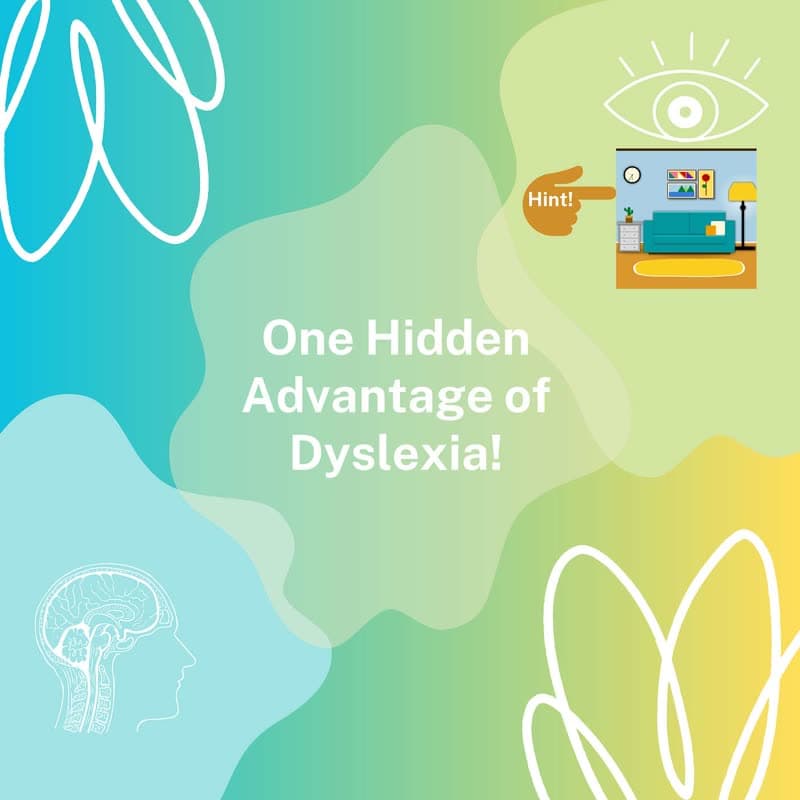
Unlocking the Potential: Embracing Dyslexia's Gifts, Part 1
About this episode
In part 1 of our new series on the benefits of dyslexia, we dive into visual-spatial strengths.
Transcript
Full transcript · 1,756 words · about 9 min to read. Press a timestamp to jump to that moment.
Dyslexia is not just a learning difference. There are actually many strengths and benefits to dyslexia. Today we're going to talk about one of them.
We're Sonja and Nick, and this is Dyslexia Journey, where we help you support the dyslexic child in your life. And today we're talking about some of the positive aspects of dyslexia. And I know some of you watching this are going to be surprised, because unfortunately, the positive aspects of dyslexia are not discussed nearly enough, especially in comparison to how much we talk about the struggles that our dyslexic kids face with reading and writing.
But the truth is, as scientists are discovering, and as many of us have already observed anecdotally, and as many people with dyslexia have already discovered for themselves, that there are actually many strengths and benefits to the dyslexic brain. And today we're going to dive into one of them in particular. And just a quick caveat before we dive into it. Not everyone, of course, with dyslexia is going to have identical strengths here.
There's still a lot of variation within the dyslexic population, just like there is within the population of non-dyslexic kids. Yeah, definitely. So the one strength that we're going to focus on today is visual-spatial skills. And this is also sometimes called 3D spatial reasoning and mechanical ability, is one way to refer to it. And to start us off today, we just wanted to share with you a quote from The Dyslexic Advantage by Brock and Frenette Eide.
Material reasoning strengths are the 3D spatial reasoning abilities that help us reason about the physical or material world. That is about the shape, size, motion, position, or orientation in space of physical objects and the way those objects interact. So that's kind of the range of what we'll be covering in today's topic. And so we have, you know, our list that we're going to talk about, about ways this shows up. Are, you know, sort of anecdotal of what we've mainly observed in our own daughter and, you know, just from what we've heard from other people as well.
So to start with, she is excellent at finding things. She seems to always know where things are in the house and it doesn't even matter if it's her things or not. She's the one we immediately go to when my cell phone is lost, as it is many times a day, as well as other objects. And it's just really noticeable that she has this great memory for where things are. And this is basically, you know, if you think about what that is, it's that she's able to recall the 3D space that she was in and details about it.
Yeah, and sort of adding on to that strength, often people with dyslexia are not only able to recall 3D spaces in great and accurate detail, they're actually able to visualize 3D spaces they've never seen. And so this can take varied forms. So one example is you can think of like interior design. They're able to visualize what a space would look like with the new furniture arranged in the way that they're envisioning it or something like fashion design.
It can also take in sort of completely different arenas in the scientific arena. It could involve something like being able to visualize the way a protein, which is a structure made out of amino acids, is able to fold in certain ways in order to function as an enzyme for whatever its particular function is. So this ability to visualize in 3D things that you've never actually seen is another real benefit of the dyslexic brain.
Right, and another way that this 3D visual spatial skill aspect of dyslexia might show up is in sort of practical skills that might require visualization. So our daughter very much likes crafts, for example, including sewing, you know, woodworking is another example, but it could include all kinds of things, right? So again, it could be something like surgery, like it's very important for surgeons to be able to have this model in their brains of what they're working with in the 3D space and then be able to do that practically.
Yeah, so that third point is kind of combining, almost combining the first two points, whereas you can visualize things that you've never, maybe never exactly seen before and then sort of work with it, right? Right, exactly. And then this can also lead to dyslexic kids being very good at puzzles, especially 3D puzzles. So the things, types of things where you've got the ring or, you know, several rings around the rope and you're trying to get the rings out without cutting the rope or those kind of puzzles, I think dyslexic kids are especially good at.
Yeah, and then finally, another aspect or way of thinking about this and how it might show up is in construction or building. And so that could mean, you know, actually building something with wood, for example, but we mean it even more broadly than that. So it's like sort of seeing any raw materials and knowing how they can be part of a finished product, sort of having that sense for what can be created from them.
So maybe a few pieces of wood are already an art piece in their mind or something, or maybe something more functional like a chair. And this is something we definitely observed with our daughter, even from a very young age. I mean, we'd be out in nature and she'd see some, you know, pine cones or pieces of wood and she'd want to collect them. And we didn't really know why. And then, you know, she'd come home and pretty soon she'd have this sort of art piece or something that she, like, had already been envisioning when she saw those pieces.
Like, she already knew how it was going to go together. Right. And so you might also notice this in things like Lego projects or robotics, potentially, or something like that, in addition to lots of different ways that it might show up in art. Yeah. And so it's interesting to think about these 3D strengths, kind of what they all have in common. And we alluded to this a little bit, but what it really is, is it's getting a, it's the ability to form a really good mental model of the 3D world.
And this is something that is, I think, challenging for a lot of people who aren't dyslexic. And again, you know, Sonja did mention at the beginning that obviously not every dyslexic kid is going to be, is going to, to be equally good at this kind of 3D mental model. But, but on average, it does seem that dyslexic kids are better at, at having this ability to picture three-dimensional space in their mind very accurately and vividly than, than sort of non-dyslexic kids are.
And yeah, and I just want to add in here that John D. Rodriguez, who wrote the book From High School Dropout to Harvard that we mentioned in a previous video, he really, really described that well in his book, the way that he sees 3D space as a dyslexic person. And it was very vivid, you know, very much about like all these connections, almost like viewing the whole world as a puzzle. It was really, really interesting.
So anecdotally, that's someone's experience with that as a dyslexic person. Yeah. And now I think it's important to mention, we've, we've talked about several anecdotes of various people here with these strengths, but it's not just anecdotal. So scientists from, from many different areas in many different countries have actually studied this. And there, so there are like actual published studies showing that people with dyslexia perform better on certain tasks related to spatial reasoning than people without dyslexia do.
And I'll just talk about one study here quickly, and we'll link to it in the, in the show notes. This was published in the journal called Current Psychology by Mirella Duranovich et al. Called Dyslexia and Visual Spatial Talents. This particular paper covered several different tests. And I want to talk about just one test that was part of it, which is called the paper folding test. And so let me just quote from the article to describe exactly what this test is.
Quote, the task is to predict how a piece of paper will look after it has been folded, a hole has been punched in it, and it has been unfolded again. And so that's something that obviously requires a good 3D mental model of what's going to happen to this piece of paper. Yeah, kind of really moving it around, essentially. So it's interesting because it's not just static, it's actually changing. It's a 3D model and then it's changing too.
Yeah, that's a really good point. Yeah. And so the result, to cut to the chase, is that children with dyslexia outperformed the control group, which was children without dyslexia, on this particular paper folding test. And that's just really just one example of many studies that have been published showing dyslexic strengths in this area. Right. And so, you know, there's so many careers you can think of if you're thinking way down the line.
I mean, we're talking about just things that they might enjoy in terms of classes or hobbies or all that. But there's, if you think about it, lots of different careers where this would be applicable and really, really be a strength. Anything from, you know, plumbers, designers, chemistry, it's pretty important, like we were talking about, with, like, being able to visualize the molecules, surgeons we mentioned, all kinds of engineering. Driving, actually, is, you know, important to be able to visualize 3D space if you're the best drivers will be able to do that.
Yeah, I mean, really a wide range of careers, when you start thinking about it, really are reliant on strengths in this area. Yeah, if you have any anecdotes about this 3D, what you've seen in yourself or in your dyslexic kid to do with this 3D spatial reasoning, we'd love to hear about it. And we will, of course, in the future, this is part of a series that we're going to do on the positive aspects of being dyslexic.
So there will be more to come.
More from the show

Your Dyslexic Kid on Summer Break! 5 Tips To Make The Most Of It
5 tips for helping your dyslexic child during summer break!
The Importance of Early Dyslexia Identification ft. Amy Dobronyi of COKID
Amy Dobronyi (pronounced duh-BRO-nee) is a Co-founder and Co-chair of COKID (Colorado Kids Identified with Dyslexia - https://www.cokid.org/), a grassroots parent group, whose mission is to improve the lives of individuals with dyslexia through advocacy, education, and legislation.
Ensuring Support For ALL Kids Identified With Dyslexia ft. Amy Dobronyi of COKID
Amy Dobronyi (pronounced duh-BRO-nee) is a Co-founder and Co-chair of COKID (Colorado Kids Identified with Dyslexia - https://www.cokid.org/), a grassroots parent group, whose mission is to improve the lives of individuals with dyslexia through advocacy, education, and legislation.
Never miss an episode
New episodes every two weeks. Follow wherever you listen.