
4 Ways Dyslexia Affects Everyday Life!
Re-aired Aug 12, 2023.
About this episode
In this video, we discuss four ways that dyslexia can affect the lives of our kids outside of school and academics.
Transcript
Full transcript · 1,899 words · about 9 min to read. Press a timestamp to jump to that moment.
When you think of dyslexia, most people think about its effects on school and academics. But what about some other areas of everyday life? Today we're going to talk about four ways that dyslexia can affect people in everyday life.
Hey everyone, we're Nick and Sonja, and this is Dyslexia Journey, where we discuss topics related to supporting the dyslexic child in your life. So today we're going to talk about some everyday areas of life that dyslexia can affect. And we're just going to cut, there's a lot of them, but we're just going to talk about four today. The first one is texting and messaging. So you might think of this mostly, you know, as teens and older teens, but this can, you know, it can affect other younger kids too, depending on how much they're doing that or if they have a phone.
And so with younger kids, it might be, you know, more similar to just an overall difficulty with reading, like, especially if there's a longer message. But I mainly want to discuss it. Our daughter is a teenager with regard to teenagers and, you know, they're texting back and forth with friends, for example. So she told me that it affects her in a couple of different ways. One way is that when she sends an outgoing text to her friend, she makes pretty consistent mistakes.
So the same thing where she sometimes has an M or a B exchange in her particular form of dyslexia, that happens a lot and some other things like that. So she'll just consistently sometimes use the wrong letter in her messages. So sometimes that can make them a little hard to understand. And then when she's reading a message from someone else, she said, it's, you know, just like with other readings, she'll skip lines.
She sometimes doesn't read every word, that kind of thing. And I think what's interesting, particularly with texting, when it's this going back and forth like that, is that part of the reason that that it's more affected is because it's often very quick exchanges like that. And so she doesn't want to also just take the time to to read it as carefully. So it's just interesting to think of that there could be, you know, some she didn't have a particular anecdote about miscommunication or anything like that.
But it's just interesting to think of because it's an area totally outside of academics. And so it's it's something that we might not always think of as affecting our dyslexic kids. We think of it as maybe we think of texting generally as being sort of social and non-academic. And so it's at this, I think it's important to remember sometimes that even even something like fun communication with their friends is going to perhaps be more error prone, as any discussed, and perhaps be more mentally taxing, as we've discussed in previous episodes as well, just to keep up with the rapid flow of content.
Yeah. Do you see? Do you feel ready to go to number two? Yes. All right. So the second way that dyslexia affects everyday life that we're going to discuss today is in watching shows and movies, specifically foreign language shows, where you're expected to read subtitles. In general, dyslexia affects anything having to do with reading and writing. And so if you if you sort of stop to think about it, it's pretty obvious that if you're trying to watch a show where people are are talking at normal speed and then but in a language that you don't understand and you're expected to read the subtitles to keep up, that's going to be challenging for someone with dyslexia who might struggle with reading or or might read slower than the average person.
And so this can affect kids, obviously who, you know, at any age, there's very obviously anime is very popular in the US, other foreign language shows, even shows that if you're watching, if you're a native English speaker and you're watching and you live in the US and say you're watching a British show with with really strong accents, it can be helpful to put subtitles on to be able to. To better understand what they're saying and that could be more challenging for dyslexic kids as well.
And so this is something that comes up in I've seen discussed online and various forums as well, where people just complaining about how hard it is to watch anime and things like that, because they can't keep up with the subtitles. Yeah, so I guess that's sort of the entertainment area of life, we can say that that that it's affecting in that case. Okay, so number three for today is shopping. So there's a couple different ways, actually, that I think of it for shopping.
And again, it's sort of it is affected by, you know, age and reading level, like how much how where they're sort of at in their Dyslexia Journey academically. But it'll affect everybody still to some extent. So one simple thing is, you know, kind of like labels on the actual like product, let's say they're in a drugstore or something like that, like there's going to be labels with prices or the price labels actually on the bottles.
And one part of that is that they can be kind of written and you not, I don't know if it's always a font issue, but they, you know, how they look sometimes different, they're not going to look necessarily like a neatly typewritten page, and it could be in any font, all of these things. Often very small, too. Yeah, and often very small. So, so, so, so labels on actual products or product labeling, like within an aisle, let's say.
But beyond that, there's also the issue of sometimes in like grocery stores, you know, you'll have the aisle will be labeled. And so, at least for our daughter, she tends not to read those or go for those. So she's not using those to figure out where products are in the store. You know, she's been to a store many times. She just knows where it is. I mean, she just learns it that way.
But it's something to think about. So other kinds of signs, like in aisles, or even just other signs. Sometimes there's other signs up in stores about sales or various other things. She just sometimes will miss those. So that's a pretty big area of life, right? Because there's a lot of different kinds of stores that we go to and interact with. And it's interesting to notice how our daughter has compensated by really focusing on the visual aspect of products that she's looking for.
And so sometimes if I ask her, if I'm going to the store, if I ask her if she needs something, rather than try to write it down on a list, she'll text me a picture of the item that she wants. And I think that's representative of how when she's in a store, she's really looking for the visual aspect of the item rather than trying to read the labels. Right. Yeah, definitely. All right.
You want to do our last one for today? Sure. Our last area that dyslexia affects everyday life that we're going to discuss today is in navigation. And so that's kind of an all-encompassing word there. But what I really mean is sort of finding your way around an area. So reading maps is something that we don't necessarily think of as requiring reading per se, but it definitely does. I mean, you have to be able to read the street names on the map, which are often written very small or the city names or whatever.
And then also, so there's the aspect of reading the map and then there's the aspect of figuring out where you are in the real world by reading street signs and things like that. Again, if you're dyslexic, it's going to be more challenging and it's not even that if you're dyslexic that you can't learn to read street signs, but there's a couple of problems there. I mean, one is street signs are sometimes difficult.
They're sometimes very familiar words, but they're sometimes unfamiliar words, people's names, things like that, that are kind of difficult to pronounce. They might not look the same on the sign as when you hear it pronounced by somebody else. And then secondly, as we've already discussed, mentioned several times, dyslexic kids tend to just avoid reading more than other people on average. And so they're less likely to be just sort of automatically reading all the street signs and know exactly where they are.
And I do actually have an anecdote about this one because I only realized this a couple of years ago when my daughter had been out on sort of an outdoor shopping street area with her friends. And when I came to pick her up, you know, they hadn't known exactly where they were going to be, but I wasn't really worried because it's not that big an area. And it took me a really long time to find her, even though I was talking to her on the phone because she didn't know where she was.
And I was kept saying, you know, to read the street sign, but I didn't realize that it's something that she hadn't really been doing. So she wasn't that familiar with because she doesn't just tends to not read things. And so that wasn't the way she navigates in the world. So she was trying to use all her other ways. And in this case, it was particularly difficult and the street name would have been more helpful.
So so that's when I kind of realized that that was the issue. And an interesting question that I don't know the answer to, but it's making me think of as we're talking about this is, I wonder how the new GPS systems, if there's if how they are, I would think that, you know, if you're in your car and it's telling you the directions, that's going to be better for people and easier to use in general.
But I wonder if there are ways that it could be tricky. I do know occasionally I have to start writing in a location or something into the system. So I know that could be prone to spelling or something like that. But I'd be curious to hear if any of you know of someone with dyslexia who has interacted with the systems and if there's any ways that that those also are affected. Yeah, tell us your other experiences that you've noticed with dyslexia affects your your child outside of school, just in sort of everyday life experiences.
We're really interested to hear about that. Yeah, and these are just a few. So we'll probably have to do another episode on more, but we'd love to hear more like like Nick said in the comments. And we'd love it if you could like, subscribe and share this content so we can get it out there. And if you're listening to the podcast, please leave us a rating and a review. Thanks, everyone.
More from the show
The Importance of Early Dyslexia Identification ft. Amy Dobronyi of COKID
Amy Dobronyi (pronounced duh-BRO-nee) is a Co-founder and Co-chair of COKID (Colorado Kids Identified with Dyslexia - https://www.cokid.org/), a grassroots parent group, whose mission is to improve the lives of individuals with dyslexia through advocacy, education, and legislation.
Ensuring Support For ALL Kids Identified With Dyslexia ft. Amy Dobronyi of COKID
Amy Dobronyi (pronounced duh-BRO-nee) is a Co-founder and Co-chair of COKID (Colorado Kids Identified with Dyslexia - https://www.cokid.org/), a grassroots parent group, whose mission is to improve the lives of individuals with dyslexia through advocacy, education, and legislation.
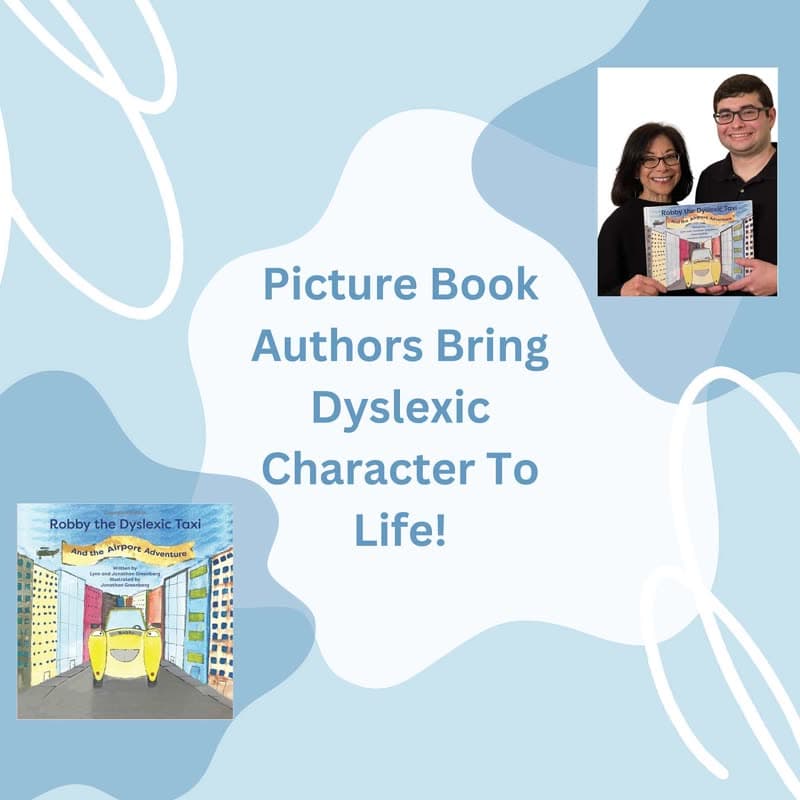
The Importance of Dyslexic Role Models, ft. Picture Book Authors Lynn and Jonathan Greenberg
Lynn and Jonathan Greenberg are the authors of the picture book, “Robby the Dyslexic Taxi And the Airport Adventure”, which is available at https://www.amazon.com/Robby-Dyslexic-Taxi-Airport-Adventure/dp/B0BTZVVX8H/ We are excited to share our interview with them, in which we explore what life was like for Jonathan…
Never miss an episode
New episodes every two weeks. Follow wherever you listen.