
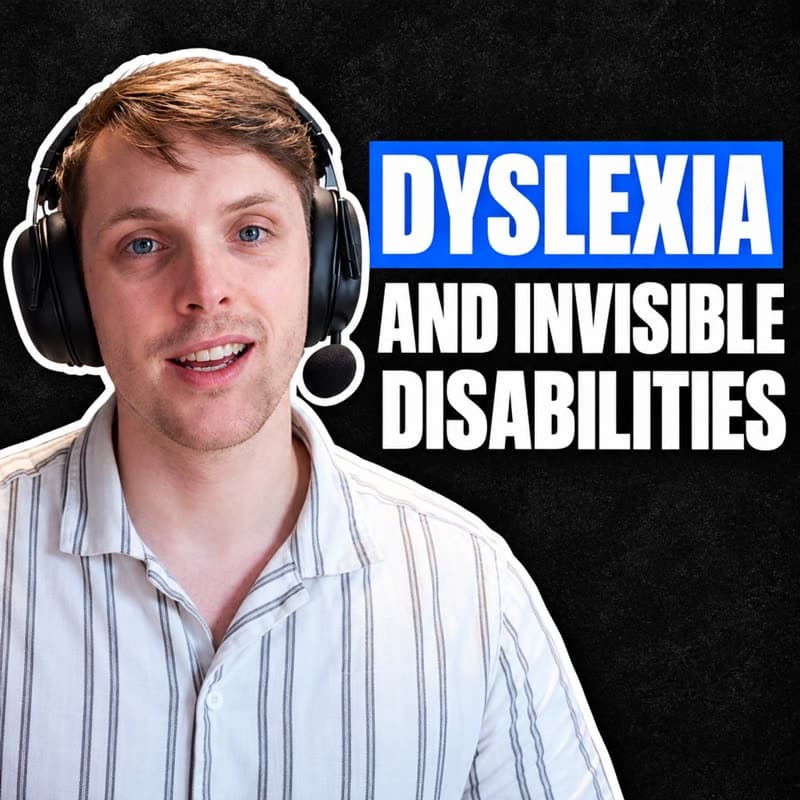
Dyslexic Voices: Filmmaker Alex Leonard on the Disabilities You Can't See
About this episode
Alex Leonard is a writer, a marketer and a lifelong language learner, and he's dyslexic. In this episode of Dyslexic Voices, Alex tells Sonja and Nick about finding out he was most likely dyslexic at age 29. He talks about the ways it shows up in his work, from mixing up names in meetings to triple-checking everything he writes. He reminds us that many disabilities are invisible, so be kind, because you don't know what battles people are fighting. And he explains how adversity fed the creativity that led to an award-winning documentary and his own business
Follow us on Instagram!
Also check out our YouTube channel!
Transcript
Full transcript · 7,039 words · about 35 min to read. Press a timestamp to jump to that moment.
Right? Someone's reading the maps, you know, and they're making a wrong turn. They could be dyslexic. They could have not realized that that was not the right street, right? Or for whatever reason. You know, this is a very specific example. But I think it's that question of, we don't necessarily think about the invisible disabilities when we think about someone who maybe has, you know, a bit of a disadvantage relative to the status quo.
It got me diagnosed when I was in third grade. And it was the most relieving day of my life because I finally had, like, kind of a place to hang my hat and say, see, I told you, I'm not lazy. Definitely not stupid. I just learned differently. Like, that's totally okay. We dyslexics, we were often, you know, just set up for failure because, you know, we were given books and tasks that really are not appropriate for the level that we were at.
So, how do you expect anyone to be open to learning when their entire relationship with reading, with learning, is physical pain? I wish I had understood when I was younger that the fact that my brain worked differently than people meant that I would be good at things in ways that other kids were not going to be good at. I just assumed I can't be dyslexic because letters don't jump up and down for me.
Dyslexia is not a disorder. It is not a disease. Once you sort of own it and embrace it, then you can have the power to deal with it. It's sort of empowering and also enriching to the whole community. To those who don't understand what dyslexia is, that it's not a negative. It's not a problem. It's, like, we keep saying superpower. Hey, everyone. We are Sonja and Nick, and this is Dyslexia Journey.
And today, as part of our Dyslexic Voices series, we have Alex Leonard joining us from Toronto. Hello, everybody. Hey, Alex. Really excited to be here with you, Nick and Sonja. Thank you. So, let's dive in and just start, I guess, at the beginning in terms of what you remember. What was it like before you knew you were dyslexic? Yeah. So, I'm thinking and speaking with you both before the show and looking at some of these questions.
I think it was, you know, I was thinking about how to answer this and thinking through just the process of maybe coming to that realization. And I think it kind of did help answer questions. So, my mom has dyslexia. So, I kind of knew that, you know, from her that you could think differently a little bit. And I think when I want to be upfront in that I haven't formally been diagnosed, but there's things in my life that clearly point this way.
And I did speak to a speech therapist at one point. And you kind of explained the situation and, you know, happy to explain for that because I was doing a TED Talk. And I went to her and kind of explained why I thought I was dyslexic. She said, yeah, you know, you most likely are from what you've told me. And I said, well, like, is there a way to, like, get diagnosed, like, formally diagnosed?
And she's like, there is. But it costs you, like, it costs you thousands of dollars. And it's, like, one of those conditions. I don't know if you even call it a condition. But after the fact, it's not like ADHD where, okay, here's meds or here's something that can help you. It's just kind of like, well, now you know. And so, for me, I was like, well, I don't know if I need to invest that money.
But I – so maybe I will consider that as that point, right, where after the fact, it kind of – it made sense of the way that I would see things or I could say things wrong or just, you know. Sometimes I was, like, the butt end of the joke because of the way that I processed information among friend groups, usually in good faith, of course. But I think that it kind of was a bit of a weight off my shoulders.
It was this moment of, like, huh, that kind of explains things. Not everything, but some things for sure. And how old were you at that point? So, this would have been, like, 2023. So, I would have been 29. Oh, okay. Yeah, a few years ago, really, that kind of came to light or really digging in more into what dyslexia is and kind of thinking more about how my mom had it and how that maybe had a shape.
And influencing parts of the work that maybe held me back. But also, you know, where did that play to some more of my strengths, too? Yeah. Well, so this makes me really interested in how school was for you. It's probably in retrospect now. But, yeah, like, as you look back, like, what do you notice? And I guess I should point out here, too, in case people don't know who are listening, that they've uncovered that there's many genes that are involved.
You know, so it really is kind of a spectrum, even though we say now, like, about 20% of people are dyslexic. It can look really different for different people. Absolutely. So, go ahead. Yeah. Yeah, no, and that's another thing that, you know, I want to get across, right? And that's something that was one of your questions is what would you convey to people? And I think it is the fact that 20%, one out of every five people have dyslexia.
But dyslexia takes many shapes and forms, right? And it's almost like there's a scale of how severe it can be. Some people can't read or write. Like, they just – it's really a struggle for them. For me, I feel that, you know, I have been able to read and write. And, you know, it's interesting. I work in marketing. I work in communications. I'm a very creative person. And I've been on radio.
I've had my own broadcasts where I had to communicate that information. I worked as a music journalist for many, many years when I started out as, like, 15. So, I don't know if it had a role. I mean, it probably did, right? But I guess I didn't see it like that. Or I didn't know if that, you know, how to label it that. Was I always the smartest kid in class? No.
I was always, you know, I was a bit of a troublemaker. But, like, who was it? I don't know. Maybe a lot of kids weren't. Let me come back to your question, though, because I think I've meandered off of it. Yeah. So, I guess as you look back now, are there specific aspects of school that you notice that were more difficult, for example? Yeah, okay. Or, you know, it can be where, like, other people, you know, could be that it was spelling.
But, of course, lots of people aren't good spellers. It can be that kind of thing, too. But now you sort of have the lens of viewing it as someone dyslexic. Yeah, yeah, yeah, yeah. No, so I think, you know, I do think in school and spelling somewhat in, like, where I think it manifests for me is, like, more in the specific words. It was, like, misplacing vowels or, like, sometimes it was, like, you had the kind of the sense of the word, but your sentence structure was a bit, you know, wonky.
Right, and it's hard to, you know, is that just dyslexia or is that just, you know, you're a poor writer, right? Like, it's hard to really compromise that. But I guess in some ways, because I leaned in a lot of the time to being an outgoing person, to enjoying speaking, I could offset it. Right, and with most people, if you have a weakness, you put more effort and energy into it. Like, I really struggled with math when I was a kid.
It's just it didn't click. I still struggle with math a little bit. But because I know that I struggle with that stuff, I feel like I've put more energy into trying to fill some of those holes, so to speak, right? Like, where's my weakest points, and can I wrap extra bandages around them to give that area strength? And so I do think, though, that that, like, the spelling, the overall, like, composition led into work.
In other instances, even as, you know, into my working career, professional degree, where I sometimes would struggle. And, you know, I had to make sure that I, what maybe people normally do double check. I was like, I need to triple check my work. Because the mistakes that normally people would catch, they're like, it looks all fine to me. Right, because that's just the way my brain is processing the information. So I said to someone, and they're like, what's going on here?
There's a few mistakes. I'm like, oh, really? Like, I totally missed those. And I feel like that's, to me, the instance where I think it was like, like, the Lego pieces all seem in place, but there's a mistake. And you just literally cannot see it. Mm-hmm. Yeah. Yeah. So what are some of the other, I guess, manifestations of dyslexia that you see in yourself? Yeah. So when I think about dyslexia, I think in some ways, the way that it comes to fruition in me is, for better or worse, I think it comes through, a lot of the time, it's the way I speak.
It's like, sometimes I'll say something silly, or I'll remember an expression slightly wrong. And, you know, that's my point, but earlier, sometimes it's a good laugh, right, when you're with your friends and things like this. And, you know, he's always saying silly things. I don't need to be, like, I thought I was saying it correctly. But the way your memory works is that it kind of jumbles it together. Like, that's kind of how I would describe it.
In giving directions or trying to say something, it can sometimes come across as, like, scrambled. And so that is really where I think I saw in the day-to-day that when I, you know, eventually did come to a speech therapist and was planning to give a TED Talk on elephant conservation, you know, I was putting a lot of energy and effort into how to be more punctual, how to be more clear. And so I think that it's a bit of that day-to-day, really, where it manifested a lot to me, just in the way you present yourself and the way you speak publicly.
So that's where I've tried to put a lot more effort into being, speak slower, speaking more coherent, choosing your words, right, which I think we can all agree is probably a win-win across the board to put more energy and effort into that, especially as I take on more positions of being a public speaker, trying to get right now to speak with interesting folks such as yourself, and trying to make sure that I'm doing the best possible job.
So, you know, there was a, I did last year a certification to be a chartered marketer in Canada. It's, like, the main marketing certification, and there was a list at the beginning of that that was, like, here are, like, eight non-negotiables that you need to keep in mind if you're a marketer in today's day and age. And it was all, honestly, you know, I spoke to a coach about this after who lead this program through the Canadian Marketing Association, and he said, like, what was the thing that stood out to you the most about this whole certification, you know, covered lots of areas, basics of marketing?
And I said to him, I was like, honestly, that first eight-step process at the beginning, because it was just such, like, a foundational reminder. It was like, as a marketer in today's day and age, you know, you should be, you shouldn't be making mistakes. Like, you should have pretty solid, you know, no typos, no spelling errors. Like, you're the front page, you're the front person, right? You should have basic mathematics. Like, you should be able to calculate our quick ROI or what the quick see-through rate is, right?
Like, all these, and this, so it was a good reminder. But I think even in knowing that, someone, you know, two people, all things being equal, if someone is dyslexic, well, you know, make no mistakes. That's going to be really hard. No simple mathematics. That's going to be really hard, right? So, like, that, to me, was a good reminder about what it means to be a good marketer in today's day and age.
But I also think that we have to, you know, caveat around accessibility and how do we make careers more accessible to people. And that was an area I did want to go into around accessibility later into here and thinking around what that means and how does society become more accessible for both hidden and, you know, more mental capabilities or areas where we should support people. Yeah, I would love to talk about that more.
Yeah. I was going to say it's a good segue into your career first. Maybe we can talk about that first and then get into the more general societal. Yeah, absolutely. So, as I mentioned, I was a music journalist from a very young age. So, I was writing for a platform in, like, the early 2010s called EarMilk.com. Milk for the ears. EarMilk. And so, I worked as a music journalist going to shows, live shows, covering album reviews.
And that really, honestly, was what pushed me into the direction of, like, journalism and marketing and communications. So, that was a really great experience. Followed that by going to school at Concordia in marketing and communications cultural studies with a minor in philosophy. So, very much essay driven, very much not really production side. It was very much all on the theory side. So, following that, I came home. I did one year, home to London, Ontario, is where I'm originally from, just about two hours north of Detroit, close to Toronto, kind of in between Toronto and Detroit, for those who know the area.
And following that, I did one year at Fanshawee College, had an amazing experience, and started my business at that point, which was AL Media, where I focus on video production and doing a lot of mural paintings early on. So, I've been a very creative person most of my life, and tried to find creative avenues where I can express my ideas and express, you know, interesting ways to demonstrate reality in the world around me.
Following that, I actually did a master's program in environment sustainability. So, you know, education has been a big part of my life and continued, and I wouldn't actually say dyslexia has held me back. Maybe from a very young age, you know, I think it manifested. But as I got older and more secondary education, you know, you work to fill those gaps and to be more, you know, judicious with your spelling and your mathematics, of course, your core principles, to overcome some of those hurdles.
And so, following that, I then left my master's program, had a successful year there at Western University, also in London, to start working with a non-profit, the Sustainable Forestry Initiative. So, I was with them for a few years. Most recently, I transitioned then into a biotech space where, again, I'm working in marketing, but working for a company that makes plant-based foams. So, helping them on all their print, design, social media, thought leadership, as well as international trade presence.
And then I shifted, and now I'm actually working in the financial sector, but also within a bilingual English and French, bilingual corporations, for helping them with their communication and reputation management. I want to talk more about the career, but side note really quickly, growing up in Canada, did you have to learn French in school? And how was that for you as a dyslexic? Yeah, you know, you did till grade nine. So, we start grade four, which is like age 10.
So, you learn that till like grade nine, and then it's optional if you want to continue going in high school. So, grade nine, you're like 13, 14. And I didn't. I was like, no thanks. When am I ever going to need this, right? Ha ha, joke's on me. Because four years later, I was like, maybe I'll go to school in Montreal. Well, should have taken French. But it's really hard to learn that.
Like, you're learning French, and it's not, you know, the education, no shade on my French teachers. It's a tough job, right? None of them are totally Francophone. A lot of them just had to teach that as an extra class. So, like, they don't have the best French. And, but coming into Montreal, living there for four years, you know, as much as, yes, dyslexia is part of my identity, I'm also a sponge for languages.
I love learning new languages. So, you know, I really tried to pick up French. I went to do a heavy immersion program after the first year. I was like, I need to learn this. But even before that, actually, before I even came to Concordia, started my university, I went to, I did a volunteer trip in Cambodia, where I was placed in Phnom Penh in the capital. And I did two months there helping teach geography and astronomy at an orphanage.
And because of my time there, again, you know, that maybe having studied communications and cultural studies or moving into that, but I've just, I was like, oh, this is such a cool language. And I saw that by picking it up, you know, I could get better deals at the market by bartering with people. And they love to hear, like, me being like a foreigner speaking their language. It was like, they blew their mind.
They're like, oh, my God, this guy can, like, has a good, like, like, vernacular, too. Like, he sounds like a local. So, so I've always just been really interested in learning new languages and learning different alphabets. And, you know, I find it funny when I tell people this and I think about, you know, dyslexic. I'm like, I'm a writer. I'm a creator. I've made my own comics. I love to learn languages.
I'm like, not the person you would expect to be like, I thought this guy thought dyslexic at a call. He, like, loves languages. So, I don't know. For me, in some ways, it's filling that gap, too. But I've just, I don't know. I find that you get to understand the way that people see the world by learning the new language. And by speaking it through their voice and through their words, it helps build your own understanding.
And usually they say when you're learning a language, when you can start to dream in that language is really when it's like seeping into your subconscious. Is that, you know, can you start to think? Because sometimes, even now, being bilingual, I can think in French. But at first, I, like, had to think in English, translate to French, say the French, right? And, like, that's the challenge sometimes for bilingual people, it's, you'll try, you have to turn one language off to turn the other on in your head, right?
And, you know, there's a lot of really interesting brain research around that. And, you know, that's a whole other conversation. But for multilingualists, how they use the same parts of their brain, the same neurons that are firing together, are wiring together, even in different languages. Yeah, and I want to pick up on one thing you said, which in a lot of ways, you are not a stereotypical dyslexic. And I think that's so important for everyone to hear.
Because dyslexia, like Sanya was saying, at the beginning, like, dyslexia takes so many forms. There's so many different genes involved. And it's, you know, we just really need to, I think we can't say this enough, that, you know, everyone thinks dyslexia is just like, oh, you, you know, write your letters backwards or something, right? And like, it's, there's just so much more to it and so much variation. And it's just so important to get that information out there.
Yes, yes. Yeah, I mean, that's why I saw your podcast. And dyslexia, especially in the past five years, you know, I did the TED Talk of 2023. It really, like, came to the forefront for me. And I was having issues at that work, you know, I was kind of struggling at times. And I'm not to say I came back, you know, with a doctor's note, be like, -huh, this is it. I can continue, you know, like, I didn't use it as an excuse like that.
But as I mentioned earlier, it kind of, it gave that weight off my shoulders. It was like, that kind of explains where I just know, professionally, I have struggled. And I'm like, maybe, like, this is probably part of the puzzle piece that kind of helps understand what are some of those weaknesses. But then, you know, I know you featured the author of The Dyslexic Advantage, which is a really good book. That was a book I read at that point in my life, just really trying to absorb as much information as I can, you know, about this thing.
Right? And, you know, that's what I learned, like, yeah, one in five people have it. And it takes, like, super different shapes, super, some people, as you mentioned, like, can't really read at all, or the words are all jumbled. Some people are like me, and, you know, things just sound a little funky and scrambled sometimes. And then, like, a minor version, most likely of it. But then I've also had a successful career doing things you wouldn't expect people who are dyslexic to do, like being a writer, focusing on communications, writing press releases.
Right? Well, yeah, and interest, I mean, interest, passion, all of that affects things so much, too. But I think sometimes, I think the reason it's also important is, like, for example, with language arts, because I'm always trying to emphasize that, that some dyslexic kids will be really strong. I think in language arts is because there's so many other factors that go into it than the pieces. And then, so, sometimes it is just that matter of, and this, I think, will bring us back to accessibility of accommodations for particular kids or that kind of thing.
So, I'm curious for you, both, I guess, in terms of, because you sort of hinted at some of those struggles and work, like, what that has been for you, but then also then looping into the, what you wanted to say about accessibility. Create a conversation around accessibility. Yeah, so I think, I think some of the struggles really is, is in, it is, like, missing things or things being, you know, and I remember thinking about this when I spoke to that, that speech therapist.
And, like, well, is that dyslexia, or, like, am I just, like, a fast person, you know, like, go fast, break things. Like, yeah, there are going to be mistakes, whatever, but you got the video on time, right? Like, how much of that can I, and essentially it's hard, right? Like, if you were a picture-perfect person. So, where I think it, like, I'm like, you know, that's definitely, I can attribute to the dyslexia versus, like, just, you know, not being someone who always crosses their T's and dots their I's, you know, for lack of a better expression here, is when, is when, like, I remember a word or I remember expression, and I'm trying to use that, or names, for instance, sometimes.
I'm like, yeah, you know, it was great talking with Dave. And they're like, Dave? And I was like, yeah. They're like, you mean Graham? I was like, oh, shoot. Yes, sorry, Graham. Right? Like, it's, like, where I, that's the element of, you know, it's maybe just a, not the best example, but those elements of, like, where I'm trying to be professional in meetings, or I'm trying to remember certain things, and I just, like, remember it in a scrambled way.
And that's, to me, that, like, that jumbling is where I think sometimes that can, that would have created friction, or it would, and it was never anything, like, super gentle rental that, like, would have cost me my job, but it did create enough friction over time that it, like, I'm like, oh, like this, you know, I maybe need better notes, or I need to counter this. Because I'm just remembering things slightly off, usually, or the way that I'm explaining myself, or speaking to represent myself in meetings could be slightly off.
And so, yeah, it didn't need a bit more concerted effort around that. But, but I think, you know, to, to the greater point, thanks to me, to come back to accessibility, it's like, do we, do you really accommodate more for someone in that, in that instance? No, it's kind of like, that's on you to figure that out. Right. But, when I, when I was younger, I had someone close to me who got diagnosed with epilepsy.
and epilepsy is, you know, dyslexia, epilepsies, and other things, of course, of these nature, you, like, you, you could be looking at someone and you can't tell. How do you know someone's epileptic? You don't, unless, of course, unless they're, like, actively having a seizure in front of you, then you know. But, then most recently, well, not most recently, but a few years ago, a very close friend of mine got diagnosed with type 1 diabetic.
Again, very hard to tell with someone's diabetic, right, unless you could see the patch on their arm. But it was, there was a point in my life, and the, you know, finding out I had dyslexia, it was kind of around the same time, but it became very apparent to me that not all, not all disabilities, some people don't like to call it a disability, and that's fair. Like, you can own that.
but I'm going to use disability for the common sense of the word here, for understanding, are not visible. And I think that as we think around, you know, when we think about accessibility and accessibility to spaces, of, you know, a lot of people instantly just go to ramps, they go to, like, elevators, they go to things that can help, right, for, for more visual impairments or physical impairments that you can see if someone needs a walker or someone needs a, you know, if, if they're in a wheelchair, for instance.
But there's so many people out there who also have type 1 diabetes that, you know, they, they need to, if they're low blood sugar, they need to have access to something to spike their, their sugar levels, right? If someone is epileptic, how do you accommodate for that? And so I think, you know, there's an expression like, you know, be kind to everybody because you don't know the, the, the battles that people are fighting to.
And so I think, like, I just maybe be a bit more empathetic, sympathetic with, you know, people on a day-to-day basis when I interact with them in the transit, on the bus, you know, the grocery store, wherever. Because that person who you just think is, like, maybe kind of getting in your face, maybe they have visual impairment and you can't even tell. People can have stigmas in their eyes, right? So you just don't know what someone's going through, right?
Someone's reading the maps that, you know, you know, and they're making a wrong turn. They could be dyslexic. They could have not realized that that was not the right street, right, or for whatever reason. And, you know, this is a very specific example, but I think it's, it's that question of, we don't necessarily think about the invisible disabilities when we think about someone who maybe has, you know, a bit of a disadvantage relative to the status quo.
Yeah. Yeah, I really like the way you took that. I mean, it's such good advice for all of us to really remember to be, to not jump to conclusions, to be nonjudgmental, and to understand that there's so much below the surface in everyone's lives. Yeah. So much, yeah. And, you know, we all live our life, right? We're all just trying to get by. And, you know, people, the World Cup just happened this year, of course, during 26th.
And so something online that was like, the World Cup reminds us every time that it's like, we're all just humans trying to get along, trying to be people, right? Like you're in America, I'm in Canada. We don't have to get into that to know that there are, you know, forces greater than ourselves who a lot of the time are trying to divide us. And I think we're all just good people trying to have a life, trying to be contributing members of society.
We don't want to deal with all that crap, right? Absolutely. And so, yeah, so I agree with what you said definitely on that compassionate and human level. I'm thinking about companies or, you know, employers and stuff, too. That leads me into, I think, also the fact that people have such contributions to give, too, though, right? So I'm wondering if you have any thoughts there or if you want to talk specifically about anything you think may be part of your dyslexic brain that shows up as a, you know, what we think of more as a positive thing.
Like creativity or something. Yeah, yeah. No, I think it's really important to remember that, too, right? Because I'm left-handed. And so I'm, you know, right hemisphere dominant, if you will. Though there's a lot of new evidence that's like the whole left-right brain is, you know, taken with a grain of salt. It's not only my right hemisphere is like swollen and my left is whimsy or anything to that, you know, that extreme.
But I do feel, because I've been a creative person, because I've done murals, because I have, you know, a successful videography business teaching a lot of these skills.
I mentioned that at one point I went to Cambodia, and that was in 2013. In 2018, after I had graduated school, my undergrad at Concordia, I entered a contest and I was able to go. This will come back full circle, I promise. I was able to go to Sri Lanka, actually, to do research work. Out of over 5,000 applicants, I pitched myself as the best person to speak on elephants to do this elephant conservation work.
And I won this amazing travel grant. And when I was going there, I was like, oh, I need to, like, film this. I need to document this process. Like, this is an amazing opportunity that's just, like, fallen in my lap. I mean, you know, I applied for it. I worked for it. But I won it. So I was able to go. So, you know, that was kind of actually a bit of a genesis to start my own getting involved as a business owner.
And, like, oh, how can I, like, actually enterprise this and make this, like, a formal thing? And from being more of a business owner, as business owners know, you got to wear a lot of hats. You got to own your, like, taxes. You got to own your marketing. You got to, you know, you got to drive sales early on, right? You got to do all this stuff. And it opened up this, like, I never done, like, business taxes or things like this.
This is hard. And it kind of came back and reopened a lot of, like, the math problems and some of those other problems that, you know, that I had from way back when I was a kid have to come to light, right? But through that challenge, I think I, you know, as much as dyslexia has hindered me in places, I think it's also added to that creativity. It's added to that sense of adventure and that curiosity with the world.
And, yeah, okay, I see things differently, but that's okay, I think, like, that I've been able to embrace that and actually use that to fuel my passion and my drive. And so a lot of that trip that I did in making this film, and this is a 20-minute award-winning film that's now premiered around the world. I've gotten great exposure from this documentary. And I've now created, actually, a product to help teach video production and to teach people this, but also less from more, I guess, the accessibility sense that we were just talking about.
But still, there's parts of that. But more thinking more through, like, a waste resource mindset. Like, how do we just do this if you're the only person on set, if you're an independent creator? And I think that, from my understanding, there's a lot of really successful business owners and creatives who have been dyslexic because they think differently, right? Not to borrow from Apple too much there, but there is a bit of a uniqueness in which you see the world that is unique.
And, you know, you don't see the sides like everyone else does. You make up your own side, right? Like, so I think that, for me, it's that, you know, that independentness of if oftentimes if you have more in an extreme form of dyslexia and you do drop out, you might go start a business. You might go do something else. And then, you know, sure, you don't know how to do, like, some math or advanced math, but you have really good people skills because you've had to overcompensate by speaking to people a lot, you know?
And so I think that it's like, don't, it's too easy to get down in a rut if you find this out about yourself or you feel like you're struggling with a condition like dyslexia, like type 1, like epilepsy, like any of these, you know, even more traditional cognitive hindrances or physical hindrances. But a lot of people rise from the ashes when they get these diagnoses, right? This is fuel to their jets.
This is fire. And so I think that a lot of the times I've been able to turn my adversity into opportunity and to try and, you know, match that with extra effort and versatility. And that I've been able to see success because of that rather than having the position of, like, woe is me. Yes. Yeah. So as we get to the end of the interview here, we always like to ask people, what advice would you have for kids out there with dyslexia?
Yeah, I think, I think my advice for kids, you know, you had an interesting episode previously, just to come back to it for a second and a little tie in. We had an episode on phonics, I think is the way you say it. And in the tail end of that, you talk about the challenge now with kids are reading less and are on devices more, right? And, like, this is obviously a huge, you could call it issue, but I guess for me, it would maybe be just advice for kids who have dyslexia or maybe kids who know other friends who have dyslexia or other conditions is to try and learn more about the world.
You know, I've been, I was very fortunate at that young age in 20, 20, 13, I was 18 years old, you know, not a kid per se, but I was able to travel to Cambodia on my own. And that was a super eye-opening experience. And I think it's really easy in our day-in-day life, you know, not just as a kid, as we get older, any stage of life, that you become focused on your own issues and your own, like, condition and place in the world.
And you kind of lose track of everybody else. And, you know, and, and it's, it's a cultural thing too, right? Like, it's not, that's necessarily a bad thing. Us in the West are very more individualistic in a sense versus, you know, East Asia is more, it's more collectivistic in terms of, like, society, the way you view others. And, and that's just, you know, there's, it's not right or wrong. That's just cultural differences.
But I would challenge people to be more, let's say, empathetic, to be more aware of, you know, especially for kids. Kids can be pretty nasty, you know, and they don't mean to be, but like, they pick on each other. But like, but they pick on each other in a way where they're just like asking questions. They don't maybe realize that it's like a nasty question, right? Or like, they'll make jokes at each other's expense.
So I would say like, maybe pause on the humor and maybe the nasty jokes, but like, use it as an opportunity to learn. Like, learn from that peer in your class. Learn about yourself by doing more research. And I think, you know, to the conversation you had about, like, how do we get kids back opening books again? Because it's in the U.S., the amount of, like, literacy, the amount of kids who are reading is declining.
And all ages, it's, it's declining. And that's not a U.S. phenomenon. That's honestly a global phenomenon. But people don't like to read so much anymore. And so I think that reading is such a good way to, like, nurture your brain and your mind and your imagination. And we need to, you know, we need to pick up more books sometimes and put down the ticky-tockies. Right, right. That's very true. Well, so as we close out here, first of all, thank you so much for coming on and speaking.
And it's, it's just always so wonderful to hear people's different journeys. And you have, of course, your own unique one here. Thank you so much for having me and having these conversations and talking more about dyslexia. Because so many people don't know enough about it. Yeah. Well, and then just, yeah, if you have any final words, feel free to share them. But otherwise, I wanted to know where people can find you and, you know, what your services are as well.
Because you do have a business system. Yeah, absolutely. So, honestly, the best way to find me is, I'm pretty, in terms of social media, I'm pretty active on LinkedIn. Not everyone uses LinkedIn. That's fine. I am on Instagram, AlexLeonardMedia, L-E-O-N-A-R-D. I'm sure we'll have links. And on LinkedIn, it's just, hey, AlexLeonard, for my handle. Same with YouTube. Same with Blue Sky. So, I'm on some of these platforms. My website's AlexLeonardMedia.com. If you go to AlexLeonardMedia.com slash G-V-E for Green Video Essentials, there is a, that's my flagship product, which is teaching video production from a solo creator, small independent team to teach you how to be more efficient, both from an environmental sense of just looking after your gear.
But also from a more creative sense of how do you find inspiration around you and how can we lean into that and document that process along the way? Because I think that's super foundational. And anyone who's listening, they can use the code, all one word, all lowercase, Creatives for Climate. And that will get you 50% off all my products, and that's indefinitely. So, that's just a nice special offer for your listeners here.
Thank you. But I just want to say, again, if you do have dyslexia, if you haven't read the book, Dyslexic Advantage, highly recommend that. That was a really eye-opening book for me. It's just as another, you know, shout-out to the core part of this. But more importantly, if you don't want to read that book, not everyone likes nonfiction, pick up any book. That would be my final call to action. Pick up any book and check it out.
And, you know, let's get reading again. Because I think that even if you struggle with it, find the fun with it. And I read a ton, and I love to read and recommend books to people all the time. And Thrift Books is a great spot to reduce our dependence on primary virgin sources of paper. Thrift Books, you can get amazing book collection there for very cheap. That's pretty much where I got all my books now, if you don't know about it.
Great. Fantastic. All right. Well, thank you, Alex. Really appreciate your time. Really appreciate you coming on. Fascinating conversation. Thank you both, Nick and Sonja. And thank you, everyone, for listening and to continuing your own dyslexic journey.
More from the show
Is the School Honeymoon Over?
Is the Back-to-School Honeymoon over? Some signs it might be, plus what to do about it! Follow us on Instagram! Also check out our YouTube channel!
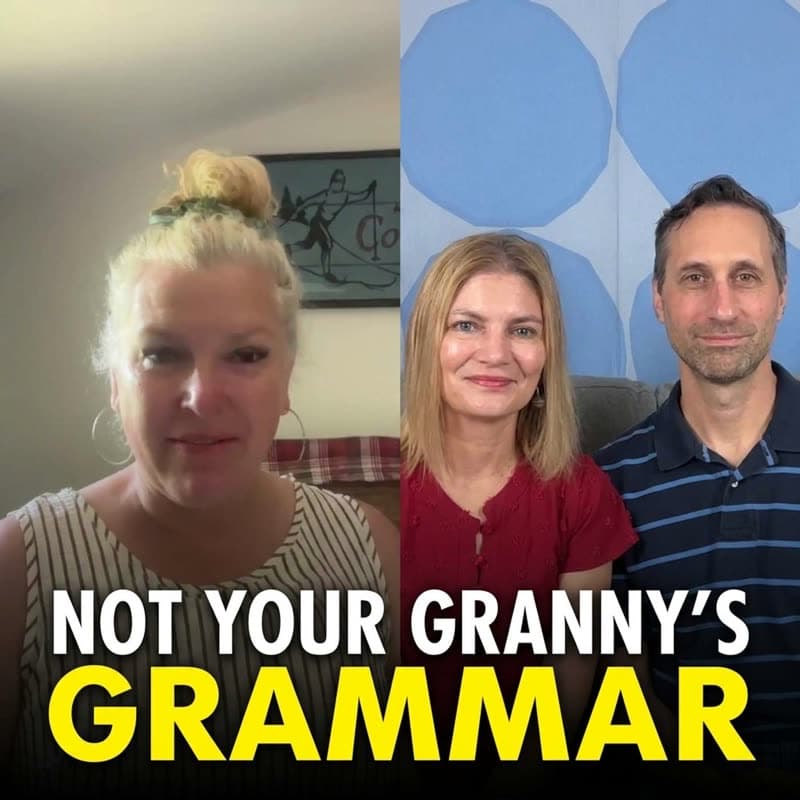
Not Your Granny's Grammar!
Patty McGee is the author of Not Your Granny's Grammar and an experienced teacher and educator. Follow us on Instagram! Also check out our YouTube channel!
The Definition of Dyslexia Changed: Here's What It Means for Your Family
For the first time since 2002, the International Dyslexia Association has rewritten its definition of dyslexia. The new version quietly removes two ideas that have kept kids from being identified for two decades: that dyslexia has to be 'unexpected' given a child's intelligence, and that a phonological deficit is…
Never miss an episode
New episodes every two weeks. Follow wherever you listen.