
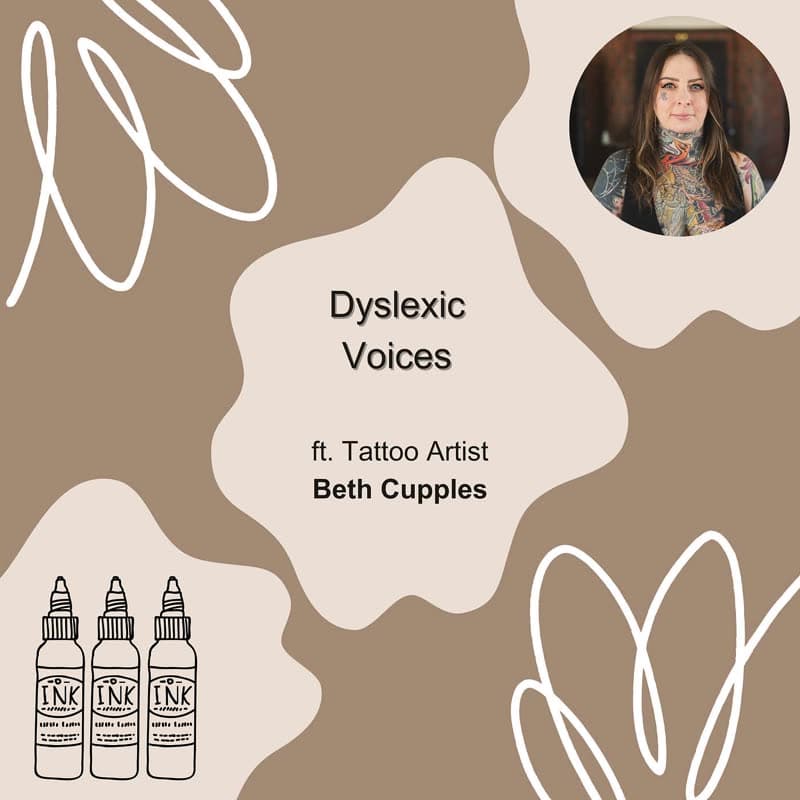
Dyslexic Voices: Tattoo Artist Beth Cupples
About this episode
In this fascinating interview with tattoo artist Beth Cupples, we explore her dyslexia and how it interacts with her art. You can find Beth and her work on instagram at https://www.instagram.com/nine.crows
Transcript
Full transcript · 7,863 words · about 39 min to read. Press a timestamp to jump to that moment.
How does anybody trust me to draw on them permanently when they're watching my handwriting and it looks like a doctor's notepad after a 14-hour shift, you know, like, it's terrible, like, but then when I start to draw, I mean, I can draw in calligraphy or in script, as we call it in the tattoo industry, I can draw that really easily because in my head it's drawing, it's not writing. It got me diagnosed when I was in third grade, and it was the most relieving day of my life because I finally had, like, kind of a place to hang my hat and say, see, I told you, I'm not lazy, definitely not stupid, I just learned differently, like, that's totally okay.
We were dyslexics, we were often, you know, just set up for failure because, you know, we were given books and tasks that really are not appropriate for the level that we were at. So, how do you expect anyone to be open to learning when their entire relationship with reading, with learning, is physical pain? I wish I had understood when I was younger that the fact that my brain worked differently than people meant that I would be good at things in ways that other kids were not going to be good at.
I just assumed, I can't be dyslexic because letters don't jump up and down for me. Dyslexia is not a disorder. It is not a disease. Once you sort of own it and embrace it, then you can have the power to deal with it. It's sort of empowering and also enriching to the whole community. To those who don't understand what dyslexia is, that it's not a negative, it's not a problem, it's, like we keep saying, superpower.
Hey, everyone, we are Sonja and Nick, and this is Dyslexia Journey. Today, we are excited to welcome Beth Couples to talk about her journey with dyslexia. Hi, guys. We're so happy to have you here as part of our Dyslexic Voices series. So, we just like to dive right in and we kind of just go through the whole thing, taking you back and then moving up from there. So, yeah, just tell us, like, what it was like early on.
Like, maybe this was before you were identified. We'll get into that as well when you're identified. What was it like? It was tough because I didn't get identified or diagnosed until I was, I think, 19 or 20. So, it actually took me quite a while to get a formal diagnosis. I was originally put in glasses, which I hear is actually quite common because a lot of kids just say, like, I can't see, I can't see, I can't read.
And I did have a slight astigmatism in both eyes, so that did help. But I remember trying to explain to teachers and my parents that it kind of, it wasn't that I couldn't see or that I couldn't understand something. It just, everything looked like it was kind of moving around all the time. And if you tell your optometrist or your mother or your teacher that it looks like you're seeing double of something, obviously, they're going to think to put you in glasses.
But I didn't really have, like, the vocabulary or the technical words, especially as a young reader, to try and get out, you know, exactly what my experience was. All I knew is everything looked jumbled and I couldn't see right is what I was telling people. Right, right. It's interesting that you could express that that way, though, because we do, I mean, that is often how people describe it, right? Yeah. People have slightly different ways they do, but that's definitely one of them.
Yeah. Yeah, so it wasn't until I, because, like, reading was just, it was so, I was so slow at it, but I loved reading. But it was just, it was such a chore to get through in school that I kind of fell off as soon as I didn't have to read anymore for a grade or a test or a book report. I just stopped reading. And then it wasn't until, like, I moved out and I had just started my career and I wanted to read for fun again.
And so I was getting book recommendations and I remember, like, I'm like, man, I can't read at night or I can't read if it's too bright out or I can't read if this or that or the third. I need new glasses. You know, it was always something. And then I finally was just like, I think I'm going to go talk to somebody about this. And, you know, I went back to an eye doctor and they were like, your prescription's fine.
We don't really know what the problem is. So I went to talk to my general practitioner and he was actually the one that was like, you know, could you describe a little bit more in detail what it looks like when you're trying to read? And that's when I described kind of like the letters moving around and things seem jumbled and reading things backwards, reading things over and over again. And he was like, do you ever have trouble with your right and your left?
And I was like, all the time. He's like, do you have trouble with directions? I was like, I'm miserable with directions. And then it all started to come together where the biggest like aha moment for me was he asked me if I write in all caps or all lowercase. And I've always written in all caps. I used to get in trouble. The funny story is the only failing grade I ever got in school is I got a D in handwriting because I just couldn't do it.
My cursive was beautiful, but I think it was because that felt more like drawing to me and writing feels more like writing. So when he was like, you know, sometimes your brain, in order to make one alphabet instead of two alphabets, you'll write in all caps or all lowercase. That way your brain doesn't get as confused. And I was like, that's really interesting. That makes so much more sense to me. And to this day, I still, when I take consultation notes or I'm writing, I'm a big D&D nerd, so I play a lot of D&D.
So when I'm taking notes for D&D, everything's in all caps because then it's only, I only have to focus on one alphabet. Interesting. I have so many follow-up questions. Let's see. You too, but go ahead. Let's go back first, I guess. So, well, actually, at first I'm going to just ask you because I think that's so interesting that you already identified that they love to read, even though then it dropped off.
Yeah. Do you know, like, do you remember why? Like, was there a particular reason why you just love story or were you read to a lot? Or I'm just curious about that because a lot of people, like, kind of really fast get to the dropping off and then don't like reading. You know, they like reading. Yeah. So that's really interesting to me. I think I have to attribute a lot of that to my parents.
You know, they really encouraged me a lot with my imagination from an early age and the fact that I love to write as well as reading. So I would write stories. I'm the oldest of four children. So I was constantly, like, entertaining my siblings and writing little stories for them and making puzzles and making board games. So, like, I loved story and storytelling from a very young age and my parents did read to me a lot and I liked that a lot more, obviously, because I didn't have to do it myself.
But, yeah, I mean, it just, I was so attracted to, we're just such a nerdy family. It was all Star Wars and Lord of the Rings and The Hobbit and I read Kafka growing up, you know, like, it was just all this kind of stuff that I was just, I was fascinated with. But it was, my comprehension was there. It was just something about putting it together just didn't really make sense.
So, yeah, it was just, it was my parents that really fostered that imagination from, like, a really young age. Yeah, that's, that's great. And with, with Dungeons and Dragons and with other fantasy stuff, I know for people with dyslexia, there's a lot of, like, foreign names and stuff you read and pronounce. Like, is that a struggle for you? So, funnily enough, and I haven't really done a lot of delving into this, so I'm not sure how much is just my own lived experience or if this is, like, a common thing.
But, despite having troubles with, with the, the challenges of dyslexia itself, I pick up languages pretty easily. I can speak, I'm conversational in Japanese. I know a little bit of French. I know a little bit of Spanish. I can speak some Greek. I know a few words of Korean. so, like, it's something that I, that makes a lot of sense to me once I can pick it up. And Japanese, I don't know if you know this, has, like, three or four different alphabets.
but they're symbols. So, it actually is easier for me to read in Japanese sometimes than it is in English because the fours and the Ls and Rs don't all look the same to me. So, when I'm reading foreign words or foreign names in D&D or a fantasy book, it almost, like, picks up as, like, a different language. Like, I hear it more in my head than I do when I'm reading it.
Mm-hmm. Yeah, that makes sense. And that's interesting just to hear your experience with language, too, because I like that you bring that up because, a lot of people, dyslexic people, are discouraged from foreign languages completely. And I don't, well, I think absolutely sometimes they need it as an accommodation, especially if it's going to be done in a very, very strict, certain way. However, I think it's absolutely true that there are ways that they can be very good at languages sometimes, and it's going to vary from person to person.
Yeah, like, did you learn Japanese from, like, did you start learning Japanese from, from anime and things like that? you know, originally, yeah, it was, it was just being a big anime and manga nerd, for sure. but my high school actually offered Japanese as one of their languages. So, I did that, and then I took, a Japanese discipline of martial arts, so I learned even more of that. And that was more, like, I learned, you know, like, formal Japanese in school, and then I learned more, like, military-based Japanese from martial arts, so I could kind of put all that together.
but I, if, as long as I can hear it and process it auditorily, it, it's a lot more, it makes more sense to me. If I can speak it, if I can feel it, if I can touch it, reading has always just been, like, the, the biggest difficulty, reading and just, like, writing out, longhand. Interesting. So, I'm curious, I guess, too, about just how school was in general. So, you weren't identified yet.
I'm guessing you were doing a lot of compensating-type mechanisms. You mentioned you'd only got a D in that handwriting. So, you know, and you got through it. So, I'm curious if you can recognize, especially looking back now, what you were doing to compensate and, and, and how it all went, too. So, it, I, I don't know if this is just how my brain works, in general, but I can, I can usually identify pretty quickly if something doesn't make, like, I do this a lot.
if it, if it makes, like, like, common knowledge sense, right? So, if I read something and it just sounds absurd, I would just read it over and over again. So, they didn't really classify me as, like, a, like, a, like, a bad reader, but I was very slow because I was, like, a self-correcting dyslexic where I'd read something and go, that was wrong, and read it again, or that was wrong, and read it again.
Read it backwards, read it forwards, read it from the top of the paragraph, read it from the bottom of the paragraph. So, I, like, I knew that something wasn't right if the sentence didn't make sense, and I'd read a word, and I'd be, like, that doesn't sound like the right word, and so I'd have to go back and read it. So, it was just a lot of, like, I guess I was just picking up context clues, which is also, like, how I've picked up language a little bit more easily, is that if you know a couple words, you can kind of pick the rest out from context.
If you're listening to, like, a sentence, or you're watching a movie in a foreign language, I can kind of put it together, but a lot of it, and that's, that's a lot of my life as well in my career, is I have to pick up those context clues with people, or, or nothing would make sense, and I would be very bad at my job. No, it's interesting, because, yeah, you mentioned it's how your brain works, and it, I'm sure it is, and it also probably got reinforced, right?
So, you probably also, with having that be such a strong skill, then that got so reinforced that, like. Like, you can even use it in all these other contexts now, that's great. Yeah, so, like, it was almost, it felt like this kind of superpower that, like, I could kind of, like, no pun intended, but read between the lines, and just kind of figure it out, you know? Like, I just, you just figure it out until it sounds right, or, you know, I'd be driving and read a street sign wrong, and be like, well, I know that street isn't in this area of the neighborhood, so it must be, I must have read it wrong, you know?
So, it's, to be frank, it's kind of exhausting. Yeah, right. But it did work, you know, I did, I did all right in school. It was, it was a struggle. I don't think school was ever easy, but my parents really pushed me to take it seriously, and I had this hunger for knowledge in general, and I know that I, you know, what I wanted to do in my life was going to require me to learn those skills, kind of, no matter what it took.
Yeah, yeah, and do you feel like, because, I mean, I'll guess this is a little hint already that you're an artist, but, you know, did, do you feel like that was sort of, like, I mean, it was so much part of you, probably, it's hard to even say this, but, like, you know, when people have these strengths that they're really good at, they often go into that passion, and then that also, like, helps when other things are harder.
Did you feel like that happened for you with art as well, or was it a different trajectory for you? No, I think I knew kind of what I wanted to do from such a young age, because, like, I have just always been fascinated with art and creativity and culture and stuff like that, that, you know, I delve into that, that, that world of whether it's manga, or it's the art style of Lord of the Rings, or whatever, you know, I just, I kind of became involved in that so quickly that I knew that, like, if I wasn't going to be good at something that I liked to do, then I needed to kind of pivot and find something else that I do have that passion about, that I can apply those skills to, if that answers your question.
Yeah, yeah, that does, that does. Yeah, so did you take art classes all through school? All of them, everyone that my school offered. I took everything from web design, to ceramics, to painting, to, I actually started the art club at Palmer High School. They hadn't, they didn't have an art club until I went there. Okay, that's cool. Yeah. Yeah, it's kind of interesting. And really quickly before we get on to the trajectory from there, did you ever find it frustrating in art?
I'm just curious because I've heard different things from different people. Some people, like, they have that creative side and, like, art class with the way it's structured and feeling more like class. Because they do them very differently. Some will make you take all these notes and, like, have all these, you know, like, certain ways they do it that are very, like, kind of class and language oriented. I was just curious what your experience was with that.
Like, did you just not care because you were pushing through it? Or did that ever frustrate you? Or did you not have classes that were like that? Maybe your teachers were different. It varied, it varied. We moved around a lot when I was growing up. So I spent time in a lot of different schools with a lot of different teachers. And just obviously the chaos of just moving and being a young child kind of added to the stress and the pressure of, like, trying to find those passions in school and trying to find classes that made sense to me.
There were definitely some classes I took, like, art history. Like, oh, my God, I could not think of a harder thing to do. It's nothing but names and dates. And, like, I just couldn't keep them straight. I'm like, is it 1906? Is it 1609? I have no idea. Like, when was Picasso alive? You know? Like, turns out he actually died not that long ago. But, yeah, it was, like, that kind of stuff was really tough because, I mean, I hate to say this if anybody in the tattoo industry gets a hold of this.
But, like, art history in the traditional sense didn't really interest me because it was a lot of, like – I'm sure if I took collegiate-level classes, it would be a little bit different. But in high school, they're really just trying to cram, like, the masters down your throats and the names and the dates and all that kind of stuff. And it just didn't interest me. So I think I had some teachers that were, like, you have to just get through this.
And then I had other teachers that were, like, hey, we know that you have – because, like, people call art an EZA. It's like taking an extra gym class. You know, some kids think I'm just going to go in there, I'm going to scribble on a piece of paper for 60 minutes, and then I'm going to get my diploma. For me, I think a lot of teachers, fortunately, kind of recognized that passion in me at a really early age and was like, hey, here's the assignment for today, and then here's your secret assignment.
You know, I always felt like this secret agent of, like, of the art world in school where it was like, hey, you have to make three pots. Everybody else has to make one. We're going to, like – you're going to build my personal website and web design class because you're good at it. You know, so it was, like, a lot of that kind of stuff in school where, like, I did have teachers that identified that, like, I did take this seriously, and I wanted to pursue a career in art.
So, yeah, I mean, it was a mixed bag, but, like, I got through it. If I never have to read another art history book, I think I'll be pretty all right with it. It's pretty dry. Yeah, that's fair. Should we shift gears to your career trajectory then? Yeah, absolutely. Kind of in there already a little bit. I think we're at the beginning. Yeah, it's such a huge part of my life that it's funny that I actually – so I got my apprenticeship straight out of high school.
I did not go to college. I did get accepted to the Rocky Mountain College of Art and Design, decided it wasn't really the right path for me. I knew that even if I did get a degree in art, while that might have been helpful, I would still have to do a formal apprenticeship after that. So I decided to skip the four-year degree and the hundreds of thousands of dollars of debt it would have been.
And, honestly, I was just – I was done being in school. I didn't really enjoy it. It was hard. I had all these tools and mechanisms. And I just wasn't a huge fan of it. So I did get my apprenticeship at – it was 2009, and my birthday is in July. So I would have been 18 turning 19, and I just hit the ground running. I mean, I was doing everything I could.
And the cool thing, and maybe one of the downfalls of the tattoo industry, is nobody really cares what your background is. Nobody cares about your diploma or if you even got your GED or if you went to school. Sometimes, even, you know, if you did go to college and then decided to be a tattoo artist, you got called an ARC snob, you know? It's like – it's its own world. And I loved that because I didn't – nobody was like, hey, sit down and take all these notes.
It was like, hey, hold this machine. Take it apart. Put it back together. Like, draw, feel things, set things up. And, like, I'm such a tactile learner that I took to it so quickly. And actually, as of 10 days ago, I had my tattoo-aversary, and it's been 16 years. Oh. Yeah. Yeah. It's amazing. It's something. I know. That's amazing. And, no, I was going to ask, because you started mentioning this, that, you know, when you take notes for clients, you know, before they're going to have their session and that kind of thing.
So I'm curious, like, how – and it doesn't have to necessarily be compensation only, but, like, how in both the ways where it's helping you, just your natural style of your – how your brain works, and also maybe ways that you have to compensate, like, how you see that when you're doing these sessions with clients and doing your tattooing? Oh, God. Honestly, it's one of the only things about tattooing that still makes me very nervous to do in front of a client.
I've tattooed, like, at conventions with hundreds of people. I've tattooed in front of, like, somebody when their spouse is sitting there watching me. I've tattooed in front of my mentors and my bosses and my peers. The only thing that still just, like, makes me absolutely rattled is having to write out in front of people. One thing, and I actually learned that this was pretty common with dyslexic people as well, but here I actually have it.
I hold my pencil really weird because it was just the only way that I could get it comfortable to, like, get the letters out because I have to, like, really squeeze it to kind of, like, get to write the right way. And, you know, if you are my client, you will know that, like, I do like to write things out and take notes because, like, I see it visually. And I don't really want to be, like, typing on my iPad while somebody is speaking to me.
I kind of like to engage a little bit more, and I think it's a little easier to write things out. I do the same thing when I play D&D, actually, is I take those notes longhand because it does kind of force me to, like, look at it and memorize it. But the worst part of the consultation is always when I go, okay, just give me your contact information and I'll write down your phone number.
And every time somebody's, like, 719, Tuesday, and I'm, like, 917, and I have to erase it, and I do it over it. It happens every single consultation, and I'm mortified because people are watching me, and then I have to, like, kind of erase it. And the other thing that maybe this is just a subconscious kind of, like, fear of mine, but I always think, like, my handwriting is really messy. It still is.
It never got better. But if I'm booking, like, a script tattoo and somebody's watching my handwriting. I get it, yeah.
Promise, it's a different thing. It's a different thing. But I'm, like, how does anybody trust me to draw on them permanently when they're watching my handwriting and it looks like a doctor's notepad after a 14-hour shift, you know? Like, it's terrible. Like, but then when I start to draw, I mean, I can draw in calligraphy or in script, as we call it in the tattoo industry. I can draw that really easily because in my head it's drawing, it's not writing.
And I've had to explain that to my clients before because I do have people that ask that are, like, oh, like, what's up with that, you know? And I'm, like, oh, I'm dyslexic and it's really difficult for me to write out longhand sometimes. I was, like, but it does turn on a different part of my brain when I step into the drawing realm. So, honestly, that's the biggest struggle is that consultation moment.
And then, of course, going back and reading my own scribbling notes is pretty rough, too. But I've figured it out. I know that my fours look like ours and my Ls are sometimes upside down, you know, or whatever it is. Well, let's talk a little bit now about how – okay, so artistry in general and tattooing specifically is such a – like, you need such good 3D visualization skills. Yeah. And that's something that we talk about a lot, that, like, people with dyslexia often have very strong visual spatial skills.
I didn't know that. Yeah. Huh. So, tell us a little bit about, sort of, your visual spatial skills. I know that you have previously mentioned that you can just, you know, visualize what it's going to look like on someone's body very easily. Yeah. Yeah. Once I – I call it head drawing. Once I've gotten my head drawing done, I can usually get a drawing out on paper within two to four hours.
And it doesn't really depend on how big or how complicated it is. As long as I can kind of, like, sit there and twist it around in my head and move it and kind of figure out, like, the composition, where things are going to go, I can get it out on paper pretty easily. Because, like, I actually just recently learned a couple years ago that there are some people that don't have, like, that mind's eye view.
Like, when they close their eyes and they think of, like, picture an apple, they actually picture, like, the word apple instead of, like, a physical apple. Like, that blew my mind because I thought everybody just sees stuff in their head constantly. Because when I think of, like, an apple, not only can I visualize it, like, in very, like, adept detail, but I can also, like, visualize it in, like, that 3D reasoning and then also, like, taking it apart and moving the light source around.
And, like, it's actually, like, it's like playing a little video game in my head. Yeah. No, that's really interesting. Yeah. No, I can't. I can't do that. No, yeah. Really? No, not to the degree. I can do it a little bit because I have some pretty good visual-spatial skills, but not to the degree you're talking about, certainly. It's wild. It's also a little exhausting, if I'm being honest. Interesting. Yeah. Can you talk a little more about that?
Yeah. So, I, my dreams are very vivid. My 3D reasoning in my head is very vivid. If I close my eyes, I know this sounds kind of crazy, but, like, I can almost, like, play, like, movie-quality things, like, just in the backs of my eyes. Like, I can just, I can pull all that from memory, and it makes a lot of sense. So, when I'm trying to get somebody's idea out of their head, especially if I have a client, which is most people who are like, I cannot do that.
I have to take, like, those context clues that I've learned, whether it's, like, their scribbly notes, or their little drawing that they did, or just, like, you know, words that people will use and kind of put that together. Because, like, everybody comes in for an in-person consultation. Because if I have to sit and read through a giant email of what you want, I'm going to miss things. So, like, that's kind of how I've circumvented that a little bit.
It's, like, I need to sit and talk and feel and look at the person and, you know, take pictures and, like, you know, feel the texture of your skin. And if you have a scar that we need to cover up, like, that's where I start popping into my element. But as far as, like, just recognizing things in my brain, it is very, very vivid and easy for me to do. So, I think, I always thought there was something kind of wrong with me where it's, like, man, I can think of these words.
And, you know, I took, like, public speaking in high school as well, which helped greatly in tattooing because a lot of my job is talking. So, it was really frustrating to be able to comprehend things and get the words out but not be able to, like, physically write them. It was so hard to do. And it made math nearly impossible because then there was a whole other alphabet and a whole other language that I had to learn that I was, like, I'm, this is just, this is beyond me.
Interesting. Interesting. Yeah, do you feel like the, because you also got quite good in martial arts, do you feel like that is the same type of visual-spatial skills or something different? I think it helps. I can think, so, back when they were still, I don't know if they do gifted and talented anymore or if they call it something different. But I was in our gifted program and they, my, like, whatever, they give you these weird categories of, like, things that you're particularly good at, right?
And mine was spatial awareness and reasoning. so I can, my sister always used to give me crap for this, but I have, like, all my artwork kind of back here in the house. It looks like it's a little tattoo studio, right? but I will hang things without a measuring tape or a level because I can just look at something and be like, oh, that's about six and a half inches. And she'd measure it and it would be six and a half inches.
So it's like, I, when I look at something, I can, I can kind of, like, make sense of it. So, yeah, when I was doing martial arts, it's not like, I mean, the lefts and rights were really tough and the right hand and the left hand was really tough and stuff like that. But once I got into, it was probably sparring, like, fighting and competing where it was much more, like, free form.
that was really easy to me because I was, like, I'm using that, that visual reasoning in the 3D space to make sense of things. Whereas doing, like, katas or forms is a little tougher because it's like, now you're going to step onto a 45 degree angle and you're going to use your left foot to point to the west and your right hand. And I'm like, none of these words mean anything to me.
Let me hit something, you know? So, I, once I could memorize it, which I think has been another compensation tool for me is just pure memorization. once I can memorize something, I'm usually pretty good at it. So, like, whether it's memorizing a form in martial arts or memorizing, like, a, like, a drawing technique or phrases of a language, once I have it memorized, my memory is actually pretty decent. Yeah. Yeah. Yeah.
Anything else you notice, I guess, in any area of life? You mentioned a lot already, actually. You mentioned, you know, when you're driving, just using those context clues and, like, does this make sense? You mentioned a lot of things. Anything else come to you, like, just about how you notice it in everyday life? And that can include in advantageous ways, too, like visual, spatial, anything. I don't know. I think the biggest thing for me is, this is something that I was taught very early on in my tattoo career is that precision is everything, right?
And not just physically when you're tattooing, but when you're, when you're drawing or when you're setting up your station, there's a particular way to put your eight caps in a row and face your bottles a certain way. And that way, if something is going wrong during the tattoo, you don't have to, on the fly, troubleshoot, is it my ink cap? Is it my needle? Is it my cartridge? Is it that you can just go, like, something's wrong with my line work?
Maybe it's my hand pressure. Maybe it's the client's skin. Maybe, you know. So, like, I've taken that precision into, like, reading and writing because I still do, I actually still do write quite a bit. And, I'm a DM for my D&D group, so I write the whole story as well. I just try and take all of the other aspects out of it and make sure that everything is well lit. I, you know, I make sure that I don't have a headache.
I make sure that what I'm writing is, like, the right, the right font size so I'm not straining to see something, you know. So, I, what I've tried to do is just take away all the other factors. I actually don't wear glasses anymore, but, like, if I'm going to be reading for a long period of time, I do have a pair that I can, like, make sure that I put on so I'm not straining in those ways.
and then, then it just comes down to, like, me and one problem. It's just me and the problem. And then I can kind of, like, take it slow and read at my own pace and read for fun, you know. And I do get, I still get frustrated sometimes, especially when I'm, like, you know, I'll read something too quickly and then have, you know, I didn't absorb any of it because I was just skimming and my brain was just making up random jumbly words in my head, you know.
Like, I've got a, I've got mail on the table right now that I need to read and I'm just like, I cannot be bothered with that. Like, there's no way. Yeah. So, when you read for fun, do you always do it with physical books or do you like audiobooks? So, I, I've tried audiobooks a couple times. I find that, when my mind is given more than one thing to do, it will wander.
and if I have something that seems, like, backgroundy to me, because, like, I'm, I'm a millennial. We, we're so used to screens making noise all the time that, like, I can be watching a TV show, you know, working on a drawing and checking Instagram at the same time, you know. So, with, like, audiobooks, it's just so, like, soothing and backgroundy that it doesn't keep me engaged enough. Like, I need to physically be, like, working through the book.
I'm sure it would be a lot easier if I was, like, you know, if I had long commutes or if I, like, fell asleep listening to an audiobook. But, like, when I read, I kind of, my, my mom says this sometimes. She's like, you know, you play your life on hard mode. She's like, you, there are things that you could do to make this easier. And I'm just like, no, I want to, I want to get better.
Like, I, I read, and once I found out I was dyslexic, I was reading every single night. I was like, I am going to, like, almost like this weird form of, like, exposure therapy. I don't know if it made it better or if it just, like, made me have really bad headaches all the time. But it was something that I wanted to do. So, I, I wanted to get better at it, you know.
I used to have a fear of flying. So, two years ago, I took 49 flights in one year. I was like, I'm just going to do it. Like, I just, you know, it's just, get, get through it. Yeah. Yeah. So, taking it as a challenge. Yeah. Yeah. Well, I think we're going to shift. Or did you have anything else? I know. We want to shift. So, we like to always ask people some of their own, like, wisdom and advice that they want to pass along, you know, towards the end here.
So, I'll start with what, do you have any particular advice for a kid with dyslexia? For a kid with dyslexia, I would just say to really, like, it's, it's hard to tell. I've got a kid to do this. But you do have to kind of, like, advocate for yourself. Not, you know, even if you have a really supportive teacher or really supportive parents. If you feel like there's something that you're not being understood, then you need, you need to push and, like, really know that, like, if something just, just feels harder than it should be, there might be something wrong.
And that's something that I didn't realize because I was like, oh, this is just hard and I just have to deal with it. Or, like, you know, nobody's really understanding what I'm saying, so I'll just push through it. And that very easily could have derailed me into never reading ever again, you know, and just, like, and doing poorly in school and keeping all that to myself. Maybe never getting diagnosed, you know, and the easier and the quicker that you can get a diagnosis of anything, I believe, helps, you know, whether it's a condition or an illness or a disability or whatever it is.
As soon as you get that diagnosis, then it is you versus the problem instead of you versus your teacher or you versus school or something like that, you know. So, yeah, it's hard because sometimes you don't have the tools and you don't have the language or you might even not have, like, the resources to do so. But, yeah, if you're a young person that's really struggling with something that seems like it's just, it's too hard or somebody has to explain something to you a million times, like, keep pushing, keep asking those questions.
Make it their problem. Make it your teacher's problem. Be like, I don't understand this. It is your job to help me, you know, instead of just trying to swallow it and make it your own issue because I did that for a very long time. Yeah, yeah. Well, and sometimes I think still people will assume, don't necessarily know, like, internally how much someone's working, how hard someone's working if they aren't. And sometimes there's still that assumption, like, that someone just isn't working, which is terrible.
But, like, I think the more, yeah, if it's possible to be more vocal, then hopefully the person will get, you know, ding, ding, ding, they are working. So there's something else going on here. Yeah, I didn't even hear about dyslexia. When I heard about dyslexia, I was probably in, like, I don't know, middle school. And I just thought it meant that a kid couldn't, I associate it with, like, illiteracy. I was like, oh, you're dyslexic, which means you can't read, you know.
And this was also back in the 90s. So, like, we didn't, you know, it's a little tougher to get a diagnosis with those kind of things. Anyway, unless it was very severe or you weren't self-correcting or you didn't have, like, parents that were advocating for you. So it was a lot more difficult. So, yeah, I think, like, getting those tools in that language is the responsibility of the support system of the child to be like, hey, like, what are the, when you say you don't like reading, what does that mean?
Are you uninterested in the subject matter? Is it hard on your eyes? Are you just too tired to read? You know, like, trying to ask those questions. I think that we as adults and, like, the child support system have a huge responsibility to figure out what the root of the problem actually is and not just be like, my kid doesn't like to read and just throw the baby out of the bathwater, you know?
Yeah, absolutely. Yeah, for sure. How about, oh, go ahead. No, go ahead. And I was just going to say, how about anything for the general public? If you feel like there's still misconceptions out there that you run into, for example? I think so. I think that there is a lot of associations still left with dyslexia in general, like, just not being able to read. Because the literacy is its own problem and sometimes can be paired with dyslexia.
But it doesn't mean that, you know, I can't read. And I do, like, I do also think that just because sometimes, like, it's tough because dyslexia is one of those things that people kind of, like, throw out as, like, they'll say something wrong and be like, oh, that was so dyslexic of me. I would really love if we stopped doing that. Another little, like, kind of personal thing about myself is that I have bipolar.
And that's another condition that people will throw around all the time. You know, like, oh, my ex-girlfriend, she's so crazy. She was bipolar. And it's never, you never hear anything good about bipolar. Nobody's ever like, oh, she was so creative. It's because she was bipolar. You know? And it's the same thing with dyslexia. It's like, you never hear anything good about it. Like, if I had to give any advice to the general public, it's like, please try not to self-diagnose.
It is important to get a formal diagnosis. Just because you said something backwards or you mixed up a phone number one time does not mean that you were dyslexic. And it does kind of take some of the power and the awareness of those people who have gotten a formal diagnosis to actually be like, hey, like, no, that's not really what it's like. And it kind of, like, I don't know, it feels like it cheapens it to me because it's just like, hey, no, like, I can read and write and I can speak.
And I think I'm, I can, in certain situations, be fairly articulate when I need to get a point across. But, like, I don't want everybody to just say, like, oh, like, I'm, I'm this, I'm that, I'm the third. Because, like, it, then I feel like those people are, one, maybe not going to get the help that they actually need. But it could discourage somebody else from getting that diagnosis and getting the help that they need.
Yes. Beautifully said. All of that was very beautifully said. And I'm glad you said it. So, yeah, as we come to the close here, any, you can add anything else you want, of course. But we'd also love to know, is there anywhere people can find you and your art? I don't know if you're still doing guest spots ever, but I suppose if they could find out. Yeah, I'm taking a little bit of a break from traveling just because I did have that.
I was essentially on tour for about 14 months. I did 18 cities in four different countries in, like, 13 months. It was a lot. So, I'm taking a little break from guest spots right now. But when I do travel or do conventions, I post everything on my Instagram. My Instagram handle is 9pros. So, it's just 9.pros, and it's spelled out N-I-N-E. So, yeah, that's my Instagram. It has all the information on there.
It's got my full portfolio, ways to contact me. I'm usually pretty quick to respond to all those kinds of things. So, if anybody wants to get a hold of me, or if anybody even wants to talk about this, I will talk all day. Great. Yeah. And we can put that in the notes as well so that we've written out for them. Yeah, absolutely. Well, thank you so much. This has been so enlightening, and it's just wonderful to, like, hear your whole story.
And it's always interesting to hear all the nuances, right? Because there's all these similarities that go along, but everyone's story is so different. Their personality is so different. Like, I like how you perceive things so much as a challenge, like, as part of what plays into your whole journey, too. Yeah. So, it's just been wonderful, and I'm so glad that you wanted to share your story with everyone. I'm so glad you guys had me on.
This was great. Thank you so much.
More from the show
The Definition of Dyslexia Changed: Here's What It Means for Your Family
For the first time since 2002, the International Dyslexia Association has rewritten its definition of dyslexia. The new version quietly removes two ideas that have kept kids from being identified for two decades: that dyslexia has to be 'unexpected' given a child's intelligence, and that a phonological deficit is…
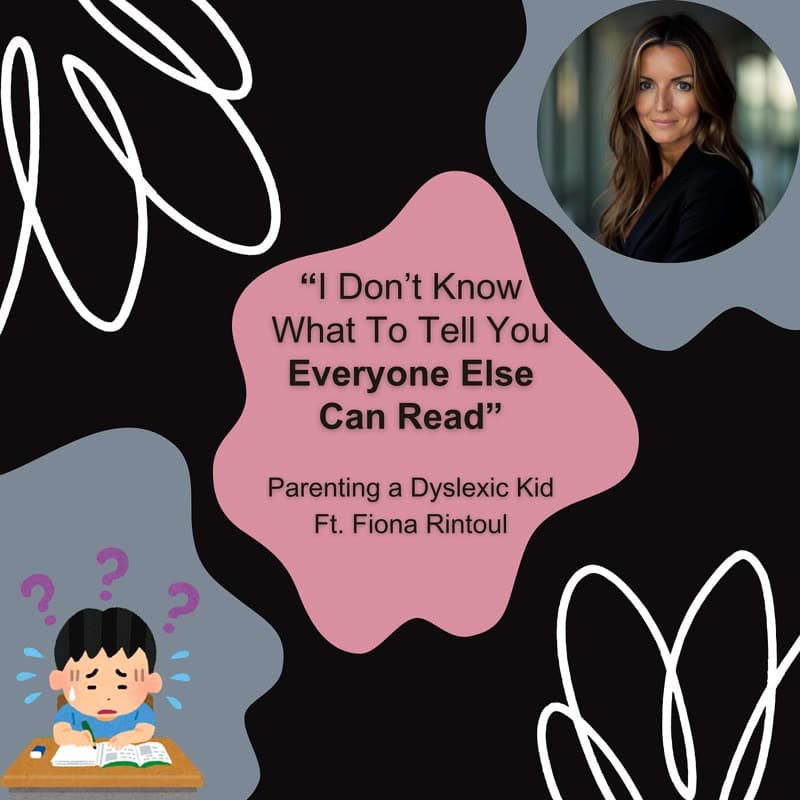
"Everyone Else Can Read" Ft. Parent Fiona Rintoul
Fiona Rintoul, fellow parent of a dyslexic daughter, joins us to discuss her experiences. You can find Fiona online at https://purplecowrecruiting.com/.
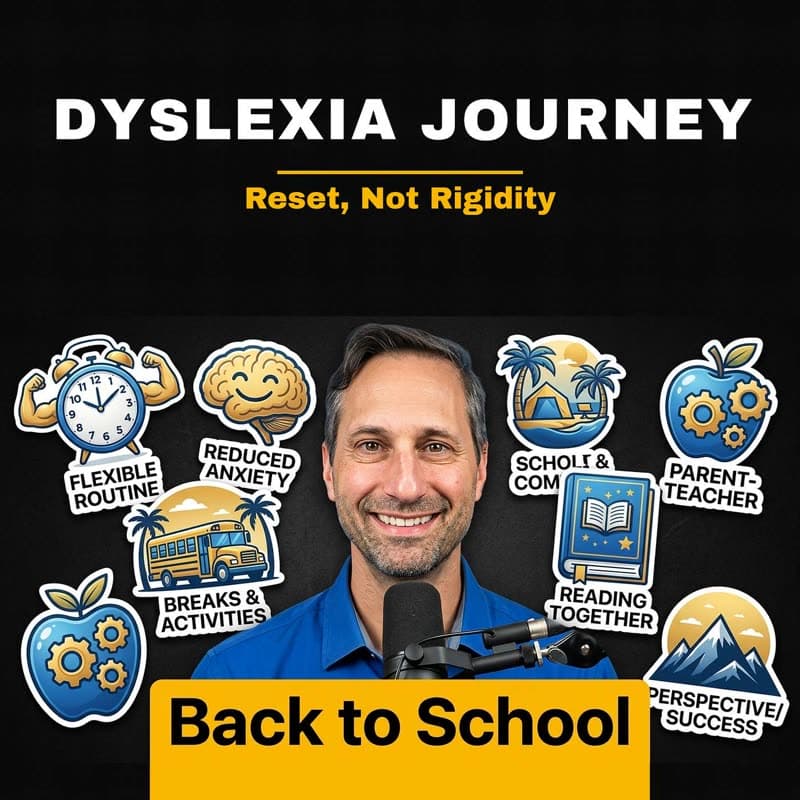
Back to School with Dyslexia: Reset, Not Rigidity
The first two weeks go great. Then, somewhere around week three, the crying starts, or the stomachaches, or the flat refusal to get in the car. If you've been through a back-to-school honeymoon followed by a hard crash, this episode is about setting things up so the crash doesn't take the whole year with it.
Never miss an episode
New episodes every two weeks. Follow wherever you listen.