
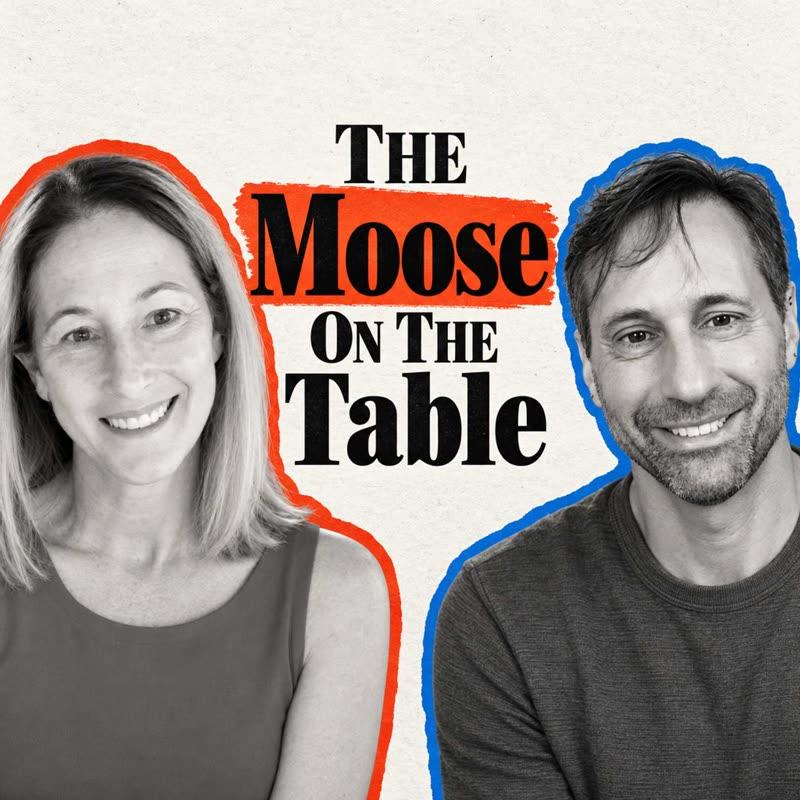
Put the Moose on the Table: Advocating for Your Neurodivergent Child ft. Lisa Richer
About this episode
Lisa Richer has spent 20 years advocating for neurodivergent kids, starting with her own two sons. One was told he'd never attend a regular school; he's now a physics major on an academic scholarship. In this episode, Lisa explains why she "puts the moose on the table" instead of talking around the elephant in the room. She describes the long road through misdiagnoses and second opinions, and why a diagnosis is a moment in time, not a definition. She also explains why extra time can sometimes work against a child, and what changes when parents let their kids have a say. Her message for parents: trust your gut, choose your team carefully, and remember you're not meant to do this alone.
You can find Lisa at https://journey2bloom.com and on Instagram and YouTube at journey2bloom.
Follow us on Instagram!
Also check out our YouTube channel!
Transcript
Full transcript · 6,965 words · about 35 min to read. Press a timestamp to jump to that moment.
When you as a parent allow your child to have a say in what is going to work for them, everything shifts. Got me diagnosed when I was in third grade, and it was the most relieving day of my life because I finally had like kind of a place to hang my hat and say, see, I told you I'm not lazy, definitely not stupid. I just learned differently. Like, that's totally okay. With dyslexics, we were often, you know, just set up for failure because, you know, we were given books and tasks that really are not appropriate for the level that we were at.
So how do you expect anyone to be open to learning when their entire relationship with reading, with learning, is physical pain? Wish I had understood when I was younger that the fact that my brain worked differently than people meant that I would be good at things in ways that other kids were not going to be good at. I just assumed, I can't be dyslexic because letters don't jump up and down for me.
Dyslexia is not a disorder. It is not a disease. Once you sort of own it and embrace it, then you can have the power to deal with it. It's sort of empowering and also enriching to the whole community. To those who don't understand what dyslexia is, that it's not a negative, it's not a problem, it's like we keep saying superpower.
Hey, everyone. We are Sonja and Nick, and this is Dyslexia Journey, and today we are welcoming Lisa Richer to the show. Lisa Richer brings 20 years of advocacy and hands-on experience, including her roles as Executive Board Chair for Bi, With, and For Autistic Adults, Advisory Chair at the Mandala School, and as an Advisory Board Member for the Parents' Alliance for Inclusion. Lisa isn't afraid to put the moose on the table, tackling uncomfortable truths and shifting the narrative from deficits to strengths.
Lisa, welcome to Dyslexia Journey. Thank you. I'm excited to be here. So, before we get into your own background and your work, let's just talk about that phrase a little bit, moose on the table. Like, tell us a little more about what that means. Yeah. So, I'm going to bring out, if anybody's watching this, if we're talking to this on just audio, I have a little moose here that there's one in the background also that you see.
So, this moose right here was thrown on the table, literally, by a boss well over 20 years ago now that felt like our team just wasn't having those messy conversations that we really needed to have. And there was a lot of just walls up or defensiveness. And so, I don't know, like, what my understanding of where the phrase comes from was from Canada. I don't know if that's the reality, but that's my understanding is that there was, they were in a boardroom, there was a moose on the table, there was a stench, and it was like no one wanted to talk about the smell, but there was, it clearly was impacting everybody.
And so, I like the moose on the table, rather than the elephant in the room, because the elephant, you name it, you might tame it, but then it goes back under the rug. And then the issues bubble back up. And we never, we keep changing the narrative, but we never move towards solutions. And so, for me, it's the moose on the table, whether it's the IEP table, the classroom table, the business room table, in the arena, it doesn't matter where it is.
When you don't put that moose out there and actually become vulnerable enough and willing to have those curious conversations, you come right back to where you started. I love that. Yeah, that's so true, because the elephant, it feels like, one of them is visualize that, it's like off to the side, you know, you look over at it, but the moose, if it's on the table, it's right there in front of you, you're directly addressing it.
Yeah, it's very evocative. Yes, I love that. Yeah, well, let's talk about your background and your, kind of structured around your personal journey with neurodiversity. It sounds like you're coming to this topic, like ours, started with your own children. Yeah, so, it knowingly started with my children, but it unknowingly started when I was born, because through my children, I have learned about my own neurodiversity. So, I grew up myself undiagnosed neurodivergent, I was an elite level gymnast, as we were talking about before we came on, undiagnosed neurodivergent, went through school, went through business, became a mom of not just one, but two neurodivergent boys.
So, very different neurodifferences, different ways to support them, some interventions worked, some didn't, the therapies. And so, yeah, the journey really has evolved from my personal, professional, and lived experiences in all those facets, and that's how Journey to Bloom came to be. Yeah, let's dig into that a little more, if you don't mind. Like, what, do you have some sort of specific anecdotes about how it was challenging when your kids were little, and sort of what you learned along the way?
How wasn't it challenging would be the point, right? Good point, good point. So, if I look at, they were, they're very different kiddos, and now one is a junior in high school, and the other one is a sophomore in college. Both of them were not easy to diagnose. And so, for, when we talk about those challenges with my oldest, there were lots of things going on very, very early on, but from what people would call the neurodistinct type of differences.
But before he was 18 months, he was in early intervention. Here in Maryland, it's called the Infants and Toddlers Program for birth through three. I know in California, it's a regional program, so in different states, it's in Colorado, it may be called something else, but it's really the birth through three. And we knew that there was some speech delay, then there were other things happening. So, he was a toe walker, a hand flapper, there was sensory dysregulation, but people were looking at these things in isolation.
And this also brings together kind of how I do, how I work the way I do, and the why behind it. And so, it was, okay, he has a speech delay, but he's not autistic. But then, as the time went on, oh, then he has a behavioral problem. And then it was, you know, let's look at all these pieces. Gross motor skill delay, social skill struggles, the toe walking, the hand flipping, the visual over-stimulation, auditory processing.
All these pieces came together, but it was very challenging to figure out what was really going on with him. Highly intelligent, although with his first, his first actually only full neuropsych, the diagnoses we received were that he would never go to normal school, that we needed to get a lot of support. Well, he's now a sophomore in college as a physics major on a partial academic scholarship in an honors program. So, you know, the challenges led to more resilience and me trusting my gut.
With my younger son, seemingly neurotypical, in quotes, because up until he was about two and a half, he was our solnish gun, which is in Russian, like, sunshine. My mother-in-law would call him that. And then all of a sudden, it was some of these, like, ups and downs. And we had someone that said, he's bipolar, he's this. Like, everyone wanted to label him with something. Went into school with the DD diagnostic code, if you will, developmental delay, because up until second grade or eight years old, don't quote me, I haven't talked about those numbers in a long time.
You can still get those interventions without knowing exactly what's happening. Then he was eventually diagnosed with unspecified learning disabilities and ADHD, and then COVID hit, and then the anxiety kicked in, and lots of other things. But through the years, what started what? What came where? Then he got diagnosed with absinthe seizures when the day before the world, I say the world shut down, and March 13th, like March 12th, was this doctor's appointment.
And so all of these factors, right, were falling in. So the challenges continued through the years. If I go all the way back to when they were little, though, the biggest challenge I found was people misunderstanding my children and not being willing to see them as who they were. I remember many conversations where my oldest wasn't allowed to go to a party unless I was there or somebody else was there with them because he was going to be too challenging.
I remember getting a phone call from a grandmother saying, our neighbor, I really want to be able to walk him home from school, but he just ran across the street and I can't be there. I'm like, I don't want to be the one that gets hit because he was dysregulated and took off. So those were some of the challenges with my older one. And then the younger one, it was, we knew a lot was going on, but we didn't know what or how to support him because the interventions we used for our older son weren't working for our younger son because they had very different needs on how to help them help themselves.
Yeah, so much, so much good, good stuff to unpack there. I think two things I'd like to call out specifically that, that you just said is one is the, about the expectations and sort of the underestimation and being told that, that your son was never going to be able to go to a normal school. And now he's in college doing well. That's something that we emphasize a lot for our dyslexic listeners and parents of dyslexic kids.
And I just actually just posted on Instagram the other day, something about, you know, dyslexia is not correlated with intelligence. Like just, just because you have a challenge like this, it doesn't mean that you're dumb. It doesn't mean that you're below average. It's just with the proper support, people can thrive.
And then I forgot the other point I was going to say. But yeah, I'd love to just hear, hear then. Cause I mean, it sounds like, and I think just the point in general too, that it's like, can be such a long journey. It's not for everybody. You know, we've definitely heard people who it's like very quick diagnosis, but for many people, you know, there's multiple things going on or it's like not very clear what it is.
So there's late diagnosis and all of that. So I think a lot of people can really resonate with that, with that journey. I guess I'm curious if you feel like there was a particular turning point or a couple of different turning points, because, you know, it's so striking. Like, as you said, for example, for your older son, that, you know, you went, you didn't go from there with them telling you that to where he's at now.
So I'm curious if you, and this is a problem, could end up being a very big topic, but that's fine. We can dive into all the aspects, like sort of how that shift then happened. Yeah. So, and very differently for each of the boys. so with, with my first son, the, the turning point was when I shared that information with his behavioral psychologist and she looked at me and said, we need to get another opinion because I don't know.
He must've been having an awful day. I, I know there's so much more in there and I want you to continue to trust your gut. and so we went and met with that person's boss in, at the regional center in California and they said, wow, okay, we're not going to retest him right now. We can't cause he had just been tested like a couple of weeks earlier. but I'm seeing a very different child than what they wrote in their report.
and he said, he explained to me some pieces of what could happen with autism and how it could show up. he also, his, his professional opinion was that when a child gets diagnosed with autism, there is a component of ADD or ADHD already involved. And back then they had them as separate things. So when the whole ADHD thing came out, it still blows my mind, like, where is that coming from? Now he explained the inversion wasn't true.
So my son who has ADHD wouldn't automatically fall under the autism umbrella, but his expert opinion was when you're autism, there's a component. And I can see that because of the intersections, but the turning point for me was that one person saying, go back and get clarity. And then that person's boss who had died, had diagnosed him. I still have the neuropsych report. It will go in a book one day, like just how different what they saw in a moment in time.
But what it helped me understand was what I just said. It was a moment in time. And a moment in time does not define how somebody moves through life. No more than a diagnosis defines what you can do with yourself or with others. To me, diagnoses inform how you go about supporting those people. And then who you surround yourself with. Who is that team that you build also? So I had a phenomenal team of people.
We lived in California. And when I moved to Maryland, that team was no longer there personally. But I would reach out to them to find out what was, you know, what was working and what was not working. With my younger son, in fact, he was around three. And we were debating on whether or not he needed, he was probably, I guess, around two and a half. We were debating on if he needed speech and language intervention because it seemed like he wasn't articulating well.
And then we learned that there were some things where his tongue was weaker. And so we had to use some different instruments to help him through the speech and language pathologist. But I reached out to my older son's speech and language therapist from the preschool he went to in California. And I said, what do you think about this? And her response was, I don't think you have anything to worry about. However, your gut has always been right.
So go trust it. So it was another shift and a turning point. But I was always tapping into those other people. With my younger son, what we realized was the speech and language was one thing. But then they realized he was dominant lefty and that he had fine motor weakness. So that then turned into him getting OT. And so I knew from my first son that then helped me with turning points with my second son that continue to ask for that help and that support.
Because you never know which intervention or which specialist or person who is willing to hold space for you is going to break open those doors.
Interestingly, though, with my older son, when he was younger, I'm sorry, with my younger son, when he was in second, third, fourth, fifth grade, he was getting interventions for needing to understand phonics. He didn't understand the CDC words, the prefix, suffixes. He was really struggling with all of that. And at that point, he had unspecified learning disability. When you look at his profile, I talked to a friend of mine who's a reading specialist.
When he was reassessed in the fall of last year, yeah, fall of last year, I was testing him for dyscalculia, which is the math, used to be called the math dyslexia, but now it's called dyscalculia, which I like. It has its own. It's different. But he tested for every single, I call them the D's, except dyslexia, because he tested on a 12th grade vocabulary level. But the only reason he tested on a 12th grade vocabulary level was because we had put him in a project-based school that focused on prefix, suffix, root words.
He had all those other interventions, and then they kept it going all the way into high school with him being able to correlate the things that worked for his brain with the disconnects of what didn't. And so some people would say to me, well, now he has stealth dyslexia. To me, it doesn't matter if they label it with dyslexia, but he has dysgraphia, dyspraxia, dyscalculia, expressive language disorder. So he went from, like, three diagnoses to having, like, to having eight on paper and then also the Epson seizures that are thankfully gone.
But that was the actual full turning point for my older, my younger son. So it took a lot longer to get to that place because now I have all the information. And we understand we were looking at the ADHD as the primary driver, and for five years, that's where we were still doing the interventions without knowing that, wow, all this other stuff is going on. And he has a really good working memory, but his recall is four deviations from his working memory backwards.
So he has a huge gap, which is an inversion of ADHD. Most ADHD kids have a great recall and not a good working memory. So he's, like, a one percenter. So he ended up becoming even more complicated than my first son. Yeah. Well, I want to highlight here, too, I think that, you know, despite the length of time and, you know, all the, of course, work as a parent that goes into this, like, hopefulness.
Because I like, you know, when you mentioned you don't know which one will break it open. I mean, I think sometimes, of course, there's the experience where we go to someone and they're not still getting the kid, you know, even though it's trying to, I mean, I don't know how much of that experience you've had. We've definitely had that experience. It's just not quite working that approach or alternative thing. But I think the hopefulness in that something's going to break through and so to keep trying, you know, and then also, like you said, as you get different pieces of the picture, it can be really important.
And I think that's true, really, for everybody. I mean, again, there's occasionally people where it feels like more of a straightforward case, but so many people, yeah, it's multiple diagnoses. Yeah, and it's really hit or miss. Like, in our case, the school didn't catch it and we had to go to a private assessment center. But we've heard from other parents who the schools caught it right away in kindergarten. And it's really, I mean, I think it points to how everyone is unique.
And also, I just wanted to highlight as well what you said earlier about you have to trust your gut. I mean, you, and be persistent. I mean, you knew that this was worth continued persistence and continued testing to really understand your own children. And I was going to say for myself, too, just really quickly, that part of, like, for me, a lot of the moves on the table is the uniqueness aspect.
Because that's difficult for society and systems and whatever to grapple with, but it is the case. Yeah. Yeah. Absolutely. And that's where the reason I was able to do what I did is I let go of that guilt and shame. And I leaned into knowing I'm not an expert on kids. I don't have, I can trust my gut. I have the knowledge. I know our very first pediatrician within the first week, our oldest was having trouble swallowing.
And the doctor said, trust your gut, it is spot on. And it was like, for me, I had stopped trusting myself for so many years. And when I gave birth, it was like, wow, now's my chance to kind of, to restart that process. And so letting go of that guilt and shame and being willing to get curious and keep going is really important. But you had said something about the testing, which I think is, it's really interesting to, something to bring up here.
So when my, when my youngest was in, I guess it was second grade, we was when we first had him tested. He had the ADHD and there, I think there was some anxiety too, and the unspecified learning disability. We then took him to Kennedy Krieger a year later and had the assessments and again, we wanted to do a comparison. They came back with the same diagnoses across the board. And yet in 10th grade, going into his 10th grade year, he's now at 11, we took him to a different neuropsychologist who did neuroacademic assessments, who had worked in a school system and in private practice.
And he truly, completely broke apart what all of his differences were, which is where we ended up with all of those. And the reason I bring this up is for us, it really brought things together. Like it helped us understand, especially the expressive language piece that no one had even thought about. It really helped us understand where between his recall, his processing, all the language differences, where the anxiety came in. Because if he couldn't get from here to his mouth what he was trying to express, then everything else was going to pile up.
So it was almost like every new, new, if you will, or clarified diagnosis that was at the center, along with executive functioning of everything. So the reason I say this is it's very uncommon, as you all are saying, to not have more than there's coexisting neurodifferences. And whether one is prompted because something else wasn't uncovered, or it just comes along for the ride, things can shift in terms of what is being most impacted or what's showing up at some point.
Often, it comes out of work getting harder, expectations becoming higher, potentially just kids getting older. And so I'm, and the diagnoses don't ever go away. Like that's the thing that also drives me crazy. Oh, your son doesn't look autistic, or that went away. And no, it doesn't go away. You just learn and gain the tools to deal with it. Same thing with dyslexia, right? As you were talking about, you're right, it doesn't, dyslexia doesn't equal intelligence, you had said, right?
None of this equals intelligence, but the way I look at it is emotional intelligence is more important than IQ intelligence when it comes to recognizing, having compassion, and having the desire. But then it's up to the other people to meet you where you are. Yeah. This might be a good time to transition into hearing more about your work, you know, your advocacy work, maybe starting with Journey to Bloom and what that is.
Sure. So, Journey to Bloom started as Bloom Special Education Advocacy. And then when COVID hit, I was really stepping back and reflecting on the term special education and the term advocacy. One put up walls. The other one had me walking in on the defense because people just assumed I was going to be a bull and trying to shop right and just kind of coming at them or a bulldog. So, I rebranded to Journey to Bloom.
And I rebranded to neurodivergent success partner. I will, people can call me an advocate, whatever they want. But the work I do is helping move people from stuck to success. And I leverage the Clarity, Confidence, Courage, Journey Map. And it aligns with internal, relational, and systemic. And that could be in the home, within yourself, in the classroom. That's where the moose to the table, right? Where are we going with this? So, parents will bring me their why because the word why triggers me.
So, I'll let them bring it to me. And I work through the what and the how so that we can move and remove those roadblocks. And so, I work with parents, whether they hire me to come into a meeting and work with them through the IEP process or getting qualifications or even just building their team of where do they go. To working with professionals in organizations that grew up with other people, they're not going to be able to be able to do that.
And now are themselves in situations that don't make sense or have kids that they're like, now how do I juggle the working world and my children? And I've lived in that corporate space and was asked, like, why would you want to do this neurodiversity work all the time when you could become, you know, a chief people officer? Because it's more meaningful, it's more impactful. And so, the journey to bloom came out of all of my lived experiences and then led into me helping others like me navigate a neurodiverse learning journey.
So, they didn't have to go through what I did alone because no one's meant to do this alone. That's great. And I really, you know, we call our work Dyslexia Journey as well. And that word journey, I think, is really, it really is accurate and really resonates because it really is a lifelong journey. It really is. And the word bloom was my great aunt's last name. And so, she, between my children and her just always just doing what felt right versus what others said was right, is, that's why that word came along with me from the special education, the bloom, special education advocacy into keeping it with the journey of bloom.
I'm curious, then, you know, in your work, what are some of the common frustrations you see and perhaps also some, you know, success stories or strengths that you see or all the pieces of it, whether the ones that are more frustrations or strengths you see in the kids that get then brought out or how it all unfolds. I'm just curious if you have any particular ones that strike you or come to mind.
Yeah, when I'm working with a family, they often come to me in frantic mode of, I have to get this done now. You know, my child's this or I need this for my child. And so, with the frustration, sometimes in the middle and high school years, sometimes it's the parent and the child battling each other that's then impacting the school. In the younger years, it's just the unknown unknowns of, like, what is going on?
The school's not listening to me. Maybe I'm not articulating it the way that I need to be. What am I missing? Because we don't know what we don't know. And so, from a frustration standpoint, maybe the child's scores on their, I have a love-hate relationship with testing, but the scores, say, on their same testing, and all of a sudden, they're going up and then they drop 30 points. And the school's like, oh, it just got harder because they went up a grade.
It's still supposed to be trending up. But then the parents are thinking, okay, well, educators know what they're talking about. So, I'm just going to let it go and then it keeps happening right in the frustration. So, lack of communication, lack of clarity, and lack of understanding is often a lot of where the frustration pieces come in. There's so many variables. In fact, there's so many variables and so much misinformation out there that I am getting ready to create an option for people to just come in and work with me for a year just meeting in group settings to get questions answered and unpack these myths or these perceptions and perspectives.
So, people focus a lot of times on here are, this is the law, this is the law, this is what's happening, but what we're forgetting about is each child is unique. And that frustration is, well, you're supposed to do this, but why are we doing this? What's happening to make us do this? How are we helping move this child? How are we offering them that free and appropriate public education? What works for one dyslexic child is not going to work for another dyslexic child, right?
And so, or any diagnosis. So, those become frustrating pieces as well. But then there's the success side. And when you do work with a team that is willing to listen to one another and willing to work together to solve things for the child, not just change what they're doing, but put that moose on the table, right? The elephant's changing it. The moose is helping to solve and resolve so that we can move forward.
So, I'll give a recent success in that regard. The school team, in this case, felt like this child was just, had too much pressure on what was happening academically. Mom had been given information that if this child didn't take all these AP high-level classes, there's no way they would get into the college of their dreams. Well, that was a college advisor telling them that from the outside, who had no idea who their child was.
So, at one point, I had to stand up for what the child needed, even more than what the parent wanted, and align with the school. Because it's what was right for that student. And so, for me, I work with the families for the child. And success happens when we're all there for the child. And then, you know, I've got numerous examples, especially with, like, from the middle to high school, where the kids end up coming into the meetings with us, and they start to share their voice.
And when you, as a parent, allow your child to have a say in what is going to work for them, everything shifts. Yeah, that's great advice. Yes. Well, and I think it can be, it can sound easy to do, but I think when, especially almost when we go into these huge advocacy for our kids' roles, sometimes sort of seeing how that starts to come in, you know, it can actually be a big shift.
So... Yeah. Well, the emotions that are attached to it, right? As a parent, because mine just went back into public after five years in private. As a parent, it's emotional. I cry in my meetings, even with my clients sometimes. But trying to bring out that emotion away from it, and that's where someone like me comes in. When we're not, when we're coming in as part of the team, not as a, here's a document, you need to implement it, whereas, like, let's work together, then the objectivity can come in.
Everyone can move forward. Yeah. I'm curious in your work, because now you do work so closely with schools now. You have your own journey, but then also you do a lot of work with schools. Do you have a sense of if there's some more general things that schools could be doing to best support neurodiverse kids? I mean, we're talking about the individual part where you have to come in, you know, and for each kid, figure it out.
But I'm curious if you sort of have some of those things that you just wish would always happen for everyone. I'm smiling because my younger son went to a two-week program at Dartmouth over the summer, and they have a universal design learning instruction style. And at one point, he's like, Mom, you were fighting for all my accommodations. I didn't think I needed half of them. So what do you mean? He's like, well, everyone was getting accommodated the way I was.
So I felt really comfortable. So that's one thing. Some of these accommodations will benefit everybody. Now, will some kids get to do even better because of it? Sure. But if they don't need them, then they're not necessarily going to access them. But for those that need it and aren't diagnosed or don't really understand what's – they can't articulate what's going on. So universal design learning, you know, where there are certain accommodations.
So maybe everyone has an ability to use a graphic organizer because it helps them put their thoughts together in a better way. Everyone has a time management class because everyone can do better with time management. You give somebody a planner, but if they don't know what to do with it or how to appropriately break apart their time and be productive and what to do first and then what to do next, that planner doesn't mean anything.
It's like putting a kid behind the wheel of a car and telling them just to drive. Yeah, absolutely. For sure. It's true. I think that would be so great. Yeah. Very good wish list to have those kind of skills be actually taught and addressed. Oh, for sure. Yeah. And, I mean, we've gone even further on some of our episodes and talking about how other accommodations like extra time on tests and, you know, everyone – why are we so time pressure focused?
Why are we so focused on having kids sit still all day? Like all this stuff that, you know, most everyone would benefit from changes. So, movement breaks for sure. Absolutely for everyone. Mindfulness. Where my son came from, they did meditation every morning and they did yoga twice a week. They did walking meditations. Like, just getting out in air. Those are simple things that could happen. Yeah. But time constraints make it so that it's not allowed for.
So, you know, I agree with that. But the thing about – it's interesting. I want to talk about the extended time for a moment though because when we talk about extended time and I have a – I ended up getting a certification in executive functioning a couple years ago because I got really tired of the schools telling me that executive functioning didn't thread through almost all neurodifferences. And so, I went and got my certification so I could objectively and respectfully talk about those intersections.
And so, for example, like when you have someone that struggles with time management to give someone extended time for classwork, it actually can work against them. Because now the work is piling up even more. And that is – actually happened in a meeting just last week where those school psychologists said, well, advocates ask for extended time. And I had a pause where she said, let me finish. I said, no, let me lean in for a moment.
I do not want extended time for classes because here's what's going to happen. But extended time for tasks for this particular child, yes, because they needed more time to process and to not have that anxiety come in. What I needed for that student was a tutorial class where they were teaching them how to manage their day, how to chunk their learning, when to ask for help, how to advocate for themselves. That's the type of class I think everyone would benefit from, but that's what that child needed rather than some of those other facets.
And that's where I'm saying it can be offered universally, but then you also have to know when you pull it back. And that becomes the other side of this. If we do universal design for everyone, it's not going to solve all the problems. It actually could create different problems. So we have to be mindful of who needs the bumpers, who needs the boundaries, who needs the scaffolding, and how much. Yeah, I mean, it really goes back to the individualization, I think.
Yes, yes. Yeah. And another sort of kind of example that came to mind for me just now is that our daughter has run into is, like, she really does need extra time on tests because it takes her longer to read and write. And sometimes teachers have said, oh, well, this test, you know, it's supposed to be done in a half hour, but we're giving everyone an hour, and so you don't get the extra time.
And we're like, well, no. Like, if everyone else gets an hour, she needs an hour and a half. Yes, and I see that often because many times teachers don't understand that giving that extended time to everyone, great, but if you think everyone needs that much time, to your point, that means my child needs even more time, right? And so I see that happen, and some of those come in from we don't know what we don't know, and we have general educators and even some special educators that aren't trained in the way to recognize some of those things.
The EQ isn't really high. The emotional intelligence, there's gaps in that. And so if we're not constantly training and retraining and modeling and observing, doing a one-and-done training every year and only giving the general education population and the special education population together two days in a year to do intertwining trainings, it's not enough. You know, you can do unconscious bias training. You can do all these other things by law that we have to check the boxes on.
That's great, but they're not helping move the needle forward or giving the teachers, the administrators what they need to appropriately support these children. And so I like to say that when I can, it felt timely to bring up, because if parents are listening that are also educators, over 50% of my clients happen to be educators, because they're so frustrated with, I'm missing something, or I don't know how to do this. And so over the years, as I've worked with more and more schools and parents, I realized just how much there are these systemic issues, gaps, and misunderstandings.
Yeah, that's great. Yeah. I think there are a lot of educators who listen as well, so that's great advice. Yes. I was going to say, as we wrap up, though, I'd love to hear any sort of final words of advice that you have for, you know, both parents, more generally, and then taking it out to the wider world, too, what you wish they would know about neurodiversity.
A fun fact is everybody's brain is different, even that of two identical twins. So I do trainings on understanding neurodiversity and leading and engaging for, like, a broader audience, and that was, like, one of the coolest facts I ever heard. It's like your fingerprints. Everyone's fingerprints are different, and so is everyone's brain. And so is everyone considered neurodivergent? No, because it's what neurotypical is, is what's deemed typical by society. It's the broader social norms.
And there's lots of ways to talk about this. So that's just something to think about, is we all think and learn and do things differently, in part based on our outside experiences. That's a broader statement. For parents, you do not need to do this alone. You are not meant to do this alone. There are people like me. There are people that say they're like me that aren't like me. There are people like the two of you that, you know, may show up and say they can do things the way that the three of us here do them.
Choose your team carefully. Know that you can always change that team if it is not working for you. And recognize that one person working against you, if you're not feeling comfortable with how that person on your team is showing up in the meeting, speak up. Change it. And from a school perspective, if you're working with a school team, I say we're all a team, but people that sit in the school building.
If you're not comfortable with something they're doing, ask to speak with somebody that's in the central office team. They are supposed to be there to help, support, and guide each other. And so when we're not working as a team, the one person that truly loses out most is that child. Yeah, that's wonderful advice. Well, we really appreciate having you on. We're definitely going to put all of your information, of course, in the show notes.
But did you want to just say it out loud for anyone as well? Absolutely. So Journey, the number two, Bloom, that's my website. It's also my Instagram handle and my YouTube channel is also the same. And then my name, Lisa Lazar Richer or Lisa Richer, depending on what other social you're on. You can reach out to me. I have a Creating Your Team or Building Your Team download on my website. There's lots of information on there.
I'm pretty much an open book. So if you have any questions, want to reach out, please do so. Fantastic. Thank you so much. Yeah, thank you very much. Thank you.
More from the show

Dyslexic Voices: Filmmaker Alex Leonard on the Disabilities You Can't See
Alex Leonard is a writer, a marketer and a lifelong language learner, and he's dyslexic. In this episode of Dyslexic Voices, Alex tells Sonja and Nick about finding out he was most likely dyslexic at age 29.

Is the School Honeymoon Over?
Is the Back-to-School Honeymoon over? Some signs it might be, plus what to do about it! Follow us on Instagram! Also check out our YouTube channel!

Not Your Granny's Grammar!
Patty McGee is the author of Not Your Granny's Grammar and an experienced teacher and educator. Follow us on Instagram! Also check out our YouTube channel!
Never miss an episode
New episodes every two weeks. Follow wherever you listen.